
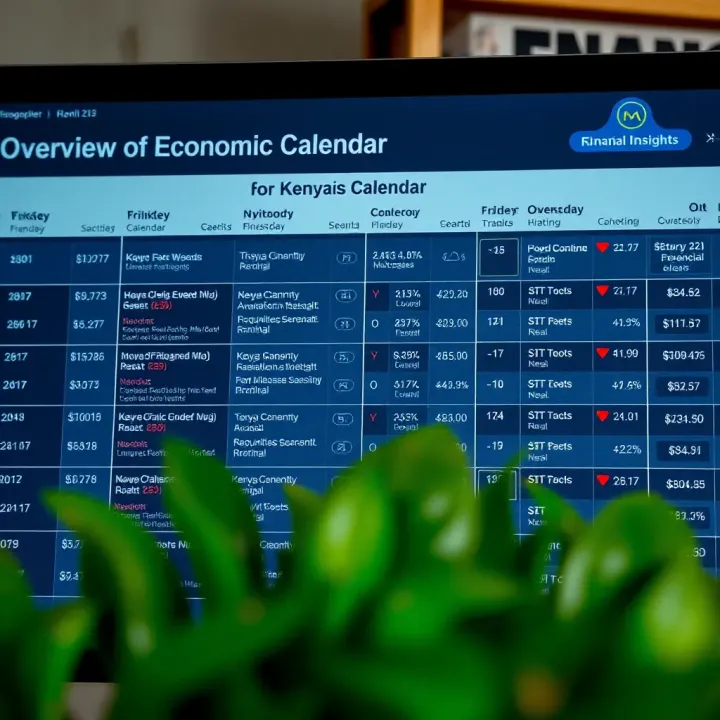
Understanding Kenya's Economic Calendar for Investors
Stay ahead in Kenya's market 📈 by mastering the economic calendar! Learn how to track key events, interpret data releases, and make smart investments daily.
Edited By
Laura Mitchell
The US economic calendar is a schedule listing dates for key economic reports and events, such as inflation figures, employment numbers, and GDP updates. These reports provide insights into the health of the US economy, which is the biggest in the world. Because Kenya and much of Africa are linked through trade, investment, and currency markets, movements in US economic indicators often ripple far beyond American borders.
For investors, traders, and businesses in Nairobi or beyond, keeping an eye on the US economic calendar is not just for curiosity. It helps anticipate market volatility and adjust strategies accordingly. For example, when the US Federal Reserve announces interest rate changes following inflation data, it can affect dollar strength, commodity prices, and the Nairobi Securities Exchange (NSE).

Some of the most watched indicators include:
Non-Farm Payrolls (NFP): This monthly report reveals how many jobs were created or lost in the US economy, directing Forex market swings and investor sentiment.
Gross Domestic Product (GDP): Reflects the total economic output and signals growth or contraction.
Consumer Price Index (CPI): Measures inflation, influencing central bank policies.
Federal Reserve announcements: Rate decisions and meeting minutes drive bond and stock market moves.
Understanding these dates enables Kenyan investors to anticipate shifts in currency pairs like USD/KES or commodity prices such as oil and maize, which affect import and production costs locally.
Monitoring US economic releases gives you a timely edge—knowing when turbulence may hit markets helps you plan your trades or business decisions more effectively.
In practical terms, many Kenyan traders set alerts on platforms like MetaTrader or use financial news services to track these reports. Businesses importing goods priced in dollars also watch these dates to hedge currency risk or negotiate contracts.
By integrating the US economic calendar into your financial planning, you reduce surprises and improve response times—whether adjusting your portfolio, securing supplies, or seeking investment opportunities. Staying informed builds resilience in an interconnected world economy.
The US economic calendar is a schedule listing significant economic events and data releases from the United States. It highlights dates when reports such as GDP growth, inflation figures, employment numbers, and Federal Reserve decisions come out. For investors, traders, and analysts, this calendar serves as a crucial tool to anticipate market movements, plan trades, and assess economic health.
Since the US economy is the largest worldwide, its economic indicators often influence financial markets globally — including Kenya's currency and stock market. For example, a stronger-than-expected US jobs report might lead to a firmer US dollar, putting pressure on the Kenyan shilling and affecting import costs. Knowing when these reports are published helps Kenyan businesses and investors time their decisions better.
At its core, the US economic calendar is a timetable of scheduled data releases and events from government agencies like the Bureau of Economic Analysis or the Federal Reserve. This includes figures such as the Consumer Price Index (CPI), Non-Farm Payroll employment data, and monetary policy announcements.
Its primary purpose is to help market participants monitor the economic health of the US — understanding growth, inflation, employment, and financing trends. Traders use this information to anticipate moves in currencies, bonds, stocks, and commodities. For instance, if inflation data shows a sharp rise, investors might expect the Federal Reserve to hike interest rates, causing shifts in bond yields and stock valuations.
Following this calendar gives advance notice, allowing decision-makers to prepare for potential volatility rather than react after prices have moved.
The US economic calendar differs from others mainly in its global impact and detail. While every country releases economic data, the US economy’s size means that its calendar events tend to drive international markets more than others.
Unlike local or regional calendars, the US calendar often features higher liquidity and more market reaction. For example, Kenya’s own economic calendar includes crucial reports like inflation and GDP, but these generally affect local markets more directly. The US calendar affects broader market sentiment that trickles down to Kenyan markets.
Moreover, the US calendar is widely followed in real-time by global financial centres, which results in sharp price moves immediately after releases. This contrasts with less liquid calendars where market responses might be muted or delayed.
Being aware of the US economic calendar isn’t just about knowing dates. It’s about understanding when significant shifts could happen, so investors and businesses in Kenya can manage risks and spot opportunities effectively.
In summary, the US economic calendar lets you track vital US economic releases that shape global markets. Its regular updates and the breadth of economic data offer invaluable insights, especially for Kenyan market participants who face indirect effects through currency exchange, commodities, and stocks.
The US economic calendar tracks several key indicators that influence markets globally, including here in Kenya. Understanding these indicators helps investors, traders, and businesses anticipate market movements and adjust their strategies accordingly. Each indicator reveals different aspects of the economy’s health, from growth and inflation to employment and monetary policy.
Gross Domestic Product (GDP) measures the total value of goods and services produced within the US over a specific period. It is a broad indicator of economic activity and growth. A strong GDP figure often signals a robust economy, encouraging investors to buy stocks and commodities, while a weak GDP may cause cautious or bearish behaviour. For Kenyan investors, a rising US GDP could strengthen the Kenyan Shilling against the dollar as demand for Kenya’s exports shifts. For instance, if US consumers spend more on goods like coffee or tea from Kenya, this can boost forex inflows and improve trade balances.
Inflation indicators such as the Consumer Price Index (CPI) and Producer Price Index (PPI) gauge price changes over time. CPI reflects retail price movements, affecting everyday consumers, while PPI measures wholesale price changes impacting producers and supply chains. Inflation data influences US Federal Reserve policies, especially interest rates. Kenyan business owners dealing in imports or exports watch these numbers closely because US inflation spikes can signal tightening monetary policy, which then affects global borrowing costs and commodity prices. For example, if US inflation surges, fuel prices may rise, increasing transport costs for Kenyan businesses.
Non-Farm Payrolls (NFP) report the number of jobs added or lost in the US economy, excluding farming and government jobs. This indicator gives a snapshot of employment trends and consumer spending power. A strong NFP report usually pushes the US dollar higher and often causes volatility in commodity markets like oil and metals. Kenyan investors and traders who follow forex markets need to be aware of NFP release dates. Sudden market swings after this report can affect exchange rates, impacting the price of imported goods or foreign investments.
The Federal Reserve’s interest rate decisions are perhaps the most watched events on the US economic calendar. Changing rates can tighten or loosen money supply, influencing investment, lending, and currency strength. When the Fed raises interest rates, it often attracts capital into the US, making the dollar stronger and putting pressure on emerging market currencies like the Kenyan Shilling. Kenyan exporters might face challenges if their goods become more expensive abroad due to a strong dollar. Conversely, lower US rates generally ease financial conditions globally, which may encourage borrowing and investment in Kenya’s growing sectors.
Being aware of these indicators and their timing allows Kenyan market participants to prepare for potential volatility and make smarter trades or business choices.
US economic events resonate far beyond American borders, directly impacting Kenyan markets and businesses. Given Kenya's growing integration with the global economy, especially through trade and investment flows, fluctuations in US indicators can influence exchange rates, commodity prices, and stock market movements in Nairobi.
The Kenyan Shilling (KES) often reacts to significant US economic data due to capital flows between the two countries. For instance, when the US Federal Reserve signals interest rate hikes, investors might shift funds toward the dollar to benefit from higher yields. Such movements increase demand for the US dollar, causing the KES to weaken. This affects importers who face higher costs when buying goods denominated in dollars, impacting everything from fuel prices to machinery imports. A practical example happened in late 2022 when US inflation data spiked, prompting market expectations of aggressive Fed tightening. The KES slid by about 1.5% against the dollar in just a few days, directly affecting traders and businesses reliant on imported inputs.
Several commodities vital to Kenya’s economy, like coffee, tea, and petroleum products, are priced globally in US dollars. US economic data and policy decisions can cause swings in these prices. For example, stronger-than-expected US economic growth may push oil prices higher due to increased demand forecasts. This drives up fuel costs in Kenya, which have a knock-on effect on transportation and production expenses in sectors like agriculture and manufacturing. Conversely, when US demand softens, global commodity prices may drop, offering a breather to Kenyan businesses but potentially squeezing producers' profits. Tracking these US economic releases helps commodity traders and business planners anticipate price shifts.
The Nairobi Securities Exchange (NSE) is also sensitive to US economic developments. Large foreign investors often adjust their portfolios in response to US data, triggering capital inflows or outflows in Kenya. For instance, during US recessions or when job reports disappoint, investors may pull out funds from emerging markets like Kenya, leading to declining stock prices on the NSE. Conversely, positive US economic reports can boost investor confidence, lifting share prices and increasing trading volumes. A clear case appeared in 2023 when upbeat US GDP data encouraged foreign investment, resulting in a 3% rally in the NSE 20 index within a week. Local fund managers and investors benefit by keeping a close eye on such US economic indicators to time entry and exit points effectively.
Keeping track of US economic events is not just for global traders. For Kenyan businesses, investors, and policy makers, these signals provide vital clues for navigating exchange rate risks, commodity cost fluctuations, and market sentiment shifts.
By understanding these effects, Kenyans can better prepare for market changes, manage financial risks, and seize opportunities arising from the global economic environment.
Kenyan investors and business owners can gain a real edge by using the US economic calendar effectively. The calendar highlights key data releases and events that often move global markets, affecting currency exchange rates, commodity prices, and investment flows relevant to Kenya. Staying updated helps you plan your trades and business strategies ahead, reducing surprises and boosting your chances of profit.
Good data sources are the backbone of using the economic calendar wisely. Trusted platforms like Bloomberg, Reuters, and the official US Bureau of Economic Analysis provide timely and accurate statistics. For Kenyan investors, platforms like Investing.com and CNBC Africa also summarise this information conveniently. Always cross-check data timing and authenticity, since outdated or incorrect info can mislead your trading decisions.
US releases such as the Federal Reserve’s interest rate decision or the monthly Non-Farm Payrolls report can cause sharp market swings within minutes. Savvy traders often choose to either avoid trading during these volatile moments or place carefully planned trades to benefit from sharp moves. For instance, if US jobs data beats expectations, the dollar may strengthen, and this shift usually impacts the Kenyan shilling against the dollar. Positioning your trades just before or after these announcements can be a smart move, provided you understand the risks involved.
Aside from trading, businesses can adapt operations by following these economic signals. If US inflation data shows rising prices, Kenyan importers might anticipate cost increases on goods sourced from the US and plan inventory purchases accordingly. Similarly, exporters should watch US economic health to predict demand for Kenyan products. For example, a strong US GDP growth report could signal increased consumer spending, benefiting Kenyan tea and flower exporters who supply the US market.
Tracking the US economic calendar isn't just for traders; it's a practical tool for anyone with business ties or investments linked internationally. Knowing when big reports drop gives you time to prepare and act confidently.
In practice, integrate the calendar into your regular financial review. Setting alerts for upcoming releases keeps you informed without constantly checking the clock. This approach helps manage both opportunities and risks tied to US economic shifts affecting Kenyan markets.
By understanding where to get reliable data, timing your trades smartly, and adjusting business plans in light of economic trends, you put yourself ahead in a linked global economy, ready to navigate its ups and downs with greater assurance.
Navigating the US economic calendar can be tricky due to several common challenges that investors and traders often face. Understanding these difficulties helps you make better decisions and avoid costly mistakes in volatile markets.
Economic indicators sometimes send mixed signals. For example, the US non-farm payrolls report might show strong job growth while the consumer confidence index paints a gloomy picture. This causes confusion about the overall health of the economy. Kenyan investors need to look beyond headline figures and analyse the context—such as sector-specific trends or seasonal adjustments—to understand the real picture. Combining multiple reports and comparing them with global trends can clarify these contradictions, providing a more balanced view before making investment decisions.
Economic calendars mark scheduled reports, but unexpected events like geopolitical tensions, natural disasters, or sudden policy changes can disrupt markets. Take the US-China trade tensions; sudden announcements during major report days led to sharp swings in global markets, affecting Kenyan shilling exchange rates and commodity prices like tea or coffee. To manage such volatility, investors should consider setting stop-loss orders or limit orders when trading around key dates. Having a risk management strategy also means being prepared for gaps in market pricing after surprising news, which often fall outside calendar predictions.
The US economic calendar operates primarily on Eastern Time (ET), which is seven or ten hours behind Kenya depending on daylight savings. This time gap means many important reports release either late in the night or early morning in Kenya. Kenyan traders and businesses must plan ahead to monitor these events in real-time to take advantage of market movements or adjust strategies promptly. For instance, a Fed interest rate decision at 2 pm ET hits Kenyan markets close to 9 pm or 10 pm, requiring late-hour vigilance. Using alerts and scheduling trades accordingly can help overcome timing challenges and prevent missed opportunities.
Understanding these challenges equips Kenyan market players to better read US economic signals and integrate them effectively into their strategies, reducing surprises and enhancing decision-making.
By keeping these practical difficulties in mind, you can follow the US economic calendar with more confidence and refine your investment or business plans accordingly.
Stay ahead in Kenya's market 📈 by mastering the economic calendar! Learn how to track key events, interpret data releases, and make smart investments daily.
Discover how the forex economic calendar helps Kenyan traders spot key events, interpret data, and make smarter currency market moves 📊💱🇰🇪
📅 Learn how the economic calendar shapes financial markets 🌍, helping Kenyan investors predict movements and make smarter trading decisions.
📅 Learn how the forex economic calendar helps Kenyan traders spot key events and data for smarter trading decisions. Stay ahead with essential tips! 📈
Based on 15 reviews