
How Forex Trading Works in Kenya
Learn how forex trading works in Kenya 🇰🇪, including currency basics, local regulations, top platforms, risks, and tips for success in the Kenyan market.
Edited By
James Thornton
Forex trading means buying one currency while selling another at the same time. It works because currencies move in value against each other due to factors like economic news, interest rates, and political events. Traders aim to buy when they anticipate a currency will strengthen and sell when they expect it to weaken.
The bulk of forex activity happens in global centres such as London, New York, and Tokyo, but Kenyan traders can join using online platforms and mobile apps like Safaricom's M-Pesa integration with forex brokers. This accessibility allows thousands of local investors to participate even with relatively small amounts of money.
In forex, currencies are quoted in pairs, such as USD/KES (US Dollar against Kenyan Shilling). The first currency is the base currency you buy or sell against the second, the quote currency. For example, if USD/KES moves from 110 to 111, the US Dollar has gained strength relative to the Shilling. A trader who bought USD expecting it to rise can close the trade for a profit.
Successful forex trading depends on understanding market drivers, timing, and managing risks. Kenyan traders often start with small trades, monitoring global events like US Federal Reserve decisions or East African Community trade shifts which impact currency values.
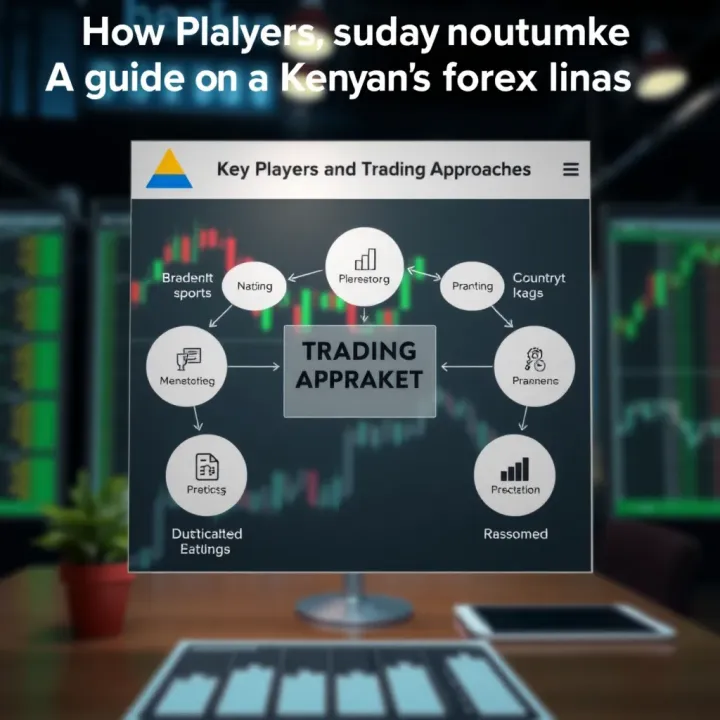
Major participants include banks, central banks like the Central Bank of Kenya (CBK), hedge funds, corporations, brokers, and retail traders. Banks provide most of the liquidity, setting exchange rates that smaller traders follow.
Kenyan traders typically use two main approaches:
Spot trading: Buying or selling currencies for immediate settlement.
Forex contracts for difference (CFDs): Speculating on price movements without owning actual currency.
Mobile trading platforms have become popular in Kenya, offering real-time charts, indicators, and access to both local and major currency pairs. Apps also support M-Pesa deposits and withdrawals, simplifying fund management.
It’s important to note that forex trading involves high risk. Sudden currency swings can cause losses, especially if using leverage—borrowing to increase trade size. That’s why education, practice through demo accounts, and sensible money management remain vital steps for Kenyan traders.
This foundation helps Kenyan investors to navigate forex markets pragmatically while leveraging digital tools tailored to local needs.
Grasping the fundamentals of forex trading is the first step for anyone looking to enter the currency market confidently. It helps you understand how the market functions and what exactly you are trading. Forex trading is not just about guessing which currency will go up or down; it involves knowing how currencies relate to each other, what affects their value, and how to respond to market shifts quickly.
Forex trading involves buying one currency while simultaneously selling another. It operates through currency pairs, where the first currency is called the base currency and the second the quote currency. For example, in the USD/KES pair, USD is the base and KES is the quote. If you buy USD/KES, you are buying US dollars against Kenyan shillings, expecting the USD to strengthen against the KES. The goal is to profit from changes in exchange rates caused by economic events, political news, or market sentiment.
The forex market runs 24 hours a day from Monday to Friday because it follows the timezone of global financial centres like London, New York, and Tokyo. Unlike stock exchanges, forex trading is mostly over-the-counter (OTC) — meaning transactions happen directly between participants via electronic networks rather than through a centralised exchange. Banks, brokers, corporations, and individual traders participate, providing ample liquidity and price movements you can trade on. This continuous flow means you can trade at times that suit your schedule, including after work hours.
Currency pairs come in three categories: majors, minors, and exotics. Majors are the most traded pairs globally, for example, EUR/USD, GBP/USD, and USD/JPY. These pairs usually have tight spreads due to high liquidity. Minors involve major currencies but exclude the US dollar, such as EUR/GBP. Exotics pair a major currency with one from an emerging economy, like USD/KES or USD/ZAR. For Kenyan traders, the USD/KES pair is crucial since it's directly related to local currency movements. Understanding these pairs helps traders focus on markets with predictable behaviour and manageable costs.
Knowing the basics of forex trading allows you to make informed decisions, reduces risks, and improves your chances of success in the dynamic forex environment. Don't jump straight into trading without a solid grasp of these essentials.
In summary, understanding what forex trading really involves, how the market functions around the clock, and the role of currency pairs sets the foundation for effective trading. Kenyan investors benefit from this knowledge by aligning their trades with practical market realities and local economic factors.
Grasping the key concepts and terminology in forex trading is essential for anyone looking to trade confidently and avoid costly mistakes. These terms are not just jargon; they are the building blocks that shape how trades are executed and profits or losses accumulate. Let’s explore the critical ideas every forex trader should understand.
A pip is the smallest price change in a currency pair and usually represents 0.0001 of the quoted price. For instance, if the EUR/USD moves from 1.1200 to 1.1201, that’s one pip. Pips help traders measure gains and losses precisely. Traders deal in lots, which are standard units of currency — a standard lot equals 100,000 units of the base currency. There are also mini (10,000 units) and micro lots (1,000 units), allowing flexibility for traders with different capital sizes.
Leverage enables a trader to control a larger position than their available capital. For example, a leverage of 1:100 means that with KSh 10,000, you can control a position worth KSh 1,000,000. While leverage boosts potential profits, it also increases risk. Many Kenyans get attracted to high leverage without fully understanding it, and this can lead to heavy losses.
When trading forex, two prices appear for every currency pair: the bid and the ask. The bid is the price a broker is willing to pay to buy the base currency, while the ask is the price at which the broker sells. The difference between these two prices is the spread.
For example, if USD/KES has a bid price of 110.20 and an ask price of 110.25, the spread is 0.05 KSh. This cost must be factored in because you start a trade at a slight loss equal to the spread. Tighter spreads mean lower trading costs, which matters a lot, especially for day traders or scalpers dealing with rapid trades.
Margin is the amount of money you need to open a position, essentially a security deposit on the trade. If you wish to buy $100,000 of EUR/USD with leverage, you might only need KSh 20,000 (depending on the broker’s margin requirement). The rest is effectively borrowed.
However, if the market moves against your position, your broker will issue a margin call to ask for more funds to maintain your trade. Failure to meet this call may lead to an automatic close of your positions to protect both the broker and you from further losses.
Understanding these terms and how they influence your trading capital, costs, and risks is key to becoming a disciplined trader. Whether you are trading on platforms like MetaTrader or local brokers, mastering these concepts will help you navigate forex markets more wisely.
By getting comfortable with pips, lots, leverage, bid/ask spreads, margin, and margin calls, you prepare yourself to trade more effectively. Remember, practice in a demo account first and always be cautious with leverage and margin — they can be a double-edged sword.
Understanding how to trade forex is key to becoming a successful trader. This section explains the practical steps involved, focusing on the process of opening a trading account in Kenya, the platforms commonly used, and how trades are executed. Each part ensures you know exactly what to expect when starting your forex journey.
To begin trading forex in Kenya, you must open an account with a licensed forex broker. Brokers regulated by the Capital Markets Authority (CMA) or reputable international brokers accessible from Kenya provide a secure environment for trading. The typical process involves submitting your identification documents, confirming your address, and sometimes providing proof of income due to anti-money laundering regulations. For instance, a Kenyan trader might submit a national ID or passport along with a utility bill via email or the broker’s online platform.
Depositing funds into your forex account is straightforward, with many brokers accepting M-Pesa, bank transfers, or even credit cards. Starting capital can vary, but some brokers allow funding accounts with as little as KSh 5,000, making forex accessible even for small investors.
Most Kenyan traders use platforms like MetaTrader 4 (MT4) and MetaTrader 5 (MT5), which are popular for their user-friendly interfaces and comprehensive charting tools. These platforms offer real-time price data, technical indicators, and automated trade capabilities through Expert Advisors (EAs). Another modern option is the web-based platform offered by brokers like FXTM or Exness, allowing traders to operate without installing software.
Mobile apps are crucial in Kenya where many rely on smartphones. Brokers providing apps compatible with Android and iOS enable on-the-go trading, notifications, and access to market news. This flexibility is vital given the fast-moving nature of forex markets.
Trading forex involves buying one currency and selling another simultaneously, known as trading currency pairs. For example, if you expect the US Dollar (USD) to strengthen against the Kenyan Shilling (KES), you would buy the USD/KES pair. Conversely, if you anticipate the Kenyan Shilling will appreciate, you would sell that pair.
Trades can be placed as market orders—executed immediately at the current price—or as pending orders, triggered when the price reaches a set level. For Kenyan traders, understanding the spread (the difference between bid and ask prices) is vital, as this affects profit margins.
Managing your trades carefully helps avoid unexpected losses and ensures that each move aligns with your overall trading strategy.
In summary, knowing how to open an account, choosing the right trading platform, and understanding how to buy and sell currency pairs are essential steps in forex trading. With these foundational skills, Kenyan traders can confidently enter the forex market and make informed decisions.
Understanding what drives currency prices helps traders make better decisions in the forex market. Several key factors shape these movements, some predictable and others less so. Kenya-based traders, in particular, should watch how global and local events affect currency pairs to spot trading opportunities or avoid risks.
Economic data releases, such as GDP growth rates, inflation figures, and employment numbers, have a direct effect on currency values. For instance, if Kenya’s inflation rate rises unexpectedly, the Kenyan shilling might weaken against the US dollar because inflation erodes purchasing power. Conversely, strong non-farm payroll numbers from the US typically strengthen the dollar.
News events also play a vital role. Announcements like trade deals, budget statements, or corporate earnings reports can cause abrupt price changes. Traders following the forex market need to track the economic calendar closely, especially around release times, since volatile swings can offer profit chances or cause losses if caught unprepared.
Central banks like the Central Bank of Kenya (CBK), the US Federal Reserve, or the European Central Bank influence currency prices through interest rate adjustments and monetary policy decisions. Raising interest rates usually attracts foreign investment, strengthening that currency. When CBK raised its base rate in 2023 to counter inflation, the shilling briefly gained against major currencies.
Monetary policy statements or unexpected moves can shift market sentiment instantly. For example, if the Federal Reserve signals tighter monetary policy, traders expect a stronger US dollar, impacting pairs involving the dollar. Kenyan traders should follow CBK releases and international central bank meetings for signals on price direction.
Political instability, elections, or international conflicts can influence forex prices drastically. For instance, unrest in a country often leads to its currency losing value due to fears of economic disruption. The 2022 Kenyan general elections saw increased shilling volatility as investors weighed the country’s stability.
Market sentiment—how traders feel about risks or global economic health—also directs price movements. If investors expect economic slowdowns or crises, they tend to move funds into "safe haven" currencies like the US dollar or Swiss franc, pushing those currencies up. Understanding the mood in the market helps traders anticipate possible price swings beyond fundamental data.
Forex price movements reflect a mix of economic facts, central bank policies, and the ever-changing mood of the global market. Staying updated with these factors enables Kenyan traders to navigate volatility with more confidence.
By keeping an eye on economic reports, central bank decisions, and geopolitical news, you can better understand why forex prices move the way they do. This knowledge is vital to anticipating trends and protecting your investments in a fast-moving market.
Forex trading offers exciting opportunities but involves significant risks that traders must understand before diving in. Being aware of these risks and how to manage them helps protect your capital and improve chances of consistent profits. This section focuses on common pitfalls, practical tools to manage risk, and the regulatory environment relevant to Kenyan traders.
Volatility is the biggest risk in forex trading. The currency market moves quickly, sometimes triggered by sudden news like political unrest or unexpected economic reports. For example, the Kenyan shilling can fluctuate sharply when there are changes in the Central Bank of Kenya’s monetary policy or during election seasons.
Leverage is another double-edged sword. Though it allows you to control large positions with a small deposit, it can magnify losses as well as gains. Imagine using 50:1 leverage and a 2% adverse move wiping out your entire trading account. This risk demands careful money management and sensible leverage use.
Liquidity risk is also worth noting. While major currency pairs like USD/EUR have high liquidity, exotic pairs involving African currencies may have wider spreads and less trading volume, which can increase trading costs and slippage.
Using stop loss and take profit orders helps control potential losses and lock in gains automatically, even when you can't watch the market constantly. A stop loss sets a point to exit if the trade moves against you, while take profit closes a trade when it hits a desired profit level.
For example, if you buy USD/KES at 110 with a stop loss at 108 and take profit at 112, your loss is capped if the shilling strengthens beyond 108, while your profit is secured once the price hits 112. Setting these orders based on technical analysis or economic events adds discipline and minimises emotional decisions.
Kenyan forex traders should ensure their brokers are regulated by the Capital Markets Authority (CMA) Kenya. The CMA’s oversight provides some protection against fraud and promotes fair trading environments. Using regulated brokers with clear client fund segregation and transparent pricing reduces the risk of scams.
Besides regulation, always confirm your broker has clear withdrawal procedures and good customer support. Also, regularly update your trading knowledge and avoid promises of unrealistic returns common with unregulated outfits.
Successful forex trading is less about chasing big wins and more about preserving your capital through smart risk management and choosing trustworthy brokers.
Understanding these risks and how to handle them makes forex trading a more calculated and viable activity rather than a gamble. Kenyan traders can build confidence by adopting practical risk controls and sticking to regulated trading platforms.
Learn how forex trading works in Kenya 🇰🇪, including currency basics, local regulations, top platforms, risks, and tips for success in the Kenyan market.
📈 Understand forex trading basics in Kenya: currency pairs, key players, forex platforms and tools, plus risks to help you trade confidently in local and global markets.
🌍 Learn how forex trading works—buy and sell currencies with confidence. Understand market players, risks, and strategies tailored for Kenyan traders interested in global currency trading.
📈 Understand how forex trading works with practical steps, Kenyan-specific rules, key currency pairs, top platforms, and safe payment options like M-Pesa. Start trading smart!
Based on 10 reviews