
Forex Trading in Kenya: A Beginner's Guide
Discover how to start forex trading in Kenya 🇰🇪 with tips on brokers, risk management, and local regulations. Grow your investment knowledge and trade smartly! 📈
Edited By
Sophie Mitchell
Forex trading involves buying and selling currencies to make a profit. For anyone stepping into this market—whether you’re a seasoned investor or a fresh trader in Nairobi or Mombasa—it’s essential to grasp the key terms used in forex. Understanding these terms helps you read the market better and take informed decisions that protect your capital.
At its core, forex operates around currency pairs, such as USD/KES (US Dollar against Kenyan Shilling) or EUR/USD (Euro versus US Dollar). Traders speculate on whether the base currency (first in the pair) will strengthen or weaken against the counter currency. For example, if you believe the US Dollar will rise against the Kenyan Shilling, you buy USD/KES; if wrong, you risk losing money.
Besides currency pairs, knowing terms related to brokers is vital. Brokers act as intermediaries between you and the forex market. A good broker should offer fair spreads (difference between buying and selling prices) and reliable execution of trades. In Kenya, brokers licensed by the Capital Markets Authority (CMA) offer added trustworthiness.
Risk management terms like "stop-loss" and "take-profit" come into play when you want to control how much you lose or gain at certain price points. For instance, setting a stop-loss to sell USD/KES if it falls by 2% protects your investment from bigger downturns.
Then there are terms describing trading styles, such as scalping (quick trades lasting minutes), day trading (holding a position within a day), or swing trading (holding for days or weeks). Each style suits different risk appetites and time availability.
To trade well, focus on mastering these basic terms before jumping into complex strategies. Clarity on terminology reduces costly mistakes and builds confidence.
Here are some core terms every Kenyan forex trader should know:
Pip: The smallest price move in a currency pair. For example, USD/KES moving from 108.50 to 108.51 equals one pip.
Leverage: Using borrowed funds to increase trading size. While it can boost profits, it also magnifies losses.
Spread: The difference between buy (ask) and sell (bid) price set by the broker.
Margin: The minimum amount you need to open a trade using leverage.
Lot: The size or volume of a trade, often starting with micro lots (1,000 units) in retail forex.
Getting these terms clear helps you understand insights from charts, news, or your broker’s platform. With a strong grasp of these basics, you’re better placed to navigate Kenya’s growing forex market with less guesswork and more control.
Understanding forex trading basics gives you a solid footing before stepping into the market. Without this knowledge, you risk making costly mistakes that can drain your capital quickly. For instance, knowing how currency pairs work enables you to predict how a move in one currency can affect your trades.
Forex trading involves buying one currency and selling another simultaneously. It's the biggest financial market globally, with daily trades worth over $6 trillion. Imagine exchanging Kenyan shillings for US dollars because you expect the dollar to strengthen; that's forex trading at its core. This market runs 24 hours a day during weekdays, allowing traders to respond quickly to global economic events.
Unlike stock markets, forex doesn't have a central exchange. Instead, it runs as an over-the-counter market where banks, brokers, and individual traders transact through electronic platforms. Transactions occur in pairs, such as USD/KES or EUR/USD, showing how much of the second currency you need to buy one unit of the first. Prices change constantly based on supply and demand, economic news, and geopolitical events.
For example, if the US Federal Reserve raises interest rates, the US dollar might gain value since higher rates attract investors seeking better returns. Traders who understand this can capitalise on such moves.
The forex market is divided into four main trading sessions: Sydney, Tokyo, London, and New York. Each has unique characteristics and volatility patterns. Kenyan traders often focus on the London and New York sessions because these overlap during certain hours, leading to higher trade volumes and more opportunities.
Sydney Session: Opens before Kenyan morning; less volatile but good for beginners.
Tokyo Session: Matches well with Nairobi’s morning hours; influenced by Asian markets.
London Session: Coincides with Kenya’s afternoon; highest volatility and liquidity.
New York Session: Starts late afternoon in Kenya; overlaps with London session, boosting market activity.
Knowing these sessions helps you plan trades better – for example, avoiding low liquidity periods which might lead to wide price spreads and unexpected losses.
In summary, grasping the forex basics—what it is, how it moves, and when to trade—builds your confidence and sharpens decision-making. That foundation is crucial before exploring complex strategies or risk management techniques that come next in this guide.
Understanding essential terms in forex trading is the foundation for any Kenyan trader aiming to navigate this market confidently. These terms provide you with the tools to decode price movements, communicate effectively with brokers, and manage trades strategically. Without grasping these basics, trading decisions may become guesswork rather than informed moves.
Major currency pairs are the most traded pairs worldwide and always include the US dollar (USD). Examples include EUR/USD (Euro vs US dollar), GBP/USD (British pound vs US dollar), and USD/JPY (US dollar vs Japanese yen). These pairs enjoy high liquidity, tighter spreads, and generally lower trading costs — aspects crucial for traders wanting to enter or exit trades easily.
For Kenyan traders, knowing major pairs is practical because popular platforms often focus on these. They reflect major economies' health, making them relatively stable compared to others. For instance, when the US economy ticks, it quickly shows in USD-based major pairs.
Minor pairs exclude the US dollar but still link strong currencies like the Euro, British pound, and Japanese yen. Examples are EUR/GBP and GBP/JPY. These pairs usually have less liquidity than majors but still attract interest due to their volatility and trading opportunities.
They can appeal to savvy traders looking for market moves beyond the usual USD focus. For instance, during a pound sterling event, GBP/JPY can show sharp fluctuations, which traders might use for short-term gains. However, wider spreads mean transaction costs can be higher, so factor that in your trading plan.
Exotic pairs combine a major currency with one from an emerging or smaller economy, such as USD/ZAR (US dollar vs South African rand) or EUR/TRY (Euro vs Turkish lira). These are less liquid and often have wider spreads, but they offer chances for larger price swings.
In Kenya, exotic pairs can be attractive but risky. Take USD/ZAR, for example—its movements may reflect regional economic trends affecting the wider East African Community. However, traders must be cautious as price volatility can lead to sudden losses if not managed properly.
A pip is the smallest price movement in a currency pair, typically 0.0001 for most pairs like EUR/USD. Understanding pips helps you measure profits or losses accurately. For example, if EUR/USD moves from 1.1050 to 1.1060, that’s a 10-pip change.
Lots are units of currency you trade. A standard lot equals 100,000 units of the base currency, but smaller sizes like mini (10,000 units) and micro lots (1,000 units) make forex accessible to all traders. For instance, trading one mini lot on USD/KES means controlling 10,000 US dollars worth of Kenyan shillings.
Leverage is borrowed capital your broker provides to multiply your trade size, allowing you to open positions larger than your actual capital. While leverage can amplify profits, it also increases risks. For example, with 1:50 leverage, KSh 10,000 can control a KSh 500,000 position. Kenyan brokers typically offer leverage between 1:10 and 1:100.
The bid price is the price a broker is willing to pay for a currency, while the ask price is what they sell it for. The difference between them is the spread, which is effectively the broker’s fee.
For example, if USD/KES bid is 110.50 and ask is 110.55, the spread is 0.05 KSh. Tight spreads matter because smaller costs improve your chance of profit, especially for frequent traders. Kenyan traders should compare spreads across brokers before choosing where to trade.
Knowing these terms helps avoid surprises and design better strategies suited to your risk appetite and trading goals.
In short, mastering currency pairs, understanding pip value, lot sizes, leverage, and the bid-ask spread equips you with a solid ground in forex trading. It turns unfamiliar charts into practical tools to grow your investments wisely.
Understanding common trading strategies and their related terms is vital for anyone serious about forex trading. These concepts form the backbone of how traders make decisions and manage their trades in a market that moves fast and can be quite unpredictable. Knowing what it means to go long or short, how to set stop loss and take profit orders, and managing margin can protect your capital while improving your chances of success.
A long position means you are buying a currency pair because you expect the base currency to strengthen against the quote currency. For example, if you believe the US dollar will rise against the Kenyan shilling, you'd go long on the USD/KES pair—buying it at today’s price hoping to sell higher later. On the flip side, a short position involves selling a currency pair first, aiming to buy it back at a lower price. This can happen if you expect the base currency to weaken. For instance, shorting GBP/USD assumes the British pound will lose value against the US dollar.
Understanding these positions is crucial because forex markets allow you to profit whether prices go up or down, unlike traditional stock markets where profit mainly comes from rising prices.
To manage risk, traders use stop loss orders to automatically close a trade if the market moves against them beyond a certain point. Take profit orders do the opposite—they lock in gains by closing the trade once the price hits a target level. For instance, suppose you buy EUR/USD at 1.1000 expecting it to rise. You could set a stop loss at 1.0950 to limit losses if the market falls and a take profit at 1.1100 to secure profits if it reaches your goal.
Using these orders is essential. They help you stick to your trading plan without emotional interference. Without them, many traders risk losing more than they intended.
Margin is the amount of money a trader puts up to open a position, a fraction of the total trade size. For example, a leverage of 100:1 means you only need 1% of the trade’s value as margin. While margin allows you to control bigger trades with less capital, it also magnifies risk. Quick price swings can wipe out your margin and lead to a margin call.
A margin call happens when your account equity falls below the broker’s required minimum. The broker may then ask you to add more funds or close some positions to reduce risk. Kenyan traders should be especially cautious about margin because volatile currency movements can trigger margin calls quickly, potentially resulting in significant losses.
Managing these common strategies thoughtfully helps turn forex trading into a disciplined activity rather than a gamble. Clear understanding and practical use of positions, orders, and margin build a solid foundation for long-term success.
In summary, grasping these key terms and how they interact gives you control over your trades. Focus on careful planning: decide your position direction, set stop loss and take profit levels, and monitor your margin closely. These steps are critical to navigating the forex market effectively.
Managing risks in forex trading is more than just a safety net—it's a key part of surviving and thriving in this fast-paced market. The forex market moves quickly, and unpredictable shifts can drain your capital if you aren’t careful. Kenyan traders especially benefit from a disciplined risk management approach that helps preserve capital while aiming for steady profit growth.
Volatility refers to how much a currency pair's price changes over a short time. When there’s high volatility, prices can jump or drop sharply within minutes. For example, during Kenya’s political election season, the Kenyan shilling (KES) often sees increased volatility against the US dollar (USD). Traders find opportunities to make good profits but also face bigger chances for losses. Low volatility periods, like during national holidays, might give fewer trading chances but tend to be less risky.
Understanding volatility helps traders decide when to enter or exit trades and set stop-loss levels that protect them from unexpected swings. High volatility may require tighter monitoring and faster decision-making, while low volatility might call for patience and conservative trading.
The risk-reward ratio compares how much you’re willing to lose to how much you expect to gain. A ratio of 1:3 is common, meaning for every KS00 risked, the trader aims to earn at least KS00. This ratio keeps trades worthwhile over time.
For instance, if a trader buys EUR/USD at 1.1000 with a stop loss at 1.0950 (risking 50 pips), they may set their take profit target at 1.1150 to aim for a 150 pips gain. This ensures the trader doesn't blindly chase small profits while ignoring bigger losses. Consistently applying risk-reward ratios helps Kenyan traders avoid wiping out their accounts due to reckless risks.
Slippage happens when a trade executes at a different price than expected. This can occur during sudden market moves or when liquidity is thin, like during early morning hours or major news releases.
Imagine you place a buy order for USD/JPY at 110.00, but because of market volatility, your order fills at 110.05. That 5-pip slippage may seem small but can impact profits, especially when using large lot sizes. For Kenyan traders using mobile platforms like MetaTrader or local brokers, recognising slippage helps in selecting brokers with better execution speeds and planning trades around times with better liquidity.
Managing risks through understanding volatility, setting good risk-reward ratios, and planning for slippage helps traders protect their capital and trade more confidently. It’s not about avoiding risks completely but controlling them smartly.
Effective risk management makes a real difference in forex trading outcomes. With practice, Kenyan traders learn how to balance risk and reward tailored to their goals and market conditions.
Forex brokers and trading platforms serve as the backbone of forex trading, providing the essential means through which traders access the market. Simply put, brokers act as intermediaries connecting traders to liquidity providers — banks and financial institutions — while trading platforms offer the tools and interface needed to place trades and analyse market movements. Their roles influence everything from trade execution speed to the availability of order types and risk management options.
Forex brokers facilitate buying and selling of currency pairs on behalf of traders. In Kenya, many brokers operate online, allowing investors to trade from anywhere using internet-enabled devices. Brokers generally earn through spreads — the difference between bid and ask prices — or commissions. They either work as market makers, setting prices themselves, or use an Electronic Communication Network (ECN) to offer direct market access. For example, a Kenyan trader using a broker with ECN services can expect tighter spreads and faster execution, which matter most in volatile markets.
Trustworthiness is key. Licensed brokers regulated by authorities like the Capital Markets Authority (CMA) Kenya are safer bets. They must follow rules that protect client funds and promote transparency.
Orders let traders control when and how trades happen. Most brokers offer several types including:
Market orders: Buy or sell immediately at the current price
Limit orders: Set a price level where the trade should activate
Stop orders: Trade executes only when price hits a specific level, often used to limit losses
Stop-limit orders: A hybrid that triggers a limit order after a stop price is reached
For instance, a stop-loss order helps Kenyan traders protect investments when rand/ksh hits a certain threshold, preventing bigger losses. Effective use of such orders demands familiarity, which brokers usually help with through tutorials.
Kenyan traders favour platforms like MetaTrader 4 (MT4) and MetaTrader 5 (MT5) due to their user-friendly interface and powerful charting tools. These platforms provide real-time price feeds, automated trading capabilities, and extensive analysis features. Others like cTrader offer advanced order management and an alternative experience.
Local brokers often integrate mobile apps with M-Pesa payment options, enabling smooth deposit and withdrawal processes. For example, a trader might fund their forex account directly via M-Pesa on platforms offered by brokers such as HotForex Kenya or FXPesa, maximising convenience.
Choosing the right broker and trading platform is as important as picking your trading strategy. The efficiency, reliability, and features they offer can impact your trading success significantly.
With brokers and platforms playing this vital role, Kenyan forex traders must evaluate them carefully. Look for CMA licencing, competitive spreads, available order types, and smooth deposit methods to get a good start.
Discover how to start forex trading in Kenya 🇰🇪 with tips on brokers, risk management, and local regulations. Grow your investment knowledge and trade smartly! 📈
📈 Learn how to start forex trading in Kenya with easy steps on setting up accounts, picking platforms, managing risks, and making smart trades for steady KSh earnings.
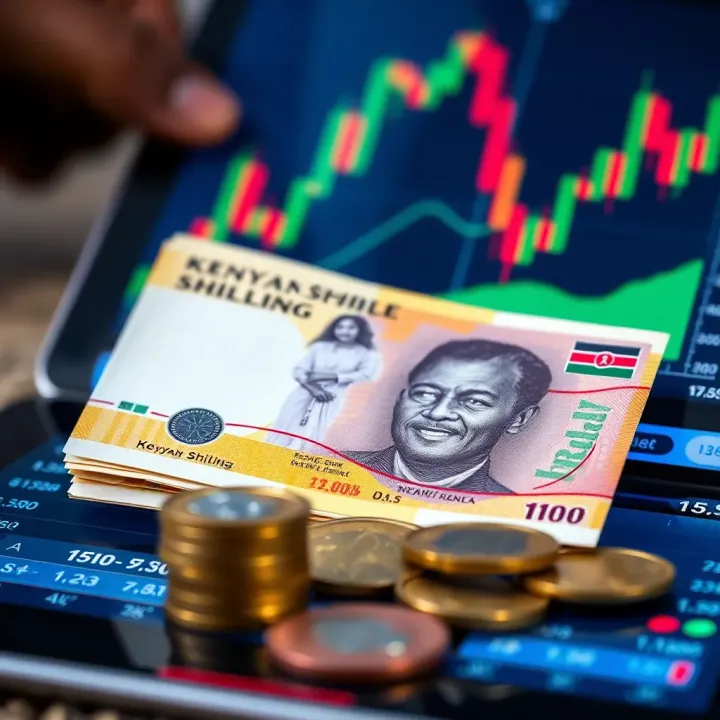
🌍 Want to start forex trading in Kenya? Learn local regulations, risk tips, and how to use tools like M-Pesa and KSh effectively for smart trading.
📈 Learn how forex trading in Kenya works, know the risks, key players, and how to start safely. Get insights on regulations and practical tips for currency trading.
Based on 11 reviews