

Top Forex Trading Books for Kenyan Traders
📚 Master forex trading in Kenya with top books on technical analysis, risk management, and trading psychology to boost your skills and confidence.
Edited By
James Cartwright
Forex trading, or currency trading, is an increasingly popular investment avenue among Kenyans looking to diversify income streams. The forex market operates globally, with currencies traded 24 hours daily across centres including London, New York, and Tokyo. Kenyan traders can tap into this market but need a clear understanding of how to start trading effectively while navigating local realities.
Starting forex trading in Kenya requires grasping basic concepts, the trading platforms available, and understanding the role of mobile money services like M-Pesa for deposits and withdrawals. Working within the financial regulations set by the Capital Markets Authority (CMA) and Central Bank of Kenya ensures your trading activities are safe and legal.
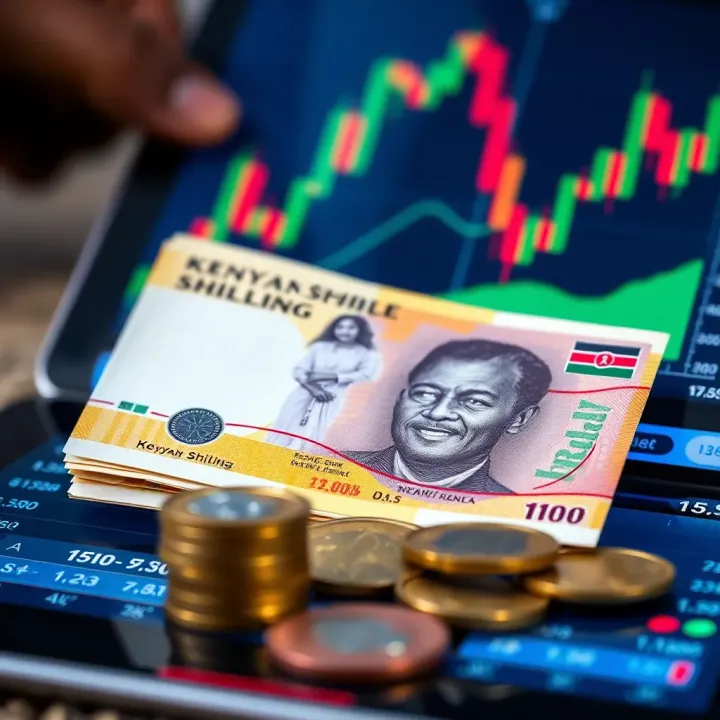
To begin, you need a good internet connection, a computer or smartphone, and an account with a reputable forex broker offering access to the currency pairs you want to trade, such as USD/KES or EUR/USD. Brokers registered with CMA are preferable to help safeguard your investments.
Forex trading carries risks; managing your capital and learning risk control measures will help protect against big losses.
A practical approach starts with a demo account to practise without real money. From there, you can fund your live account using common methods in Kenya like M-Pesa, bank transfers, or mobile banking apps of local institutions such as Equity Bank, KCB, or Co-operative Bank.
Understanding leverage, spreads, and market analysis forms the foundation of sound trading. Regularly monitoring global news and local economic data will help you make informed decisions, especially when factors like Kenya's forex reserves or political events impact the KSh exchange rate.
In the following sections, we will break down the essentials: key terms, choosing brokers, using M-Pesa in trading, managing risks, and strategies tailored to Kenyan traders. This guide aims to build your confidence and knowledge to trade forex wisely and sustainably within the Kenyan context.
Forex trading is all about exchanging one currency for another at a current or agreed price. In simple terms, you’re buying one currency while selling another simultaneously. For many Kenyans, this market offers a chance to diversify income streams beyond traditional jobs or businesses like boda boda riding or running a duka. Understanding the basics is key before you start trading to avoid costly mistakes.
Forex trading, short for foreign exchange trading, involves buying and selling currencies from around the world. Unlike the stock market, forex operates 24 hours a day, five days a week, allowing traders to respond quickly to global events. For example, a trader might buy US dollars with Kenyan shillings anticipating that the dollar will strengthen against the shilling, then sell back later at a profit.
Currencies in forex are traded in pairs. A currency pair shows how much one unit of the base currency is worth in the quote currency. One common pair for Kenyan traders is USD/KES, meaning how many Kenyan shillings it takes to buy one US dollar. When you trade forex, you’re always dealing with two currencies. If you believe the dollar will gain strength against the shilling, you buy the USD/KES pair; if you think the shilling will appreciate, you sell it.
This pair system is important because the forex market is all about comparing currencies’ value relative to each other, not absolute terms. Traders need to understand which pairs they want to focus on, often those related to the Kenyan economy, such as USD/KES or EUR/KES.
The forex market opens first in Sydney, then moves through Tokyo, London, and finally New York before closing for the weekend. For Kenyan traders (EAT, UTC+3), the most active hours usually fall between 3 pm and midnight, covering the London and New York sessions.
This timing matters because market activity affects liquidity and volatility—higher activity means more opportunities to enter or exit trades at better prices. For instance, news from the US or Europe during their market hours often moves the USD/KES or EUR/KES pairs, which Kenyan traders can capitalise on.
A pip is the smallest price change a currency pair can make, usually the fourth decimal place for most pairs. For example, if USD/KES moves from 108.7800 to 108.7900, that is a 1-pip movement.
Lots define the size of each trade. A standard lot is 100,000 units of the base currency, but many brokers offer mini or micro lots, allowing smaller investments suited to Kenyan traders starting with limited capital.
Leverage means borrowing funds from a broker to increase trading capacity. For instance, a 1:100 leverage means with KSh 10,000, you can control KSh 1,000,000 in the market. But this carries risk, as losses also get magnified.
Margin is the amount of money you must have in your account to open a leveraged position. It acts as a security deposit withheld by the broker during the trade.
Every currency pair has two prices: the bid (the price at which you can sell) and the ask (the price at which you can buy). The difference between them is called the spread.
For example, if the USD/KES bid is 108.7500 and the ask is 108.7700, the spread is 20 pips. Traders pay the spread when entering a trade, so choosing brokers with tight spreads helps reduce trading costs.

Getting familiar with these basics helps you trade more confidently and avoid surprises in the fast-moving forex market.
Understanding these core concepts sets a solid foundation for Kenyan forex traders. It prepares you for the next steps like choosing a broker, funding your account, and designing a trading strategy tailored to your risk appetite and lifestyle.
Before jumping into forex trading, getting your setup right in Kenya is vital. This means choosing the right broker, opening an account, and picking a trading platform that fits your needs and environment. Each step affects your trading experience and potential success.
The first box you need to tick is licensing and regulation by CMA Kenya. The Capital Markets Authority (CMA) governs forex brokers operating in Kenya to protect traders from fraud and malpractice. Trading with a CMA-regulated broker means your funds have an added layer of safety, plus dispute resolution mechanisms are available should issues arise. Without this, you risk losing funds to unscrupulous operators.
Next is broker fees and spreads. Brokers charge fees in different ways — some take commissions, others mark up the spread, which is the difference between buying and selling price. Choosing a broker with competitive spreads matters because high costs eat into your profits. For instance, brokers might offer spreads as low as 1 pip or as high as 5 pips depending on the currency pair and broker type. Always compare these before signing up.
Deposit and withdrawal options including M-Pesa play a big role. Many Kenyan traders prefer deposits via M-Pesa because it’s fast, secure, and widely accessible. Verify whether the broker supports M-Pesa or other local payment options like bank transfers or Airtel Money. This not only simplifies funding your account but also eases withdrawals. Some brokers might delay withdrawals or impose hidden charges if they don’t have local payment options.
Forex brokers commonly provide different account types such as standard, mini, and VIP, each offering varying leverage, spreads, and capital requirements. Beginners in Kenya with limited funds often start with a mini account requiring a lower minimum deposit. Understanding which suits your budget and trading style is key.
Using local payment methods like M-Pesa or bank transfers makes sense not just for convenience but also because it cuts cross-border fees. For example, funding your account via M-Pesa is instant, while international wire transfers may take days and incur extra charges. Staying within local payment networks reduces exposure to delays and lost funds.
Regarding minimum deposits, brokers differ widely — some ask as low as KSh 1,000, others upwards of KSh 50,000 or more. Look for brokers with deposits that fit your budget; starting small helps you manage risk as you learn. Funding can often be done via mobile money apps directly from your phone, making the process straightforward even if you don’t have a bank account.
Most Kenyan traders use popular platforms like MetaTrader 4 (MT4) and MetaTrader 5 (MT5). These platforms allow easy order execution, chart analysis, and support automated trading bots. MT4 remains popular due to its simplicity, while MT5 offers extra features like more timeframes and trading instruments. Choosing a platform with local language support or good customer service is a plus.
Mobile trading and internet considerations are crucial. Many Kenyan traders rely on mobile data and smartphones rather than desktops. Ensure your platform’s mobile version is stable and lightweight enough to handle the often patchy internet connections. Using a trading platform that can quickly execute orders despite network hiccups is essential to avoid missed opportunities or slippage.
Selecting the right broker and platform, combined with local payment and account options, lays the groundwork for successful forex trading in Kenya. Without this foundation, even the best strategy can falter.
Setting up properly also means you save time and avoid costly mistakes. Take time to research, test with demo accounts, and confirm that your chosen broker fits local realities like payment preferences and regulatory protections.
Developing a solid forex trading strategy is essential for navigating Kenya's forex market with confidence. It helps you plan trades methodically rather than acting on guesswork or emotions. A clear strategy lets you set realistic goals, identify entry and exit points, manage risk, and adapt to changing market conditions. Think of it as your roadmap to avoid costly mistakes and improve chances of consistent profits.
Technical analysis involves studying price charts, identifying trends, and using indicators to predict future movements. For example, by spotting an uptrend where prices consistently make higher highs and lows, you might decide to buy Kenyan shilling pairs early before they rise. Common indicators like the moving average or Relative Strength Index (RSI) help confirm these trends or warn of reversals.
Candlestick patterns also play a key role. Kenyan traders often use these to read market sentiment quickly; a bullish engulfing pattern, for instance, signals strong buying pressure and potential upward shifts. These patterns provide immediate visual cues, helping you decide whether to enter or exit a trade without relying solely on numbers.
Economic news frequently moves currency prices. Events like Kenya’s Central Bank interest rate announcements or inflation reports can cause quick sharp moves in forex pairs involving the Kenyan shilling. Keeping an eye on global news such as US Federal Reserve decisions also matters since forex is a worldwide market.
Using Kenya’s economic data effectively means understanding its impact on the shilling. If GDP growth slows or political uncertainty rises, the shilling may weaken against other currencies. By following reports from institutions like the Kenya National Bureau of Statistics or the Central Bank of Kenya, you can anticipate currency swings and avoid surprises.
In forex, styles differ mainly by how long you hold trades. Scalping involves making several quick trades targeting small price moves — suitable if you can monitor markets closely. Day trading means opening and closing positions within the same day, balancing work and active trading hours in Nairobi’s timezone.
Swing trading holds positions for days or weeks, capturing broader market shifts. This style fits those with limited daily time but patience to ride trends.
Matching your trading style to your available time and risk appetite is key. If you work a 9–5 job, swing trading might suit you better than scalping, which demands constant attention. Meanwhile, aggressive traders who can take larger risks might prefer day trading to exploit rapid moves.
A thoughtful trading strategy blends technical tools, economic insights, and personal habits to turn forex trading into a disciplined activity rather than guesswork.
Managing risks in forex trading is vital for protecting your capital and ensuring long-term success. Kenyan traders, in particular, must understand risk control because the forex market involves rapid price changes that can wipe out investments quickly. By managing risks wisely, you avoid significant losses and maintain steady growth in your trading account.
Leverage allows you to control a large trading position using a small amount of your own money. For example, with 1:100 leverage, KSh 10,000 can control a position worth KSh 1,000,000. While this magnifies profits, it equally multiplies losses. Many new traders get tempted by high leverage but end up losing more than their deposit. In Kenya, brokers often advertise high leverage, but using it irresponsibly can lead to fast depletion of your account. It's safer to start with lower leverage, such as 1:10 or 1:20, until you master risk management.
Stop-loss and take-profit orders help you manage your downside and lock in gains without constantly watching the market. A stop-loss order automatically closes your position when the price reaches a certain level, limiting your loss. For example, if you buy USD/KES at 110 and set a stop-loss at 108, the trade closes if the price drops to 108, capping your loss. Take-profit orders close the position once your target profit is met. These tools remove emotion from trading, ensuring you follow your plan even if the market is volatile.
Determining position sizes is a key part of risk control. Decide how much of your account you are willing to risk per trade—commonly 1-2% is recommended. For instance, with an account of KSh 100,000, risking 1% means you risk KSh 1,000 on any trade. Knowing your stop-loss distance, you calculate the appropriate lot size so that the maximum loss does not exceed KSh 1,000. This keeps your losses manageable and prevents blowing up your account.
Avoiding emotional trading is also crucial for capital preservation. Many traders make impulsive decisions out of fear or greed, such as adding to losing positions or closing winning trades too soon. In Kenya, where market access may be irregular due to internet or power issues, emotions can run high. Developing discipline through a trading plan and sticking to it helps control emotions. Keeping records and reviewing past trades also highlights emotional mistakes, helping improve future decisions.
Effective risk management doesn’t just protect your money; it also builds confidence and teaches you to trade sensibly over time.
Managing risks confidently makes a huge difference in forex trading outcomes. Kenyan traders stand to gain more by combining practical tools like stop-loss orders with smart capital management and emotional discipline.
Forex trading offers exciting opportunities, but it’s crucial to approach it with well-grounded strategies, especially in Kenya’s unique trading environment. These practical tips help Kenyan traders navigate the market safely and efficiently, making the most of local resources like M-Pesa and adapting to Kenyan trading realities.
Opening a demo account is one of the smartest moves for anyone new to forex trading. A demo account lets you trade with virtual money, which means you can explore the market without risking your hard-earned cash. This practice account simulates real market conditions, helping you get used to platforms like MetaTrader 4 or 5, test trading strategies, and understand how currency pairs move.
For example, you might practise trading the USD/KES pair during Kenyan market hours without exposing yourself to actual losses. Many brokers regulated by the Capital Markets Authority (CMA) Kenya offer demo accounts free of charge. Use this time to learn how to set stop-loss orders or how leverage affects your trades before moving on to live trading.
The Capital Markets Authority of Kenya provides training programmes designed to boost financial literacy and responsible trading. These often cover forex basics, risk management, and regulation compliance. Local universities and training centres also run courses tailored to Kenyan traders, sometimes partnering with brokers or financial institutions. Such training gives practical knowledge relevant to the Kenyan market, including how to use popular e-payment methods like M-Pesa and how Kenyan economic news influences forex trends.
Besides formal training, engaging with online forums and local trading communities can offer valuable insights and peer support. Platforms like Forex Club Kenya on Facebook or WhatsApp groups allow members to share tips, signal updates, and experiences. These communities help you stay updated on market changes, especially around Kenya’s economic announcements or global events impacting the KSh.
That said, be cautious about unverified signals or advice—always cross-check with trusted sources. Learning from others’ successes and mistakes accelerates your growth as a trader while building a supportive network.
Keeping detailed records of your trades is essential for improvement. A simple spreadsheet tracking your entry and exit points, trade rationale, profits, and losses can reveal patterns over time. For instance, you may notice that you perform better trading in the afternoon Kenyan time or find certain currency pairs more predictable for your strategy.
Regularly reviewing your trades helps avoid repeating mistakes and refines your approach. It also supports disciplined trading by keeping emotions in check, preventing impulsive decisions driven by fear or greed. Some traders even maintain a journal noting market conditions and personal feelings during trades, which can pinpoint behavioural triggers affecting performance.
Smart Kenyan forex traders use demo accounts, local training, community knowledge, and strict record-keeping to build skills steadily and manage risks responsibly.
📚 Master forex trading in Kenya with top books on technical analysis, risk management, and trading psychology to boost your skills and confidence.
📱 Thinking of forex trading in Kenya? Discover top apps, learn features, security tips, and find the best fit for safe, smooth trading journeys today!

Explore top forex trading companies in Kenya 🇰🇪, learn how the market works, choose the right broker, and get tips for safe, smart trading 💹.
Find the best forex trading platform in Kenya 🇰🇪 with our guide on top options, key features, regulations, and tips to trade safely and efficiently 📈
Based on 11 reviews