

How to Start Forex Trading for Beginners in Kenya
Ready to start forex trading in Kenya? Learn basics, pick trusted platforms, manage risks, and trade confidently with practical tips tailored for Kenyan beginners 💹
Edited By
Henry Foster
Forex trading offers a way to engage directly with the global currency markets. For many Kenyans, forex trading is not just a hobby but a potential source of additional income. However, it’s vital to understand how this market works before you get started.
At its core, forex trading involves buying one currency and selling another simultaneously. This creates pairs like USD/KES or EUR/USD. The goal is to benefit from changes in the exchange rates between these currencies.
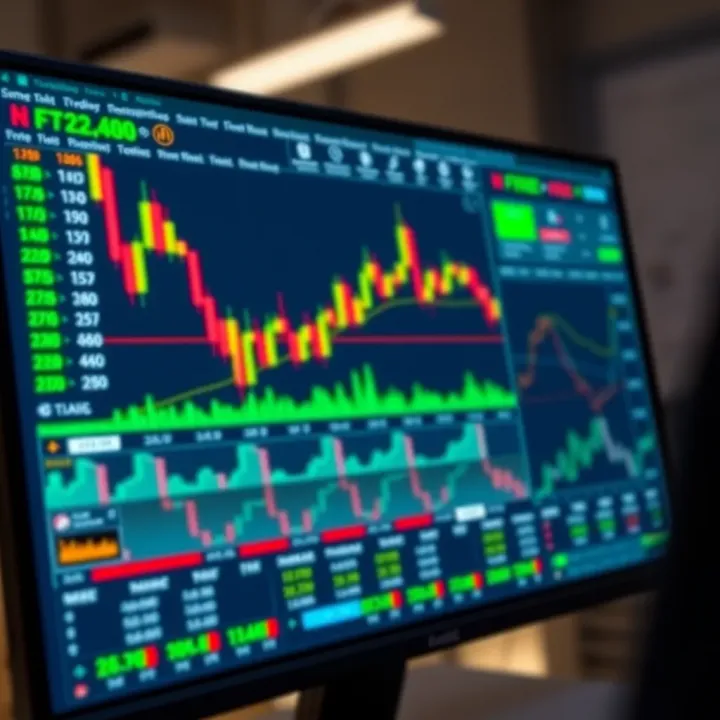
Kenya sees a growing number of retail traders exploring forex due to easy access through platforms like MetaTrader and brokers registered with the Capital Markets Authority (CMA). Still, beginners must grasp essential concepts such as currency pairs, pips, leverage, and spreads to trade wisely.
Remember: Forex trading carries risk. Losses can exceed deposits if you don’t manage your trades carefully.
Some fundamental terms to know:
Currency Pair: The two currencies traded against each other (e.g., USD/KES).
Pip: The smallest price change a currency pair can make, often representing 0.0001 of the currency value.
Leverage: A tool that allows you to control larger positions with a smaller capital, but can amplify losses.
Spread: The difference between the buying (ask) and selling (bid) price in a currency pair.
Practical trading requires a reliable platform, access to real-time price data, and a solid strategy. Kenyans often use M-Pesa or bank transfers to fund their trading accounts, making the process quite straightforward.
As a beginner, focus on building your knowledge and starting with a demo account to practise without real risk. This approach reduces mistakes and sharpens your skills. Over time, you can move to live trading equipped with a risk management plan to protect your investments.
In the following sections, we’ll cover how the forex market operates daily, the tools you need, risk management strategies, and the common pitfalls to avoid while trading in Kenya.
Grasping the basics of forex trading is the first step to becoming a confident trader. This foundational knowledge helps you understand how currency markets operate and what influences price movements, which is vital before putting your money on the line. For example, knowing how demand and supply affect the Kenya shilling against the US dollar can guide your trading decisions.
Forex trading, often called foreign exchange trading, involves buying and selling currencies on a global market. The forex market is the largest financial market worldwide, with over $6 trillion changing hands daily. It works round the clock, connecting buyers and sellers, from central banks to individual traders. In Kenya, forex trading is attracting growing interest because it offers a chance to profit from currency movements beyond traditional savings or investments.
Major currency pairs include USD/EUR, USD/JPY, GBP/USD, and USD/CHF. For Kenyan traders, pairs involving the US dollar (USD) and Kenyan shilling (KES), like USD/KES, are particularly relevant due to the shilling's impact on import prices and inflation. Traders also watch pairs like EUR/USD since the Eurozone affects trade dynamics with Kenya. Understanding these pairs helps you focus on currencies with good liquidity and market activity.
Unlike stock markets which deal with company shares, forex trading focuses purely on currency values, influenced by economic factors, geopolitical events, and central bank decisions. Forex has higher liquidity, meaning trades are fast and often cheaper in terms of spreads and commissions. Plus, forex operates 24 hours on weekdays, offering more flexibility compared to stock exchanges that have set hours. This makes it attractive for active traders in Kenya juggling other commitments.
The forex market runs 24 hours a day, five days a week, opening in Sydney, then moving clockwise to Tokyo, London, and New York. Kenyan traders particularly benefit during the London and New York sessions due to overlapping activity, providing high liquidity and tighter spreads. High liquidity means you can enter or exit trades quickly without significant price changes, which is important for reducing trading costs.
Banks act as market makers, providing currency quotes and facilitating large transactions. Brokers connect retail traders to these markets, offering platforms and leverage to trade with smaller capital. Individual traders in Kenya use brokers regulated either locally or internationally to access the market conveniently. Knowing the roles helps you pick reliable brokers and understand who you’re trading against.
Currency prices change mainly due to economic data releases, political events, interest rate decisions, and market sentiment. For example, if Kenya's inflation rises, the Central Bank of Kenya (CBK) might adjust rates, impacting the KES value. News about trade deals or political stability also affects prices. Understanding these causes helps you anticipate movements rather than reacting blindly, crucial for managing risks and maximising profits.
Forex trading is not a guessing game; it’s about understanding how the global economic and political landscape influences currency values. Starting with solid basics reduces costly mistakes.
Setting up a forex trading account is a foundational step for anyone serious about entering the forex market. It’s not just about creating an account but about choosing the right broker, understanding how to fund your account, and selecting the best account type for your trading goals. A well-set account ensures you have access to the tools and features needed to trade confidently and effectively.
Regulation is a vital factor when picking a broker, as it safeguards your funds and trading environment. Kenyan traders should look out for brokers regulated by international bodies such as the Financial Conduct Authority (FCA) or the Cyprus Securities and Exchange Commission (CySEC), as well as those authorised by the Capital Markets Authority (CMA) Kenya. For example, CMA-regulated brokers follow strict rules on client fund protection and transparency, adding a layer of trustworthiness.
Trading with unregulated brokers can expose you to scams or unfair practices. That’s why confirming a broker’s licence status on the CMA or similar regulators’ websites is a practical first step.
Spreads and commissions affect how much you pay per trade, so these costs can eat into your profits if not managed properly. Brokers offer fixed or variable spreads: a fixed spread stays constant regardless of market conditions, while variable spreads fluctuate and might widen during volatility. For instance, a broker with a typical EUR/USD spread of two pips means you pay KSh 2 for every 100,000 units traded.
Trading platforms are equally important. MetaTrader 4 and 5 remain popular among Kenyan traders for their user-friendly interface, reliability, and technical analysis tools. Some brokers also offer web-based platforms or mobile apps that integrate M-Pesa for deposits, which makes funding easier especially if you’re trading from smaller towns.
Several brokers have gained the trust of Kenyan traders by offering competitive fees and good customer support. Examples include Exness, which accepts M-Pesa deposits and provides low spreads, and HotForex, known for its fixed spreads and user-friendly MetaTrader platforms. These brokers also often provide educational resources customised to Kenyan traders.
When choosing, consider the broker’s withdrawal process too, as easy and fast cash out is crucial.
Opening a forex account typically involves filling out an online form with personal details, followed by uploading identification documents like a Kenyan ID or passport, and sometimes a proof of residence such as a utility bill. This process complies with ‘Know Your Customer’ (KYC) rules meant to prevent fraud.
The registration generally takes a few hours to one working day once you submit correct documents. Having these ready beforehand saves time and smoothens your start.
Kenyan traders benefit from deposit options adapted to local payment habits. M-Pesa, Safaricom’s mobile money service, is widely accepted by many brokers. Depositing via M-Pesa is straightforward, instant, and avoids costly bank transfer fees.
Other options include bank wire transfers and credit/debit cards, but these might take longer or incur higher charges. Some brokers also support local banks like KCB or Equity Bank for deposits.
Brokers offer different account types to suit various budgets and experience levels. For instance, micro-accounts allow trading with as little as KSh 1,000, ideal for beginners testing the waters with smaller amounts. Standard accounts may require higher minimum deposits but offer tighter spreads and more features.
Choosing the right account affects leverage, trading costs, and available tools. Always check these terms thoroughly before committing your funds.
Setting up your trading account carefully from the start gives you control, minimises risks, and makes your forex trading experience in Kenya smoother and more productive.
Understanding the core concepts and tools in forex trading gives you an edge. These elements form the foundation necessary for effective trading decisions. Without grasping leverage, margin, pips, and how to navigate trading platforms, you're basically trying to drive blind.
Leverage allows traders to control a larger position with a relatively small amount of own capital. For example, using leverage of 1:100 means you can trade KSh 100,000 worth of currency by putting up just KSh 1,000. This can magnify profits but also increase losses, so it's a double-edged sword that calls for cautious use.
Margin is the actual amount of money you need in your account to open a leveraged position. It's like a security deposit. If the market moves against you, your broker uses this margin to cover losses. For instance, with 1% margin requirement on a KSh 100,000 trade, you need KSh 1,000 in your account to take the position. Knowing margin limits helps avoid sudden margin calls that can wipe out your funds.
Pips measure the smallest price change in a currency pair. Usually, one pip equals 0.0001 in most pairs. For example, if the EUR/USD rate moves from 1.1000 to 1.1005, it has moved 5 pips. Tracking pips lets you quantify gains or losses clearly, helping set realistic stop loss and take profit points.
Getting comfortable with leverage, margin, and pips is essential before risking real money in forex trading.
Popular platforms like MetaTrader 4 (MT4) and MetaTrader 5 (MT5) are the workhorses of forex trading. They offer real-time data, order execution, and analysis tools. Kenyan traders appreciate MT4 and MT5 for their ease of use, availability of M-Pesa integration via brokers, and wide support from local brokerages.
Charts let you visualise price movements over time. Candlestick charts are favoured since they show open, high, low, and close prices within set time frames. For instance, one red candlestick on a 1-hour chart indicates the price fell during that hour. Understanding candlestick patterns can hint whether buyers or sellers dominated, useful for timing trades.
Technical indicators are mathematical calculations based on price or volume. Simple Moving Averages (SMAs) or Relative Strength Index (RSI) help spot trends and overbought or oversold conditions. Beginners find these tools helpful to confirm their trading ideas rather than guesswork. Using indicators alongside charts adds objectivity to your decisions.
By mastering these concepts and tools, you prepare yourself for practical trading and reduce costly mistakes. These basics fit neatly into the bigger picture of a disciplined trading journey in the Kenyan market context.
Setting up a solid trading strategy alongside risk management is key to surviving and thriving in forex trading. Without clear plans and controls, the market can quickly swallow your capital. For Kenyan traders, who might balance forex alongside other daily hustles, having tested methods and risk limits allows consistent progress rather than wild swings of losses and gains.
Trend-following strategies involve identifying currency pairs that show a clear upward or downward movement and then making trades that align with this direction. For example, if the USD/KES pair has been steadily rising due to stronger US economic data, a trader may buy, expecting this trend to continue. This approach requires patience to let the market move but avoids going against the main flow.
On the other hand, range trading focuses on currencies moving between fixed support and resistance levels. Here, traders buy at the lower boundary and sell near the upper limit, expecting the price to bounce within this range. Kenyan traders may prefer range trading during quiet market phases when there are no major news events affecting volumes.
Stop loss orders automatically close a trade at a specific price to prevent bigger losses, while take profit orders lock in gains once a target price is reached. These tools help control emotions, making sure traders don't hold losing positions too long or exit winning ones too early.
For instance, if you buy EUR/USD at 1.1000, setting a stop loss at 1.0950 caps your loss to 50 pips, while a take profit at 1.1100 secures your profit after a 100-pip rise. This form of automated control is crucial for disciplined trading.
A strategy is only as good as its consistent application. Many traders slip by abandoning plans after a few losses or chasing profits impulsively. Discipline means sticking to your entry and exit rules, managing risk properly, and avoiding overtrading.
Imagine you planned to risk only KSh 1,000 per trade but ended up risking KSh 5,000 after a losing streak. This behaviour often leads to bigger losses. Staying disciplined, especially in volatile markets like forex, preserves capital and builds long-term skills.
Keeping risk small relative to your total trading capital, say 1-2%, helps avoid blowing your account on a few bad trades. For example, if your account is KSh 100,000, risking KSh 1,000 per trade means even a string of losses won’t wipe you out.
This approach ensures you stay in the game longer and can wait for better trading opportunities rather than guessing or gambling.
Rather than putting all funds in one currency pair, spreading trades across different currencies or strategies helps reduce risk. If the USD/EUR falls sharply, gains in other pairs like GBP/USD or USD/JPY might offset those losses.
Kenyan traders dealing with regional dynamics might also look at forex pairs involving the East African shilling or the South African rand to diversify exposure.
Markets can whip prices unexpectedly, tempting traders to make snap decisions. Emotional trading—like chasing losses or doubling down impulsively—usually results in bigger trouble.
Developing a routine, setting clear trade rules, and using automatic orders help prevent emotions from dictating your trades. Many experts advise treating forex trading like a business rather than gambling.
Effective strategy and risk management in forex trading isn’t about making quick money but preserving capital, making calculated moves, and steadily improving your edge in the market.
Practising forex trading is crucial before risking your hard-earned money. It helps you understand market behaviour, refine strategies, and build confidence without the stress of real losses. You don’t want to jump straight into live trading only to find your decisions driven by emotions or lack of experience.
Benefits of practising without real money: Demo accounts let you trade with virtual funds, so you can learn how the forex market moves, place trades, and test different strategies without losing a single shilling. For example, if you try trading the USD/KES pair and mess up your entry point, the only thing you lose is virtual money, not your actual savings. This practice helps you explore how leverage magnifies gains and losses safely.
Simulating live trading scenarios: Good brokers provide demo accounts that mirror real-market conditions, including price spreads and volatility. These platforms let you experience typical issues like slippage or sudden price gaps during Kenyan or global trading hours. This experience prepares you for the unpredictability in real markets and teaches you how to react calmly.
Knowing when to move to a live account: Transitioning from demo to live trading requires clear readiness. If you can consistently follow your trading plan on demo without deviating or falling for emotional traps, and if you understand risk management basics, then it's time to start live trading, even with a small amount. Remember, live trading involves real consequences, so start cautiously and gradually build your portfolio.
Following economic indicators relevant for forex: Economic data such as Kenya’s GDP growth rate, inflation figures from the Kenya National Bureau of Statistics, or US non-farm payroll reports directly impact currency values. Monitoring these indicators helps traders predict market moves. For instance, a surprise rise in US inflation may weaken the dollar, influencing pairs like USD/KES.
How global events affect currency prices: Events like central bank interest rate decisions, political unrest, or major trade deals send shockwaves through forex markets. For Kenyan traders, understanding how decisions by the US Federal Reserve or the European Central Bank affect the shilling’s strength is vital. Global commodities prices also matter, as Kenya’s economy is export-driven.
Resources for continuous forex education: To stay ahead, use platforms like Babypips, daily market briefings from Reuters or Bloomberg, and Kenyan financial news outlets such as Business Daily or The Standard. Many brokers offer free webinars or tutorials tailored for beginners. Keeping updated sharpens your skills and helps you adjust methods as markets evolve.
Practise regularly, study market moves, and learn continuously – these habits turn beginner traders into seasoned forex professionals.
By combining hands-on practice with constant learning, you'll navigate forex trading with greater skill and confidence, reducing risks and increasing potential for consistent profits.
Ready to start forex trading in Kenya? Learn basics, pick trusted platforms, manage risks, and trade confidently with practical tips tailored for Kenyan beginners 💹
Learn forex trading basics with practical steps, risk tips, and free PDFs 📈. A clear guide tailored for beginners in Kenya to trade with confidence.
📈 Understand forex trading basics in Kenya! Learn market operation, key currency pairs, strategies, risk tips, and how to start trading confidently today.
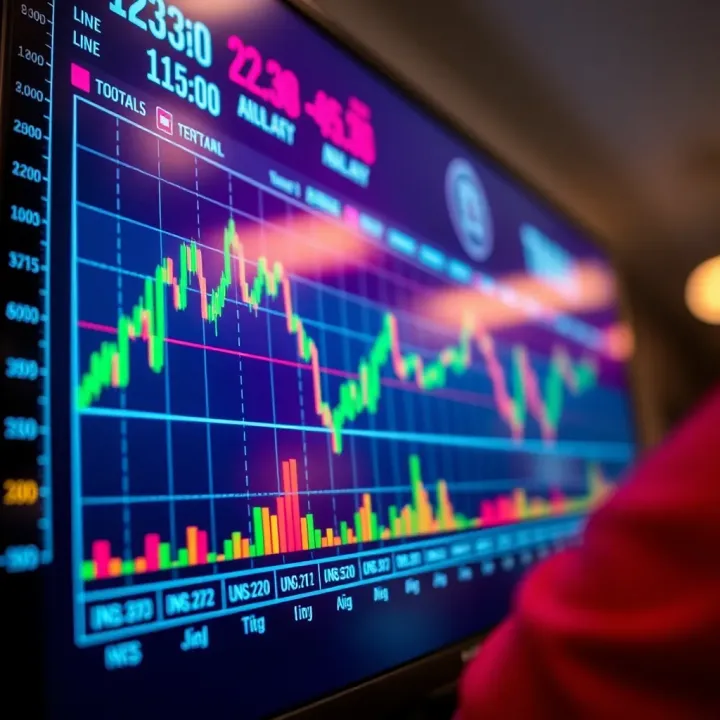
Start forex trading in Kenya with this practical guide 📈. Learn to pick brokers, open accounts, use M-Pesa for payments, and manage risks smartly like a pro.
Based on 9 reviews