
Forex Trading Basics for Kenyan Beginners
📈 Understand forex trading basics in Kenya! Learn market operation, key currency pairs, strategies, risk tips, and how to start trading confidently today.
Edited By
Grace Turner
Forex trading is becoming a popular way for Kenyans to invest and earn extra income. But unlike buying shares in a company or putting money in a savings account, forex trading involves exchanging one currency for another in the global foreign exchange market. The market runs 24 hours daily on weekdays, making it flexible but also fast-paced and sometimes unpredictable.
Starting forex trading in 2022 means you have to understand a few basics first. For example, the market usually quotes currencies in pairs, like USD/KES or EUR/USD. When you trade, you’re betting whether one currency will rise or fall against the other. Understanding terms like "pip" (the smallest price movement), "leverage" (borrowing to trade bigger amounts), and "spread" (the difference between buying and selling price) is essential.
Opening an account with a reliable forex broker is your next step. Look for brokers registered by the Capital Markets Authority (CMA) in Kenya or internationally recognised ones. Using accounts linked to M-Pesa or local banks can simplify deposit and withdrawal processes. Demo accounts are great for practising without risking real money.
Many new traders jump straight into buying and selling without a strategy. Instead, consider starting with simple methods like:
Following major economic indicators such as Kenya’s inflation rates or US Federal Reserve announcements
Using technical tools like moving averages or candlestick charts to decide entry and exit points
Setting stop-loss orders to limit losses
Remember, forex trading carries risks like market volatility and leverage magnifying both gains and losses. Never invest money you can’t afford to lose.
Managing investment wisely means having a plan, keeping emotions in check, and continually learning. Markets react to local events, politics, and global trends, so staying updated helps you make informed decisions.
With careful preparation and patience, forex trading can be a valuable part of your investment portfolio. This guide will walk you through the key steps to build your confidence and trade safely in 2022.
Understanding the forex market is the first step towards making informed decisions when trading currencies. This knowledge helps you grasp how currencies move, why they fluctuate, and what impacts their values. Without this foundation, traders might just be guessing, risking hard-earned money without direction. For example, Kenyan shilling’s strength against the US dollar can shift due to local economic reports or changes in global commodity prices, which directly affect imports and exports.
Forex trading involves buying one currency while simultaneously selling another, aiming to profit from changes in exchange rates. Unlike stocks, forex trading happens on a global scale and does not rely on a single stock exchange. It’s the largest financial market worldwide, moving over $6 trillion daily. For instance, a Kenyan trader may buy US dollars if they expect the dollar to strengthen against the shilling, allowing them to sell later at a profit.
Currencies are traded in pairs, such as EUR/USD or USD/KES. The first currency is the base, and the second is the quote currency. The price tells you how much of the quote currency you need to buy one unit of the base. Say the USD/KES pair is trading at 110.50; it means you need KS10.50 to buy 1 US dollar. Knowing this helps traders decide when to enter or exit trades based on expected movements in these pairs.
Forex is open 24 hours a day for five days each week, divided into major sessions: Sydney, Tokyo, London, and New York. Liquidity varies through these sessions; the overlap between London and New York sees the most trading volume, resulting in tighter spreads and better pricing. For a Kenyan trader, understanding these times matters because trading during high liquidity hours reduces costs and improves execution. For example, trading USD/KES while European markets are active might be more efficient than during Sydney’s morning when activity is thin.
Knowing the basics of forex, how currency pairs work, and when to trade, sets a strong base for any new trader aiming to navigate this market confidently and wisely.
By focusing on these elements, beginners can avoid common pitfalls and build strategies that suit the Kenyan market context, incorporating local economic outlooks and global currency trends.
Understanding key forex terms is a must if you want to trade confidently. These terms form the basic language of the forex market, helping you grasp how trades work and make smarter decisions. Without knowing these, you might find it hard to follow market movements or understand your broker’s offerings.
Let’s start with pips. A pip is the smallest price move you can measure in forex. It’s usually the fourth decimal place in currency pairs, like in the USD/KES rate moving from 110.2500 to 110.2501. That tiny step is one pip. Knowing pip value helps you calculate your potential profit or loss.
Next is the lot, which is the size of your trade. A standard lot equals 100,000 units of the base currency, but beginners often trade mini lots (10,000 units) or micro lots (1,000 units) to manage risk. For example, trading one mini lot of EUR/USD means you’re buying or selling 10,000 euros.
Leverage multiplies your buying power, letting you control a larger position with a smaller amount of money. For instance, with 1:100 leverage, you could trade KS0,000 to control KS million. While leverage can boost gains, it also magnifies losses, so use it cautiously.
The spread is the difference between the buying (ask) price and selling (bid) price of a currency pair. It represents the broker’s fee. For example, if EUR/USD buys at 1.1005 and sells at 1.1003, the spread is 2 pips. Lower spreads mean cheaper trading costs.
Margin is the security deposit you need to open or maintain a trade, expressed as a percentage of your trade size. If your broker requires 1% margin for a KS million trade, you must have KS0,000 in your account as margin. It’s not a fee but a locked amount until the trade closes.
Knowing these terms helps you set realistic expectations and control your risk effectively. Whether you’re trading mini lots with low leverage or managing tighter spreads, clear understanding is your first step to smart forex trading.
Mastering these basic forex terms sets the foundation for moving on to strategies and risk management. Keep these definitions close as you gain experience.
Setting up a forex trading account is your first practical step towards becoming an active trader. It's not just about signing up and starting to trade; it involves choosing the right broker, understanding different account types, and getting comfortable with the trading platform. Each of these elements impacts your trading experience and potential success.
Selecting a trustworthy broker is critical. Brokers act as your gateway to the forex market, providing the platform and tools for trading. Not all brokers operate transparently or offer the same level of service. For example, in Kenya, many traders prefer brokers regulated by internationally recognised bodies like the Financial Conduct Authority (FCA) or local regulators affiliated with CMA (Capital Markets Authority). This ensures protection against fraud and unfair practices.
Look for brokers that offer clear terms on spreads, commissions, and withdrawal processes. Platforms such as FXTM and IG Markets are popular in Kenya due to their robust regulations and user-friendly service. Also, check if the broker allows M-Pesa transactions for seamless funding, a major convenience for many traders here.
Brokers usually offer several account types designed for different traders. A standard account might require a larger deposit but offers tighter spreads, while a mini or micro account requires less capital, making it ideal for beginners. For example, Exness offers micro accounts where you can start trading with as little as KSh 500.
Funding your account is another step not to overlook. Kenyan traders commonly fund forex accounts using M-Pesa or bank transfers. Some brokers also accept international cards and e-wallets. For safety, avoid brokers demanding advanced payments through unfamiliar channels. Always verify funding methods and associated charges before committing to a broker.
The trading platform is the software where you execute trades, track prices, and analyse charts. MetaTrader 4 and 5 (MT4/MT5) remain popular for their reliability and numerous tools suitable for technical analysis. Some brokers provide their own platforms, but these might lack the versatility or community support found with MT4/MT5.
Familiarity with your chosen platform will improve your trading efficiency. Most platforms offer demo accounts—free practice environments with virtual money. For example, if you're experimenting with swing trading techniques, practising on a demo account before risking real funds will help you understand the mechanics without losses.
Setting up your forex account deliberately rather than rushing makes a big difference. Taking time to pick the right broker, suitable account type, and mastering the platform better prepares you for actual trading.
By carefully handling these foundational steps, you pave the way for a smoother entry into the forex market, reducing risks and increasing your chances of steady growth.
Starting forex trading without a clear strategy is like heading to Nairobi's CBD without a map — chances are, you'll get lost or waste time. Basic strategies help you navigate the market with purpose, avoid common pitfalls, and protect your funds. This section breaks down practical approaches new traders can apply to improve their chances of success and manage risks.
Day trading involves opening and closing trades within the same day, often within minutes or hours. It suits those who can dedicate time to monitor charts closely. For example, Nairobi-based traders might use this approach during daylight hours when markets like London and New York overlap, aiming to capitalise on quick price movements. Swing trading, on the other hand, holds positions from several days to weeks, looking to benefit from broader market trends. This suits people balancing trading with other jobs or activities, as it requires less intensive monitoring. Both approaches demand discipline; day trading requires fast decision-making, while swing trading needs patience.
Losses are part of trading, but limiting how much you lose per trade keeps your capital safe. Stop-loss orders automatically close out a trade once the price hits a set level, preventing further losses. For instance, if you buy EUR/USD at 1.1000 and set a stop-loss at 1.0950, your trade closes if the price falls 50 pips. This discipline helps avoid emotional decisions like holding onto losing trades hoping for a reversal. A common rule is risking no more than 1-2% of your total capital on a single trade. Without this, even a few bad trades could wipe out your account.
Risk management isn't just about protecting money; it's about preserving your ability to trade another day.
Tracking every trade sharpens your skills by showing what works and what doesn’t. Include details like entry and exit points, position size, the reason for entering, and emotions felt during the trade. Review your journal weekly or monthly to find patterns. Maybe you do better trading certain currency pairs or at specific times. Or perhaps emotional trades lead to bigger losses. A Kenyan trader might notice that after a late-night session, their judgement weakens. Adjusting your routine based on logged experiences improves discipline and avoids repeating mistakes.
By understanding trading methods, managing risks wisely, and keeping a journal, new forex traders set a strong foundation. These basics help protect your money and grow your skills steadily rather than chasing quick wins.
Entering the world of forex trading can be rewarding but also full of hurdles. Knowing the common challenges helps you prepare and avoid costly mistakes. This section highlights two key challenges that Kenyan traders often face: market volatility and emotional trading.
Market volatility refers to how much and how quickly currency prices change over time. Forex is particularly volatile because currencies respond swiftly to events like economic reports, political changes, or even global market shifts. For example, the Kenyan shilling can fluctuate significantly around Kenya National Bureau of Statistics (KNBS) economic updates or Central Bank of Kenya (CBK) policies.
This unpredictability can create opportunities, but it also means risks are high. A sudden dip could wipe out your gains if you're not careful. To avoid losses caused by volatility, use stop-loss orders to set limits on how much you can lose in a trade. Also, avoid trading during major news releases unless you are very experienced because price swings can be extreme.
Volatility demands respect; it can boost profits or cause sharp losses if unmanaged.
Understanding when markets are likely to be more volatile helps you pick safer trading times. For instance, the overlap between London and New York sessions sees more activity and swings, so beginners may want to start trading outside these hours.
Emotions often steer new traders into trouble. When a trade goes wrong, some hold on hoping to recover losses while others jump into too many trades chasing quick wins. This behaviour, known as emotional trading, can drain your capital fast.
Overtrading happens when you exceed your planned number of trades or invest more than your strategy allows. It usually results from impatience or stress and can lead to mistakes. For instance, if you lose KSh 5,000 on one trade and immediately try to make it back by doubling down, you risk bigger losses.
To avoid this, stick to a clear trading plan that specifies your trade size, entry and exit points, and daily limits. Keep a cool head by taking breaks and reviewing your trades with a journal. If you find yourself chasing losses or getting anxious, step back from the screen. This discipline helps maintain consistent performance and prevents burnout.
In summary, mastering forex requires more than knowing the technical details; managing market volatility and your emotions round off the skills that keep you trading wisely. Remember, success in forex comes from measured decisions rather than rushed moves or hope alone.
📈 Understand forex trading basics in Kenya! Learn market operation, key currency pairs, strategies, risk tips, and how to start trading confidently today.
Start forex trading in Kenya with this practical guide 📈. Learn to pick brokers, open accounts, use M-Pesa for payments, and manage risks smartly like a pro.
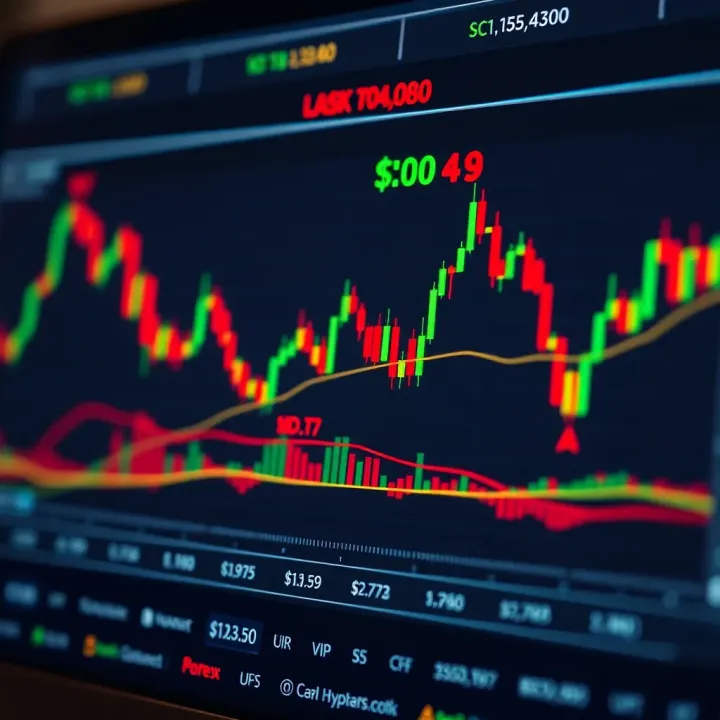
📈 Master forex trading in Kenya with this practical guide covering key strategies, risk management, top platforms, and regulatory tips to trade confidently and securely.

📈 Discover how forex trading signals guide your buy or sell decisions with market analysis in Kenya, plus tips on finding reliable providers and risks to avoid.
Based on 9 reviews