
Understanding Binary: Basics and Everyday Uses
Explore how binary underpins computing and digital communication 💻. Learn about data representation, binary arithmetic, coding, and everyday tech uses.
Edited By
Amelia Hughes
Binary is the core language behind all computers and digital gadgets. It uses just two digits — zero and one — to represent and process data. This simplicity enables reliable and efficient computation across devices from smartphones to servers.
Understanding binary helps investors and financial analysts grasp how data moves through systems they rely on, while educators can better explain digital fundamentals to learners in Kenya and beyond.
Computers translate complex instructions into binary, allowing devices to perform calculations, store information, and run software. Every app you use on your phone or computer depends on binary code working perfectly behind the scenes.
Kenya’s growing digital economy, including mobile money platforms like M-Pesa, depends heavily on devices processing binary data. Grasping binary provides clarity on how such technologies operate smoothly.
Binary is a base-2 numbering system, unlike our common decimal system which is base-10. Each binary digit (bit) represents a power of two:
0 means off or no
1 means on or yes
In practice, a sequence like 1011 translates to:
1 × 2³ (eight) + 0 × 2² (zero) + 1 × 2¹ (two) + 1 × 2⁰ (one) = 11 (decimal)
This way, computers represent numbers, letters, instructions, and more.
Binary’s two-digit system makes it easy for hardware to detect signals as current or no current, improving accuracy and speed compared to more complex numbering.
Binary isn't just academic; it fuels daily technology:
Digital payments via Safaricom use devices decoding binary data.
Stock trading platforms on NSE rely on servers running binary code for real-time updates.
Educational tools for KCSE preparation use software built on binary instructions.
By understanding binary, you gain insight into the backbone of today’s tech-driven world, enhancing both professional and educational success.
In the sections ahead, we’ll explore binary’s history, key concepts, and practical applications in more detail.
Binary is the foundation of modern computing. It is a simple system using just two digits, zero (0) and one (1), to represent information. This system underpins everything from the smartphone in your hand to the most complex financial trading algorithms. Understanding what binary is helps clarify how digital devices process and store data.
Binary operates on a base-2 numbering system, unlike the decimal system we use daily, which is base-10. Each binary digit, or bit, represents an on/off or true/false state. These bits combine to form bytes, clusters of eight bits, which store characters and numbers in computers. For example, the letter 'A' is stored as 01000001 in binary code. This simplicity allows machines to handle complex data using only two states: presence or absence of an electrical signal.
Decimal numbers use ten digits (0 to 9), making human calculations easier but harder for machines to manage electronically. Binary skips the complexity, using just 0 and 1, which correspond to the off and on states of electrical circuits. In decimal, the number 13 means one ten and three units, but in binary, 1101 represents the same value with powers of two. This difference is practical; computers find it easier and more reliable to deal with electrical signals representing just two states.
Every digital device uses binary as its primary language. When you send money via M-Pesa, the system processes countless binary signals to authenticate your transaction securely and instantly. Computers read and write binary data using microchips designed to recognise these two states, allowing them to perform calculations, store files, and transmit information efficiently. Without binary, the rapid digital communication we depend on daily would grind to a halt.
Binary’s strength lies in its reliability and simplicity. Electronic circuits are less prone to error when dealing with only two voltage levels, which means devices are less likely to misinterpret signals. It also conserves energy — switching between just two states costs less power than handling multiple states as in other numbering systems. This efficiency makes binary ideal not only for computers but for embedded systems found in everyday technology such as ATMs, boda boda meters, and even digital household appliances.
Machines understand binary because it’s a system designed for their physical reality: on/off states mirror electrical pulses, making the technology robust and efficient.
Binary uses bits and bytes to represent all digital information.
Its base-2 structure aligns with how machines process signals.
Systems like M-Pesa rely heavily on binary for secure digital transactions.
Binary simplifies electronic design, reducing errors and energy use.
Grasping the basics of binary is key to appreciating how the digital world around us operates. Whether you’re analysing stock trends or developing software for Kenyan tech startups, knowing why we use binary helps you understand the backbone of all digital technology.
Understanding how binary numbers work is key to grasping the foundation of modern computing. Every digital device, from an ATM to a smartphone running M-Pesa, relies on binary to process information. This section explains the core principles behind binary digits, place values, and conversions to decimal - a necessary skill for anyone interested in technology, finance, or education sectors relying on digital tools.
Binary uses two digits: 0 and 1, called bits (short for binary digits). Each bit represents the smallest unit of data in computing. Bytes are groups of eight bits. For instance, the letter 'A' in digital form takes 1 byte or 8 bits: 01000001. This grouping allows computers to handle more complex data efficiently, like storing text, images, or financial transactions.
Like our everyday decimal system where place values are powers of ten (ones, tens, hundreds), binary uses powers of two. For example, in the binary number 1011, from right to left, the place values represent 2^0 (1), 2^1 (2), 2^2 (4), and 2^3 (8). Adding up the values where there is a '1' gives the decimal equivalent: 8 + 0 + 2 + 1 = 11. Knowing this helps decode the binary data stored or transmitted, a skill useful in fields like data analysis.
To convert binary to decimal, list each binary digit with its place value, then sum all the values where the bit is 1. Conversely, converting decimal to binary involves dividing the decimal number by two repeatedly, keeping track of the remainders. This stepwise approach is practical for understanding data encoding and debugging digital systems.
Take the binary 1101. From right to left, the place values are 1, 2, 4, and 8. Since the digits are 1, 0, 1, 1, calculate: 8 + 0 + 2 + 1 = 11 in decimal. On the other hand, the decimal number 5 converted to binary becomes 101 following repeated division by 2. These simple exercises illustrate how digital data is represented behind screens and in financial transaction records.
Mastering binary conversions gives you an edge in understanding the digital backbone of Kenya's growing tech and financial services sectors.
Binary is the silent workhorse behind almost every digital device we use daily. It provides the fundamental language that allows computers and machines to store, process, and communicate information efficiently and accurately. By using only two digits—0s and 1s—binary simplifies complex operations, making technology faster and more reliable.
Computers rely on binary to store and process data through electrical signals that represent the two binary digits. Each bit - a binary digit - indicates an off (0) or on (1) state. These bits combine to form bytes, which represent characters, numbers, or instructions the computer understands. For instance, the letter 'A' is stored in binary as 01000001. This system allows computers to handle everything from calculations, graphic rendering, to running intricate applications.
On the processing side, the central processing unit (CPU) interprets these binary codes to perform tasks step by step. The logic gates inside the CPU, built with transistors switching on and off, execute commands based on the binary input. This binary foundation ensures consistent and error-resistant operations, which underpin the smooth performance of software and operating systems.
Common digital devices like laptops, tablets, and smart TVs all use binary to function. Even devices we might not immediately consider digital, such as digital watches and microwave ovens, operate on binary instructions. Storage devices like hard drives and solid-state drives save vast amounts of information by encoding it into binary patterns, ensuring data can be retrieved or modified precisely.
Mobile phones in Kenya, particularly smartphones, depend heavily on binary to operate. Whether making a call, sending a message, or accessing a mobile app like M-Pesa, binary data travels through networks as signals representing zeros and ones. M-Pesa, a critical mobile money platform, uses binary algorithms to securely process millions of transactions daily. This digital backbone keeps your money safe and ensures fast, reliable financial services even in remote areas.
Beyond payments, many digital services in Kenya lean on binary data. Mobile banking apps, government e-services via the eCitizen portal, and even ride-hailing apps like Bolt and Uber convert user actions into binary codes to process requests. The seamless interaction between users and these platforms is possible only because of binary's straightforward yet powerful way of handling data and instructions.
Binary is the foundation that keeps Kenya's digital ecosystem running smoothly, from everyday mobile transactions to complex online services.
By understanding how binary powers both traditional computing and mobile innovations, you gain insight into the technology shaping Kenya’s economic and social landscape today.
Understanding the history of binary sheds light on why this simple system of zeroes and ones has become the backbone of modern computing. Knowing its origins and the pioneers behind it helps investors, traders, and educators appreciate why binary remains relevant—especially as information technology advances fast and touches every sector.
The binary system did not just pop up out of nowhere; it has roots stretching back centuries. Early thinkers, including ancient Chinese and Indian philosophers, toyed with ideas of dual states like Yin and Yang or ‘0’ and ‘1’ representing on/off or presence/absence. These abstract ideas had practical use for describing the world as two opposing but complementary forces, which in turn inspired number systems grounded on two symbols.
This early philosophical base is relevant because it shows binary is not just a technical tool but also a natural way humans have tried to explain complex systems simply. In practical terms, this duality translates well into machine logic, making it easier to design circuits that use two clear states.
The modern binary number system owes a lot to Gottfried Wilhelm Leibniz, a 17th-century German mathematician. He formalised the binary numeral system, showing how all numbers could be represented with just zeros and ones. Leibniz even linked the system to concepts in logic and metaphysics, bridging philosophical ideas with mathematics.
Later, George Boole contributed another key idea: Boolean algebra, which works perfectly with binary by defining operations like AND, OR, and NOT. Claude Shannon then applied Boolean algebra to electrical circuits in the 1930s, providing the groundwork for practical binary computing.
These pioneers' contributions let us use binary not just as numbers, but as the foundation for decision-making in electronics—essential for digital circuits and computers.
Binary formed the backbone of early digital computer designs because electronic devices naturally handle two states: on or off. Machines like the ENIAC and IBM's early systems used binary logic to perform calculations reliably. This simplicity made manufacturing and maintenance easier compared to complex analogue systems.
For Kenyan investors and tech traders, understanding early computing helps explain why companies that mastered binary technology early on often led the market. It also clarifies why binary remains a key skill in software development and hardware engineering careers.
Binary’s influence goes beyond computers to almost all IT advances. From data storage on smartphones to secure M-Pesa transactions, binary encoding ensures information is processed accurately and efficiently. It also enables error correction, compression, and encryption technologies vital for modern communication.
Today, binary underpins database systems, coding algorithms, and even artificial intelligence logic. Knowing this helps educators and analysts relate classroom theory to real-world applications, from Nairobi’s tech hubs to rural digital inclusion efforts.
Binary is more than just ones and zeros—it's a language that made digital life possible and continues to drive innovation across industries.
To sum up:
The binary system’s early philosophical and mathematical roots helped shape a practical number system fitting for electronic computing.
Key figures like Leibniz and Shannon turned binary into an essential tool for digital electronics.
Binary's simplicity allowed the growth of modern computers and the broad development of today's information technology.
Grasping these historical developments offers a clearer picture of why binary knowledge remains a practical asset across finance, education, and technology sectors in Kenya and beyond.
Learning binary is not just for computer whizzes. It opens practical doors that matter for many Kenyans, whether you’re a student, a hustler in the tech world, or a professional handling data. Understanding binary helps you grasp how computers and digital devices work, which is increasingly useful in our digital economy.
Converting numbers and basic coding is an excellent starting point. By practising simple conversions between decimal and binary, you get familiar with the fundamental language computers use. For example, converting the decimal number 13 to binary (which is 1101) helps you see how each bit represents a value. This exercise not only sharpens your mental agility but also prepares you for basic programming tasks. In many ICT classes in Kenya, students begin with these exercises to better understand how data is stored and manipulated.
Another practical way is using colours or symbols to represent bits. This visual approach makes the abstract idea of 1s and 0s more tangible. For instance, you can use a green card for 1 and a red card for 0. Arranging these cards to represent a byte (eight bits) can clarify how information is structured in computers. This method works well in group learning settings or workshops, where learners can physically interact with the bits and decode simple messages. It’s a hands-on way to grasp something that might seem complex on paper.
Learning binary for ICT classes is key for students following the Kenya Certificate of Secondary Education (KCSE) syllabus. The binary system forms a useful foundation for subjects like computer studies and programming. Mastering these basics helps students pass exams and opens doors to further studies or tech courses at technical institutes. Moreover, ICT teachers often use binary exercises to explain how digital devices store and process data, linking theory directly to real-world tech around them.
For practical skills in tech-related jobs, binary knowledge boosts your ability to troubleshoot and understand electronics, software development, and network systems. Many youth in Nairobi’s jua kali sector, for example, benefit from grasping binary since it underpins mobile apps, ATM machines, and M-Pesa transactions — common tools in everyday business. Knowing binary basics also aids in coding simple apps or working with microcontrollers, which are increasingly important as Kenya embraces digital innovation in agriculture, finance, and education.
Understanding binary is a practical skill with clear benefits — from classroom success to real-world tech hustles. It demystifies how devices work and empowers users to engage confidently with Kenya's growing digital economy.
Whether you’re cracking numbers, working with colours, or diving into coding, the practical ways to learn binary build a solid foundation for the digital world everyone now lives in.
Explore how binary underpins computing and digital communication 💻. Learn about data representation, binary arithmetic, coding, and everyday tech uses.
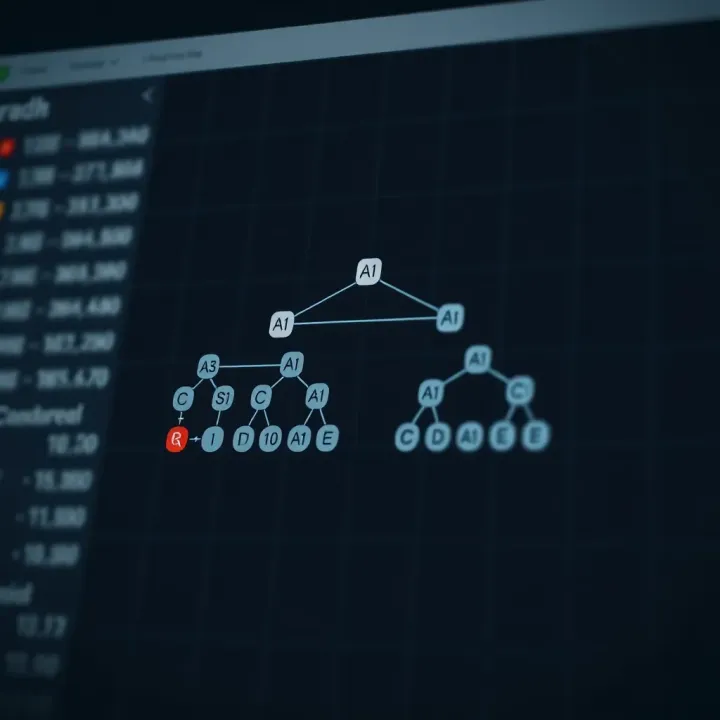
Explore binary trees 🌳 with clear explanations on structure, types, traversal methods, and practical uses in computing to enhance your coding skills.
🔢 Explore binary blocks basics, how they work in computing, their structure, types & key role in efficient digital data processing and storage systems. 💾
Explore the binary number system 📊, from its history to conversion methods and arithmetic operations. Understand its role in computing for digital tech enthusiasts!
Based on 9 reviews