
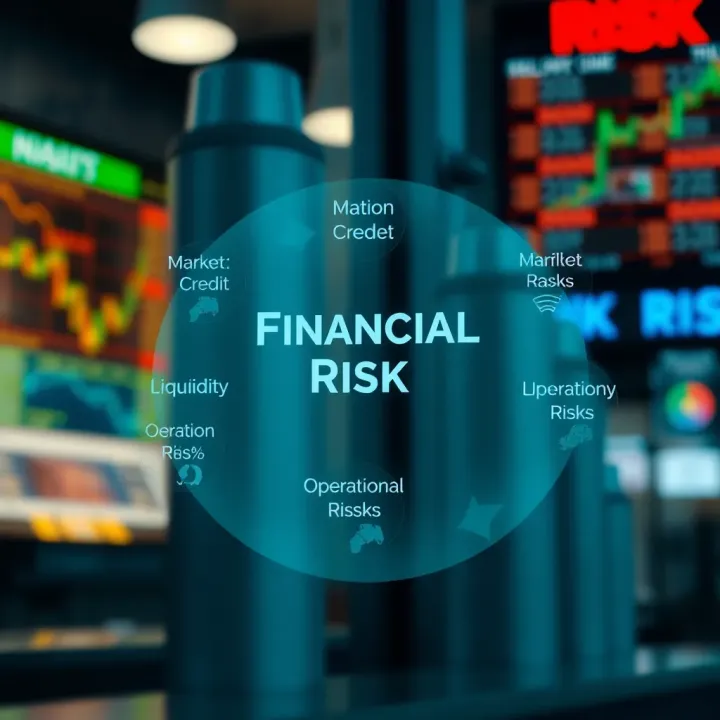
Essential Guide to Financial Risk Management
Discover how to spot, assess, and reduce financial risks in your business. Stay compliant and monitor risks continuously to protect your investments 💼📉
Edited By
James Thompson
Risk management tools are essential for any business that aims to survive and thrive, especially amid the economic ups and downs in Kenya. These tools help identify potential risks such as market fluctuations, currency volatility, supply chain interruptions, or regulatory changes that could affect a company’s operations or profitability.
Kenyan enterprises face unique challenges. For instance, a small agricultural exporter might struggle with unpredictable weather patterns caused by the long rains and short rains cycles, affecting crop yields and delivery schedules. Using tools like risk assessment matrices or scenario analysis can help such a business prepare contingency plans that reduce losses.
Meanwhile, financial firms dealing with fluctuating forex rates or interest rates benefit from software that monitors trends and flags risks early, allowing companies to adjust investment strategies timely.
Effective risk management is not just about avoiding loss; it’s about making better decisions to secure sustainable growth.
Qualitative tools: Risk registers, SWOT analysis, and expert judgment help businesses list and prioritise potential threats.
Quantitative tools: Software that calculates probabilities and financial impacts, such as Monte Carlo simulations or Value at Risk (VaR) models, provide measurable insights.
Monitoring tools: Dashboards and alerts keep track of ongoing risks and notify decision-makers about shifts in the business environment.
Identify risks specific to your industry and location – for example, a matatu business should consider traffic congestion and fuel price volatility.
Assess the likelihood and impact of those risks using simple frameworks or digital tools.
Mitigate by implementing controls, insurance, or diversification strategies.
Monitor continuously, adjusting plans as new information appears.
By applying these tools, businesses can anticipate problems instead of reacting after losses occur, ensuring that they not only survive tough times but also position themselves to compete smarter in Kenya’s vibrant market.
Risk is part and parcel of any business environment, whether it is a small roadside duka in Nairobi or a sprawling agro-export firm in Eldoret. These risks come in many shapes: financial losses, supply interruptions, regulatory changes, or even reputational hits. For businesses to thrive, they must spot these risks early and handle them before they escalate into costly problems.
Risk management tools are practical methods, techniques, or software that help businesses identify, evaluate, and control these uncertainties. Think of them as your safety net, designed not just to warn you about potential falls but also to prepare you to climb better. For example, a financial institution may use credit scoring models to limit the risk of loan defaults, while a manufacturer could use supply chain tracking software to avoid delays caused by missing parts.
In real business settings, risk often means anything that threatens the organisation’s ability to meet its targets. This could be market fluctuations affecting commodity prices or unexpected policy shifts that hike operational costs. Kenyan businesses, especially, wrestle with risks like inconsistent power supply, transport disruptions, and changing tax structures. These issues impact bottom lines directly, so recognising them early is vital.
Good risk management starts with understanding these types of risks clearly and realistically. A tea exporter in Kericho, for instance, faces weather variability risk but also currency fluctuations affecting export payments. Recognising both local and global risk factors allows for better preparation.
The primary aim of these tools is to turn uncertainty into manageable information. They offer business leaders ways to prioritise risks based on their potential impact rather than guessing. This means resources go where they’re most needed.
Additionally, risk management tools help standardise the process of identifying and responding to risks. For example, a risk matrix can colour-code potential risks as ‘high’, ‘medium’, or ‘low’, helping decision-makers focus on what poses the greatest threat. This process improves overall efficiency while reducing surprises.
Risk management tools help businesses spot weak points before they cause damage. In Kenya’s turbulent market, an SME might use cash-flow forecasting tools to avoid running out of working capital during slow seasons. These forecasts flag times when the business might struggle, allowing owners to arrange short-term finance or cut costs early.
Moreover, tools such as insurance risk assessments can advise companies on coverage needs, preventing major losses from sudden events like fire or theft. Without these, many businesses suffer irreversible financial hits.
Good risk management is not just about avoiding dangers but steering a business confidently towards goals. Using risk evaluation techniques, companies can weigh the costs and benefits of new investments or market expansions. A Nairobi-based tech start-up, for instance, might assess risks associated with launching a new app feature amidst stiff competition and evolving regulations.
These insights inform when and how to act, boosting chances for success. Plus, risk tools often uncover unseen opportunities by highlighting areas where caution is worth taking.
Risk management tools also play a key role in meeting regulatory requirements. For example, banks in Kenya rely on these tools to stay compliant with Central Bank of Kenya (CBK) rules and avoid hefty fines. They track compliance risks and generate reports for auditors.
Besides compliance, managing risks well maintains trust with customers and partners. A retailer who safeguards customer data using cybersecurity risk assessments builds a better reputation, attracting more business. Conversely, poor risk management can quickly lead to public scandals that hurt brand value.
Proper use of risk management tools is like having a reliable weather forecast for your business journey — they won’t stop the rain but will help you prepare with an umbrella.
In summary, risk management tools matter because they equip businesses with the means to see ahead, plan better, and protect what they’ve built. For investors, traders, or financial analysts, understanding these tools offers an edge in evaluating company resilience and growth potential.
In business, understanding the types of risk management tools available can make the difference between weathering a storm and being blindsided. These tools help identify, measure, and manage uncertainties that could affect operations or financial outcomes. They come in various forms, broadly divided into qualitative, quantitative, and software-based tools. Each type serves specific needs and offers unique benefits.
Risk matrices and heat maps are visual tools that help businesses rank risks based on their likelihood and impact. Picture a grid where one axis shows how often a risk might occur, and the other displays how severe the outcome could be. This simple setup allows companies to focus their efforts on the riskiest areas. For example, a manufacturing firm in Nairobi might use a heat map to prioritise risks linked to machinery breakdown versus supplier delays.
Meanwhile, interviews and checklists serve as practical, straightforward ways to gather insights from employees or stakeholders about potential risks. Checklists ensure no obvious threats are overlooked, while interviews gather richer, experiential knowledge on emerging or less obvious risks. In Kenyan agribusiness, for instance, farmers may be interviewed to identify challenges like pest infestations or erratic weather patterns, supporting tailored risk responses.
Statistical models and simulations apply numbers and probabilities to predict how risk factors can impact business outcomes. These models can simulate different scenarios, giving companies a clearer picture of potential losses. Kenyan banks often use such tools to forecast loan defaults during economic downturns, helping them set aside appropriate reserves.
Financial metrics like Value at Risk (VaR) provide a concrete figure that estimates potential loss over a specific time frame under normal market conditions. For a trader on the Nairobi Securities Exchange (NSE), VaR quantifies the maximum expected loss, helping with decision-making on portfolio limits and risk appetite.
Risk management software solutions have become a staple for firms seeking efficiency and accuracy. These platforms consolidate data, automate risk assessments, and provide real-time updates. For instance, a medium-sized Kenyan logistics company might use software to monitor vehicle maintenance risks alongside cargo delivery timelines, reducing downtime.
Integration with existing business systems is critical for smooth operations. Effective risk management tools link with accounting, inventory, or compliance systems to avoid information silos. A retail chain in Kenya benefits when its risk software syncs with sales and supplier data, allowing early detection of stock shortages or vendor issues.
Choosing the right risk management tool depends on the business’s specific risks and available resources. Combining qualitative insights with quantitative data and leveraging digital solutions often offers the most resilient approach.
This balanced mix ensures businesses stay prepared and responsive, ultimately supporting sustainable success.
Selecting the right risk management tool isn’t a one-size-fits-all process. It demands understanding your business’s specific needs and effectively applying the chosen tool to get meaningful results. Done right, it helps predict challenges, prevent losses, and support stronger decisions.
Identifying key risks specific to your industry is a crucial first step. For example, a financial firm in Nairobi must focus on credit risks and regulatory changes, while a tea farm in Kericho will be more concerned about weather and pest outbreaks. Pinpointing these risks allows you to pick a tool that targets the threats most relevant to your sector, rather than wasting resources on irrelevant features.
Understanding resource availability means knowing how much time, money, and expertise your business can commit. Smaller enterprises may find sophisticated software too expensive or complicated, while larger firms can afford integrated systems with analytics. Practicality knocks here; if your team lacks experience in technical tools, cloud-based solutions with user-friendly interfaces work better than complex programmes requiring specialised training.
Training staff and building awareness matters a lot after choosing a tool. It doesn’t help much if the best risk assessment software sits unused because employees don’t understand its value or how to use it. Conduct practical workshops and refresher sessions relevant to Kenyan business scenarios so the team feels confident and motivated to engage with it daily.
Maintaining and updating risk data ensures the tool remains useful over time. Risks evolve, whether it is changes in government policy, market trends, or local events like floods during long rains. Regular data updates and reviews prevent decisions based on outdated info. For instance, an exporter tracking global prices needs to update figures frequently to avoid losses from market shifts.
Choosing and applying the appropriate risk management tool requires a clear grasp of your unique business challenges and resources, plus ongoing efforts to embed it into daily operations and keep data fresh.
These practical elements combine to make risk management a reliable ally in your business journey, helping you spot trouble early and handle it decisively.
Risk management tools play a significant role in helping Kenyan businesses tackle industry-specific challenges, ensuring stability and growth. Across sectors like finance and agriculture, these tools provide practical ways to identify, assess, and respond to risks that might otherwise cause losses or disrupt operations. Understanding how they work in local contexts sheds light on their real-world value.
Kenyan banks and microfinance institutions rely heavily on risk assessment tools to protect both their capital and customers. Given the diversity of borrowers—from urban entrepreneurs to rural farmers—these institutions use comprehensive credit scoring systems that consider transactional histories, business performance, and socio-economic factors. For example, Equity Bank uses such assessments to reduce loan default rates by targeting clients with reliable repayment capacity. Risk assessments also support compliance with regulatory bodies like the Central Bank of Kenya, ensuring that financial institutions maintain proper reserves.
These tools help spot early warning signs of financial distress among clients, allowing the lenders to intervene or adjust terms promptly. Without effective risk assessment, institutions expose themselves to non-performing loans that can cascade into liquidity issues, especially in tight economic periods.
Digital technology, especially mobile platforms and data analytics, has transformed credit risk evaluation in Kenya. Tools that gather real-time data from mobile money transactions, payment histories, and even social behaviour play an increasing role in credit decision-making. Tala, a digital lender, uses smartphone data to create credit profiles for applicants without traditional banking records. This innovation widens access to credit for many Kenyans previously left out of formal financial services.
Moreover, machine learning algorithms on these digital platforms continually improve risk prediction accuracy. This means faster loan approvals for reliable clients and lower default risks for lenders. Such tools have boosted efficiency while reducing operational costs.
Farming is very sensitive to weather fluctuations—from droughts to floods. Risk management tools that incorporate weather forecasting and satellite data help Kenyan farmers and agro-businesses prepare better. Companies like FarmDrive combine climate data with farmer input records to offer credit and insurance products tailored to weather risks.
These tools alert farmers on expected rainfall or dry spells, enabling decisions like adjusting planting dates or irrigation schedules. By mitigating the unpredictability of weather, farmers can maintain yields and secure incomes, reducing chances of food shortages or financial hardship.
Kenya’s supply chains, especially for agriculture and retail, face risks like theft, delays, and spoilage. Digital tracking tools using GPS and barcode scanning allow businesses to monitor goods moving from farms to markets in near real-time. For example, Twiga Foods uses such systems to reduce wastage and ensure timely delivery to retailers in Nairobi.
These tracking tools also provide transparency for buyers, boosting trust and accountability in the supply chain. By recognising weak points early, businesses can adjust logistics or security arrangements, improving overall efficiency and reducing losses due to spoilage or theft.
Effective use of risk management tools tailored to Kenyan business realities not only safeguards assets but also enhances decision-making, helping enterprises stay competitive and resilient.
Implementing risk management tools is one thing, but managing the challenges that come with them is where businesses often struggle. Understanding common obstacles and how to address them can make the difference between having risk strategies that only exist on paper and ones that truly protect the enterprise. Kenyan businesses, like their counterparts elsewhere, face specific hurdles that can affect how well they spot, assess, and handle risks.
Data is the backbone of any risk management system. Yet, many firms in Kenya grapple with incomplete, outdated, or inaccurate information. For instance, a small agro-business relying on local weather data might struggle if the data is sparse or irregular. Without reliable data, risk assessments can miss major threats or exaggerate minor ones, leading to poor decisions. Data issues complicate forecasting and may cause risk tools, especially quantitative models, to deliver unreliable outputs.
Collecting quality data requires investment in better tools and sometimes training. Similarly, large banks may gather tons of customer information, but if it isn’t regularly cleaned and validated, errors creep in. These inaccuracies can increase operational risk, credit risk, and even compliance issues.
Even the best risk management tools fall short if staff and management resist using them. Resistance often arises from fear of extra workload, lack of understanding, or simply unwillingness to shift from traditional ways. In Kenyan SMEs, where resources are tight, introducing new procedures can be met with scepticism, delaying adoption and reducing impact.
For example, a trading company may have relied on gut feeling or manual checks for years. Convincing the team to adopt digital risk assessment tools requires clear communication on benefits and sufficient training. Without this, businesses risk under-utilising the tools or even abandoning them after initial trials.
To move past resistance, businesses must cultivate a strong risk-aware culture. This means leadership visibly supporting risk management and encouraging everyone to take part. For instance, a bank in Nairobi can regularly hold briefing sessions where risk issues are openly discussed, making staff comfortable with the tools and concepts.
A risk culture also helps in gathering more accurate data since employees understand why quality inputs matter. It spreads responsibility beyond a single department, making risk management a shared priority rather than an isolated task.
Risk management isn't a one-off exercise. Regularly reviewing risk assessments and updating tools ensures they stay relevant as the business environment changes. An exporter dealing in fresh produce might revisit supply chain risks every season, reflecting weather patterns or market fluctuations.
Continuous improvement also helps identify gaps arising from data issues or workflow challenges early on. By monitoring how well the tools perform and adapting accordingly, organisations avoid stagnation, keeping their risk strategies sharp and practical.
Successful risk management depends not just on choosing the right tools but on how organisations address data challenges and foster a risk-aware mindset among their people.
In summary, overcoming challenges in risk management involves practical steps from investing in quality data, overcoming staff resistance through engagement, and maintaining a culture that values ongoing learning. These approaches make risk management tools genuinely useful in helping Kenyan businesses navigate uncertainty and protect their success.
Discover how to spot, assess, and reduce financial risks in your business. Stay compliant and monitor risks continuously to protect your investments 💼📉

Explore how Enterprise Risk Management frameworks help Kenyan businesses spot, evaluate, and handle risks to boost decision-making and resilience. 📊🔍

Explore how Kenya manages disaster risks through assessment, preparedness, response, and recovery. Learn the roles of communities, government, and partners 🌍🔥

🔍 Explore how risk management helps identify, assess, and control threats to protect businesses and individuals in Kenya from uncertainties & losses.
Based on 5 reviews