
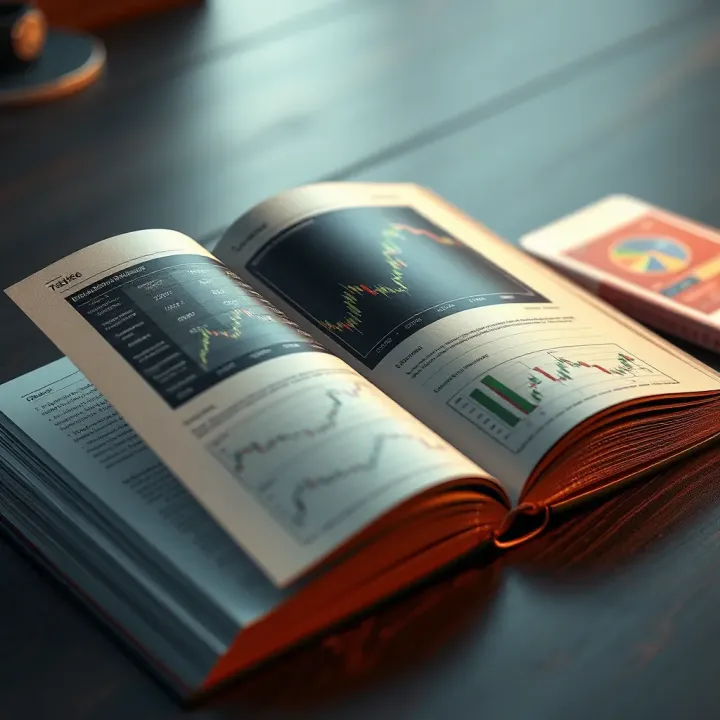
Top Forex Trading Books for Kenyan Traders
📚 Master forex trading in Kenya with top books on technical analysis, risk management, and trading psychology to boost your skills and confidence.
Edited By
Sophia Clarke
Forex trading, or foreign exchange trading, began as a practical necessity when merchants and governments exchanged currencies for trade and diplomacy. Long before computers and electronic platforms, it was a manual and complex affair, shaped by evolving economic theories and global politics.
Originally, currencies were tied to precious metals, particularly gold. This "gold standard" system, dominant in the 19th and early 20th centuries, fixed currencies to a specific amount of gold, giving rise to relative stability in exchange rates. However, as global conflict and economic pressures mounted through the two World Wars, many countries struggled to maintain this system.
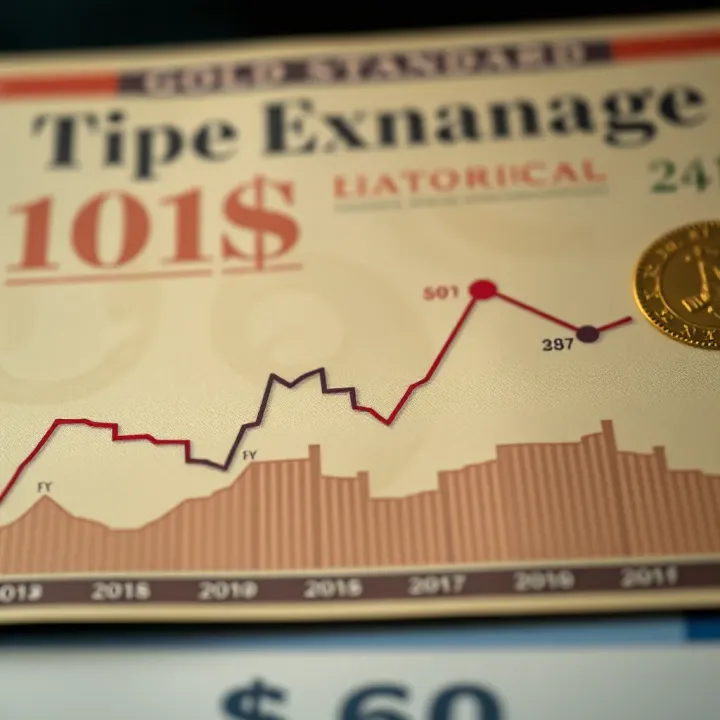
The real shift came with the Bretton Woods Agreement in 1944, which established fixed exchange rates pegged to the US dollar and, indirectly, to gold. This system aimed to provide order after the chaos of the Great Depression and war. But by the early 1970s, the US faced growing inflation and trade deficits, forcing President Nixon to suspend the dollar's convertibility into gold in 1971. This move effectively ended the gold standard era.
Floating exchange rates emerged, causing currency values to fluctuate based on market forces like trade balances, interest rates, and geopolitical events. This volatility created opportunities for currency traders but also introduced risks and complexities that had not existed under fixed rates.
The 1980s and 1990s brought significant advances in technology, especially computer networks and telecommunications. These developments allowed banks, brokers, and individual traders across the world to interact in real time. Electronic trading platforms replaced the old telephone-driven interbank markets, making forex trading faster, more accessible, and more transparent.
"Today’s forex market processes trillions of dollars daily, reflecting its evolution from a simple exchange mechanism to a sophisticated global financial system."
Some practical landmarks in forex’s modern growth include:
The launch of Reuters’ electronic dealing system in the 1980s
Growth of retail forex brokers, allowing individual traders in Kenya, and elsewhere, to participate
Integration of mobile trading apps, making forex accessible beyond traditional financial centres
Understanding these stages helps sharpen your insight into how forex trading became what it is today. Whether you’re a trader, analyst, or educator, recognising this historical context adds depth to your grasp of market dynamics and trading strategies.
Understanding the early days of currency exchange offers insight into how forex trading developed from simple trade to complex financial markets. This period laid the groundwork for modern currency valuation and exchange systems, showing how people managed trade and value across different regions.
Before money existed, people relied on barter—trading goods or services directly. For example, a farmer might exchange maize for a pot from a neighbouring villager. Though practical locally, barter was limited when people needed items unavailable in immediate trade circles. For long-distance trade, this system became inefficient because it required a double coincidence of wants; both parties had to have what the other wanted.
Ancient merchants and money changers started facilitating trade by converting one form of money to another, especially during long treks or at boundaries of different kingdoms. In cities like Alexandria or Babylon, money changers offered services to exchange silver for gold coins or local currencies for foreign ones. This made trade smoother, allowing merchants to travel farther and deal with multiple currencies without relying on barter.
The invention of coins standardised trade by assigning a recognised value to metal pieces, making goods exchange more straightforward. Greek drachmas and Roman denarii became widely accepted currencies, so exchanging coins was an early form of forex trading. Foreign currency exchange emerged as traders and travellers needed to convert their home coins to local ones. Such early currencies testified to distinct economies and shaped the idea of fixed value and exchange rates.
Medieval trade fairs, such as those in Champagne, France, became melting pots for merchants across Europe. They provided a venue where early exchange rates were negotiated based on coin type and origin. Merchants agreed on currency values to facilitate transactions involving different coins and goods. This practice started formalising exchange rates, which are fundamental to forex trading today.
Venice and Amsterdam played a pivotal role as financial hubs in the Middle Ages and the Renaissance. Venice, strategically positioned for Mediterranean trade, introduced bills of exchange that reduced the need for carrying physical money. Amsterdam, with the establishment of the Amsterdam Stock Exchange in 1602, pioneered organised trading platforms and currencies became commodities themselves. These cities laid the foundation for the structured foreign exchange markets that emerged later.
The beginnings of currency exchange reflect humanity’s quest to simplify trade, build trust, and establish value—a foundation integral to the Forex market’s complexity today.
By seeing how early traders and cities handled currency differences, investors and traders can appreciate the centuries-long evolution behind current forex systems. This understanding highlights how trade needs and technological changes shaped today's global currency dealings.
The transition from the gold standard to the Bretton Woods system marked a key turning point in international finance. It shaped the way currencies were valued and exchanged, influencing the growth of forex trading. Understanding this shift helps make sense of how modern currency markets stabilised after World War II and why the US dollar gained such a dominant role.
Under the gold standard, currencies were directly linked to a specific quantity of gold. For instance, a country’s currency unit could be exchanged for a fixed weight of gold, which anchored the currency’s value. This system offered practical benefits like reducing exchange rate uncertainty, as rates were stable and predictable. Traders and investors could plan cross-border deals without worrying about sudden swings in currency values.
However, the gold standard also came with serious limitations. Since currency supply was tied to gold reserves, governments had little flexibility to adjust money supply according to economic needs. This rigidity made it difficult to respond to financial crises or support growth, especially during the Great Depression. For example, countries faced deflation and unemployment partly because they couldn't easily expand currency supply under the gold standard.
In 1944, representatives from 44 Allied nations gathered at Bretton Woods, New Hampshire, to design a new system for global finance after the war. The main purpose was to promote economic stability and prevent competitive devaluations that had characterised the 1930s. The conference established fixed exchange rates where currencies were pegged to the US dollar, which in turn was convertible to gold at a fixed rate.
This arrangement made the US dollar the centre of international finance. As the only currency directly convertible to gold, it became the global reserve currency, widely used by countries for foreign exchange reserves and international trade. For traders and analysts, the US dollar’s anchor role meant that currency markets had a central reference point — essential for planning investments and managing risks.
The Bretton Woods system also created institutions like the International Monetary Fund (IMF) and the World Bank to support economic cooperation. The IMF provided short-term financial assistance to countries with balance of payments problems, helping them maintain fixed exchange rates. The World Bank focused on post-war reconstruction and development financing. Together, these bodies helped stabilise currencies, reduce exchange rate volatility, and create better conditions for forex trading to grow.
The Bretton Woods system laid groundwork for today's forex market by offering fixed but adjustable rates backed by strong financial institutions, enabling smoother international trade and investment flows.
By understanding this period, investors and traders can better appreciate why the dollar remains so influential and how global monetary cooperation evolved to manage currency risk.
The end of fixed exchange rates marked a turning point for forex trading, opening the door to a more flexible, dynamic market. This shift allowed currencies to fluctuate based on supply and demand rather than being tied to a fixed value relative to gold or other currencies. Forex market expansion soon followed as traders and institutions seized new opportunities created by these changes.
The Bretton Woods system, established post-World War II, pegged currencies mainly against the US dollar, which was convertible to gold. However, by the late 1960s and early 1970s, economic realities exposed flaws. Large US budget deficits, inflation, and growing trade imbalances pressured the system. Governments found it increasingly difficult to maintain fixed currency values amid global economic shifts.
In 1971, the US announced it would no longer convert dollars to gold on demand, effectively ending Bretton Woods. This decision triggered a wave of market liberalisation, encouraging countries to let their currencies float. The fixed-rate system had restricted nations from pursuing independent monetary policies; with floating rates, they regained control.
Floating exchange rates meant currencies could find their own value through daily market trading. For traders, this introduced new volatility but also new profit possibilities. A currency’s value would now reflect economic fundamentals, such as interest rates, inflation, and trade flows, instead of a rigid peg. For example, the US dollar's value began to shift freely against currencies like the Japanese yen and British pound, creating fresh trading opportunities.
With floating rates in place, currency trading volumes surged. More businesses needed to hedge foreign exchange risk due to volatile rates, while speculators sought to profit from price swings. In the 1970s, daily forex turnover was only in the tens of billions of dollars, but towards the 1980s, volumes expanded rapidly, laying the groundwork for the modern high-liquidity market.
Alongside this growth came the development of interbank currency markets. Major banks established dedicated forex desks and began trading currencies directly with one another rather than through intermediaries. This interbank network enhanced liquidity and facilitated quicker trade execution. London evolved as a major forex centre, thanks partly to its favourable time zone bridging Asia and the Americas.
The emergence of interbank markets and floating rates transformed forex from a niche activity into a global, 24-hour market — a foundation that today's electronic platforms still build upon.
The liberalisation also brought increased transparency and competition, driving tighter spreads and more efficient pricing. Traders and institutions could better manage forex risks, while increased volumes attracted more participants, including hedge funds and multinational corporations. This period set the stage for today's massive $7 trillion daily turnover in forex markets.
By understanding these historical changes, investors can appreciate why forex trading behaves the way it does today — with continuous price fluctuations, high liquidity, and opportunities balanced by risk.
Technology profoundly changed forex trading, moving it from cluttered trading floors and phone calls to sleek electronic platforms. This shift made the market more accessible, faster, and more transparent. Traders from different parts of the world could now participate in currency trading without the limitations that once kept it exclusive to banks and large financial institutions.
The early days of forex trading largely depended on telephone communication, where traders negotiated prices and executed deals verbally. This method was slow and prone to errors, making it tough to react to fast-changing market conditions. The arrival of computers and the internet in the 1990s brought a turning point. Electronic trading platforms replaced phone calls, allowing instant access to real-time pricing and order execution.
Platforms like MetaTrader and cTrader became popular because they gave traders the tools to analyse charts, place orders quickly, and manage risks better. This tech leap also reduced the spreads—the difference between buying and selling prices—benefiting traders with tighter costs.
Electronic trading let large institutions and retail traders see the same market prices at the same time, reducing information asymmetry. That helped level the playing field compared to the old system dominated by big banks.
With online trading portals and better internet connectivity, retail forex trading expanded rapidly. Individuals could now open accounts with as little as a few hundred dollars, unlike the hefty capital previously needed. This expansion opened the door for many Kenyans and others across East Africa to tap into the forex market from their laptops or mobile devices.
Retail traders could access educational materials, demo accounts, and trading signals online, giving them a fighting chance to learn and trade smartly. Companies like FXTM, HotForex, and XM have attracted many new retail investors with localised support and services tailored to emerging markets.
Forex is now the largest financial market in the world, with daily turnover exceeding US$6 trillion. This gigantic volume reflects its deep liquidity and continuous activity, operating 24 hours across different time zones. Such size means trades can happen instantly with minimal price distortion even for large sums.
Central banks play a major role in the market by intervening to stabilise their currencies or manage inflation pressures. For instance, the Central Bank of Kenya occasionally steps in to manage the shilling's value stability, directly affecting market sentiment.
Speculators and hedge funds also play their part, seeking to profit from short-term currency moves. While this activity can increase volatility at times, it also adds liquidity and depth to the market.
Regarding regulation, global forex markets have seen greater oversight post-2008 financial crisis to protect traders and improve transparency. Regulators like the UK's Financial Conduct Authority and the US Commodity Futures Trading Commission set rules that brokers must follow. In Kenya, the Capital Markets Authority oversees forex brokers to ensure fair practices.
Transparency has improved with electronic platforms allowing traders to see bid and ask prices clearly, reducing the chance for manipulation that was common in manual trading systems.
The rise of electronic trading platforms has turned forex into an accessible market for individuals worldwide, while improved regulation continues to protect trader interests and market integrity.
Overall, the combination of technology and regulation has transformed forex trading into a dynamic, inclusive, and transparent market that serves diverse players from globall banks to the everyday Kenyan trader.
📚 Master forex trading in Kenya with top books on technical analysis, risk management, and trading psychology to boost your skills and confidence.
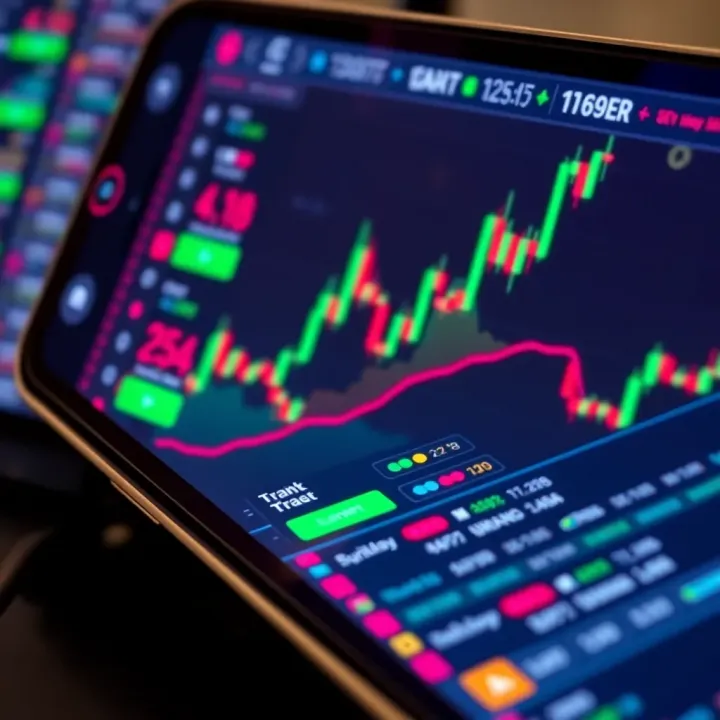
📱 Thinking of forex trading in Kenya? Discover top apps, learn features, security tips, and find the best fit for safe, smooth trading journeys today!
Explore top forex trading companies in Kenya 🇰🇪, learn how the market works, choose the right broker, and get tips for safe, smart trading 💹.
📚 Discover essential forex trading books covering basics, strategies, market analysis & risk management. Perfect for beginners and pros to improve skills!
Based on 5 reviews