
Understanding Forex Trading Bots in Kenya
🤖 Discover how forex trading bots work, their pros and cons, and smart tips for Kenyan traders to safely boost automated trading success in forex markets.
Edited By
Emily Clarke
Forex trading and gambling often get lumped together, but they're quite different in several key aspects. Many people think of forex as gambling because both involve risk and the chance to lose money. However, forex trading revolves around analysing financial markets and making informed decisions, while gambling mostly depends on chance.
At its core, forex trading involves buying and selling currencies in a marketplace influenced by global economic factors, interest rates, and political events. Traders use strategies based on economic indicators, technical charts, and sometimes news to predict price movements. For example, a trader might study the effect of Kenya's inflation rate changes on the Kenyan shilling relative to the US dollar before placing a trade.
Unlike gambling, forex trading allows room for skill and knowledge to influence outcomes instead of mere luck.
That said, forex trading carries risks. It’s easy to lose money if you trade without a clear plan or discipline. Overleveraging—a common pitfall where traders borrow too much relative to their capital—can wipe out accounts quickly, much like betting all your shillings at a boda boda matatu race and coming last.
In contrast, gambling, such as betting on football, largely relies on chance, even if some punters try to use statistics or “gut feeling.” Outcomes depend heavily on luck, and the odds usually favour the house. For instance, betting on a match winner or a jackpot lottery often offers fixed odds that don’t change with new information.
Key differences between forex trading and gambling include:
Skill versus chance: Trading rewards research and strategy; gambling depends on luck.
Risk management: Traders use stop-loss orders and position sizing. Gamblers rarely control risks scientifically.
Market transparency: Forex prices reflect economic realities, while gambling odds are designed for profit margins.
Understanding these differences helps Kenyan traders approach forex properly. It’s not about hoping for a lucky strike but rather applying effort, research, and discipline.
In the next sections, we'll explore more on how to manage risks and sharpen skills to trade responsibly within the Kenyan market environment.
Understanding what forex trading involves is essential before comparing it to gambling. Forex trading refers to the buying and selling of currencies on the global foreign exchange market. This market is the largest financial market worldwide, with a daily turnover exceeding $6 trillion. For Kenyan traders, forex offers opportunities to engage with international currencies right from Nairobi or other towns using online platforms.
Forex trading plays a practical role in enabling businesses to manage currency risk, travellers to exchange money, and investors to seek profit from currency price movements. However, unlike casino games, it requires study, analysis, and strategy to increase chances of success.
Forex trading is exchanging one currency for another at agreed rates known as exchange rates. For example, you might buy US dollars using Kenyan shillings with the aim to sell the dollars later at a higher rate. The scope covers government central banks, commercial banks, institutional investors, corporations, and individual traders. This vast network ensures high liquidity, meaning traders can enter and exit positions without major delays.
For you as a trader, this means prices can change quickly, offering chances to profit but also risks of losses. Knowing how broad and interconnected the forex market is provides context for the challenges and benefits involved.
The forex market is active 24 hours a day during weekdays, starting in Wellington and Sydney, moving to Tokyo, London, and finishing in New York. This continuous cycle allows traders to respond to global economic news anytime. The most traded currencies are the US dollar (USD), euro (EUR), Japanese yen (JPY), British pound (GBP), and Swiss franc (CHF).
In Kenya, trading activity peaks when London's market is open (10 am to 7 pm EAT), especially for major pairs like EUR/USD or GBP/USD. Understanding these hours helps plan when to trade, as liquidity and volatility can differ depending on the time.
The forex market consists of various players, each with different objectives. Central banks manage currency stability and implement monetary policies. Commercial banks facilitate international trade and provide liquidity. Hedge funds and investment firms speculate on price changes for profit. Corporations engage in currency trading to hedge risks from imports and exports.
Individual traders like yourself participate through broker platforms, aiming to make profits or hedge personal currency exposure. Knowing who the participants are helps you appreciate market behaviour and price movement causes.
Currencies trade in pairs, such as USD/KES (US dollar/Kenyan shilling) or EUR/USD (euro/US dollar). When you buy one currency, you sell the other. The exchange rate tells how much of the second currency buys one unit of the first.
For instance, if the USD/KES rate is 110, it means one US dollar costs 110 Kenyan shillings. If you expect the shilling to weaken, you might buy USD/KES, hoping the rate rises to sell later for profit. Conversely, if you expect strengthening, you could sell the pair.
Many forex brokers offer leverage, allowing you to control larger trade sizes with a small deposit called margin. For example, a 1:100 leverage means KSh 1,000 margin lets you trade KSh 100,000 worth of currency. Leverage can magnify profits but also losses.
In Kenya, caution is needed when using leverage. Although it boosts potential gains, it can quickly wipe out your capital if the market moves against you. Managing leverage wisely is key to long-term survival.
Traders use different order types to enter or exit trades. A 'market order' executes immediately at the current price. A 'limit order' sets a specific price to buy or sell later when reached. A 'stop-loss order' helps limit losses by closing a position if the price hits a certain level.
Execution speed matters, especially in volatile markets. Fast and reliable platforms allow you to respond quickly to price changes, reducing risks of slippage or missed opportunities.
Knowing the mechanics of forex trading—from currencies to orders—forms the foundation to approach the market responsibly and avoid thinking that trading is just gambling.
Many people wonder if forex trading is just another form of gambling. Comparing forex trading to gambling helps clear up this confusion by showing where they overlap and where they sharply differ. This clarity is crucial, especially for investors, traders, and financial analysts looking to approach forex trading with the right mindset. Understanding these differences also aids in risk management and strategic decision-making.
Gambling largely depends on luck; outcomes are unpredictable, and chance reigns supreme. For example, when you place a bet on a roulette table, the result hinges on the ball landing on a random number. There is little or no reliable way to forecast the outcome based on past spins. The randomness here means players operate at the mercy of the odds.
This reliance on luck makes gambling risky for those who expect consistent profits. In most cases, the randomness masks any pattern or trend, making it nearly impossible to develop a skill-based edge over time.
Casinos, bookmakers, or any gambling houses maintain a built-in advantage called the house edge. This means over time, the house expects to win a certain percentage of all bets—usually ranging from 1% to over 10% depending on the game. For instance, a standard roulette game typically carries a house edge of about 5.26%, meaning the casino expects to profit around KSh 5 for every KSh 100 wagered in the long run.
Players rarely beat this expected loss. No matter how many times you bet, the house edge ensures the gambling operator maintains profitability. This creates a generally negative expected value for the gambler.
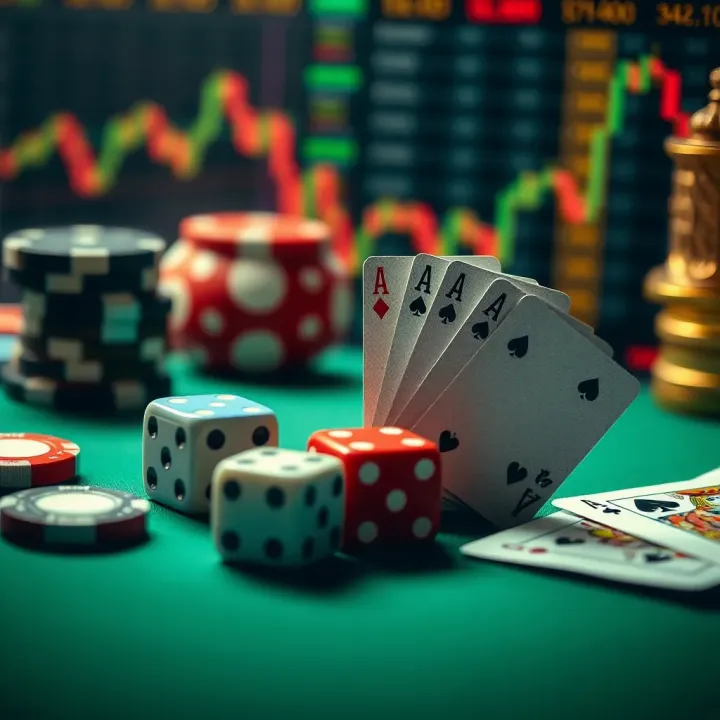
Gambling outcomes tend to be short-term, often settled within minutes or hours. While luck may favour you on a particular spin or hand, long-term success is statistically unlikely because of the house edge. This makes gambling more about chance-taking for short bursts of excitement than long-term wealth building.
In contrast, forex trading can be approached with a longer horizon where strategy and patience matter. But in gambling, the expectation should be that the longer you play, the more likely you lose money.
Forex trading depends heavily on analysis rather than pure chance. Traders study fundamental factors like interest rates or economic reports and use technical tools such as moving averages or support and resistance levels to predict price movements. For example, a Kenyan forex trader might watch how the latest Central Bank of Kenya rate decision impacts the shilling's value.
This analytical approach means forex traders can develop and refine their strategies over time, increasing chances of success.
Unlike gambling, where stakes are often fixed and predetermined, forex trading offers risk control through tools like stop-loss or take-profit orders. These allow traders to define how much they are willing to lose or gain before closing a trade. Such mechanisms help limit losses and lock in profits, promoting disciplined trading.
For instance, a trader using a stop-loss might prevent losing more than KSh 1,000 on a single trade, protecting their overall capital.
Forex prices fluctuate due to real-world factors like geopolitical events, economic data, or trade flows. For instance, a presidential election in the United States can cause volatility in currency pairs like USD/KES. These factors provide a logical basis for price changes, differing from gambling outcomes driven by pure chance.
Traders who stay informed about such market-moving events can anticipate and react accordingly, which again highlights how forex trading involves skill and research rather than mere luck.
The line between forex trading and gambling comes down to skill, strategy, and control — where forex offers tools to manage risks and make informed decisions, gambling relies chiefly on chance and odds stacked against you.
Understanding the risks in forex trading helps Kenyan traders avoid costly mistakes and set realistic expectations. Forex markets can shift rapidly, influenced by many factors beyond any single trader's control. Unlike gambling, where chance dominates, forex trading involves risks that need managing through knowledge and strategy. Knowing these risks can help traders develop better plans and protect their capital.
Global events, like political instability in countries or unexpected economic announcements, can send shockwaves through forex markets. For example, the 2016 UK Brexit vote caused significant volatility in the British pound, catching many traders off guard. Such events often increase price uncertainty temporarily or for extended periods, requiring traders to stay updated with news and react fast.
In Kenya, this means forex traders should watch global indicators such as US Federal Reserve decisions or oil price changes. These factors can affect currency pairs like USD/KES, thereby influencing the cost of imports or exports. Ignoring such events may result in unexpected losses.
Sudden price swings or "flash crashes" happen when market liquidity dries up or a large order moves through the market quickly. These sharp moves can wipe out gains or deepen losses within minutes, demanding quick decision-making. For instance, a sudden sell-off in the Euro due to a surprise economic report can cause volatile swings against currencies like the US dollar or Kenyan shilling.
Kenyan traders need to be cautious during such volatile periods, ideally using stop-loss orders to limit downside risk. Understanding that sudden spikes are normal means one must avoid emotional reactions that lead to chasing losses or doubling down impulsively.
Liquidity risk refers to the difficulty of executing trades without affecting the price, especially in less popular currency pairs or during off-market hours. In the Kenyan context, while USD/KES has good liquidity during business hours, smaller pairs may experience thin trading. This can widen spreads and increase costs unexpectedly.
Traders should prefer pairs with higher liquidity to avoid slippage—the difference between expected and actual trade prices. Also, during times like night sessions or holidays, liquidity tends to fall, increasing risk.
Overtrading is a common trap where traders take too many positions, often to recover losses quickly or due to boredom. This behaviour usually results from impulsivity rather than strategy. For example, a Kenyan trader who experiences a losing streak might rush into multiple trades without proper analysis, compounding losses.
Controlling overtrading means sticking to a predefined plan and trade frequency. Impulse control is crucial; without it, even the best strategies can fail.
Greed and fear are powerful emotions affecting decisions. Greed pushes traders to hold losing positions too long, hoping for a turnaround, while fear may cause premature exits, missing out on gains. Both emotions distort judgement.
Kenyan traders should be aware of these biases and use risk management tools like stop-loss orders. For instance, succumbing to greed might mean ignoring signals to exit a position, risking larger-than-planned losses.
Discipline and patience form the backbone of successful forex trading. Markets do not always move as expected, and traders need to wait for clear signals and stick to risk limits. In Kenya’s bustling environment, it’s tempting to rush decisions, but those who develop patience tend to fare better.
Keeping a trading journal and reviewing past trades helps build discipline by identifying emotional mistakes. Patience allows traders to capitalise on good opportunities instead of chasing quick profits.
Managing the risks involved in forex trading demands a mix of market awareness, emotional control, and disciplined planning—qualities that distinguish trading from gambling. Kenyan investors who recognise and respect these risks stand a better chance of long-term success.
Forex trading is not about luck or guessing; skill and knowledge heavily influence success. Understanding market behaviour, analysing trends, and managing risk effectively require training and experience. Unlike gambling, where outcomes mostly depend on chance, forex trading rewards those who can interpret data and execute informed decisions wisely.
Fundamental analysis involves studying economic factors that affect currency values. Traders look at indicators like central bank policies, interest rates, inflation, and geopolitical events to predict currency movements. For instance, when the Central Bank of Kenya raises interest rates, the shilling often strengthens because higher returns attract foreign investors.
This approach helps traders grasp the bigger economic picture rather than relying solely on price charts. By understanding underlying reasons, they can avoid panic during sudden market changes influenced by news or government decisions.
Technical analysis uses historical price charts and patterns to forecast future movements. Traders identify trends, support and resistance levels, and apply tools like moving averages and Relative Strength Index (RSI). These help pinpoint entry and exit points.
For example, if the USD/KES pair hits a resistance level repeatedly, a trader might expect a price drop and decide to sell. Technical analysis provides a systematic way to interpret price action, complementing fundamental insights.
Economic indicators offer concrete data on a country's financial health and often trigger market reactions. Key indicators include GDP growth, unemployment rates, and trade balances. In Kenya, reports on inflation rates or tea and coffee export earnings can sway forex prices.
Savvy traders monitor the release schedules of these indicators to prepare for volatility. Knowing when to expect such reports allows them to avoid getting caught in unpredictable price swings or exploit the opportunities they present.
A trading plan starts with clear goals: whether that’s steady growth, income, or capital preservation. Coupled with this are risk limits, which define the maximum loss a trader is ready to accept on any one trade or day.
For example, a trader may set a rule never to lose more than 2% of their capital per trade. This discipline helps avoid reckless decisions and protects funds during rough patches.
Testing a trading strategy against past market data shows its potential effectiveness before risking real money. Backtesting reveals how a method might perform under different conditions, highlighting strengths and weaknesses.
A Kenyan trader could backtest a strategy using historical data of the Kenyan shilling against the dollar. If results show a high success rate over several months, the trader gains confidence to apply it live.
Recording every trade, the reasons behind it, and the outcome helps traders identify patterns in their behaviour and strategy performance. A journal reveals emotional triggers, recurring mistakes, and winning approaches.
Regular review encourages continuous improvement. For example, if a trader notices losses mostly happen during specific news releases, they can adjust to avoid trading in those periods.
Skill and knowledge turn forex trading into a thoughtful activity where decisions rely on facts and planning—not chance. This is what separates trading from gambling and improves chances of long-term success.
For Kenyan traders stepping into the forex market, practical advice is vital to navigate the risks and complexities successfully. Forex trading isn't a game of chance—it demands careful decision-making, understanding of market dynamics, and effective risk management. Practical tips help you avoid costly mistakes and build a disciplined approach, especially given the unique challenges faced by traders in Kenya.
Before opening an account, check if the broker is licensed by recognised bodies such as the Capital Markets Authority (CMA) in Kenya. A regulated broker follows rules that protect your funds and maintain fair market practices. For example, a CMA-licensed broker must keep client money separate from its own business accounts, reducing the risk of misuse. Trading with unregulated brokers can expose you to scams or unfair trading conditions.
Spreads refer to the difference between the buying and selling price of currency pairs, while commissions are fees charged per trade. A broker with tight spreads and low commissions helps you keep trading costs down, which is crucial when trading frequently. For instance, if you trade the US Dollar/Kenyan Shilling (USD/KES) pair, a spread of 2 pips or less is generally reasonable. High spreads or hidden fees can slowly eat into your profits without you noticing.
Good customer support is essential, especially during volatile market events when you might need quick assistance. Look for brokers that offer responsive service in English and have multiple contact channels such as phone, email, and live chat. Equally important is the platform's usability; it should be user-friendly and reliable. Platforms like MetaTrader 4 or 5 are widely used and support mobile trading, which suits Kenyan traders who often rely on smartphones.
Using stop-loss orders limits how much you can lose on a trade by automatically closing your position at a set price. Similarly, take-profit orders close a trade when it hits your target profit. This disciplined approach helps protect against sudden market swings, like during unexpected political events affecting the Kenyan shilling. For example, placing a stop-loss at 1% below your entry price can safeguard your capital from steep declines.
Leverage lets you control a larger position with a smaller amount of money but magnifies both profits and losses. Keeping leverage low, say 1:10 or lower, helps manage risk effectively. Kenyan traders often get tempted to use high leverage offered by some brokers, but this can quickly wipe out your account, especially given forex market volatility.
Don’t put all your funds into a single trade. Dividing your trading capital across several trades and not risking more than 1-2% of your account on each trade helps preserve your funds. For example, if you have KSh 100,000 for trading, risks per trade should not exceed KSh 1,000 to KSh 2,000. This practice keeps you in the game longer and avoids big losses from one bad decision.
Many Kenyan traders fall victim to schemes promising high returns with little effort or guaranteed profits. These offers are red flags. Legitimate forex trading involves risks and no broker or mentor can promise consistent winnings. Always research thoroughly and verify broker credentials before depositing money.
Emotions like fear and greed lead to impulsive decisions such as chasing losses or overtrading. Sticking to your trading plan and avoiding rash moves helps maintain control. For instance, if a trade goes against you, taking a step back instead of immediately increasing position size reduces emotional damage.
Markets change and so should your knowledge. Regularly update yourself on global economic news, forex trends, and trading techniques. Kenyan traders can follow news sources like Business Daily or learn from online courses tailored to local market contexts. Continuous learning improves decision-making and helps spot opportunities before others do.
Practical forex trading is about more than just making quick gains; it requires discipline, risk control, and ongoing learning to succeed in the Kenyan market.
Following this advice offers Kenyan traders a solid foundation to approach forex trading with confidence, minimise dangers, and build lasting success.
🤖 Discover how forex trading bots work, their pros and cons, and smart tips for Kenyan traders to safely boost automated trading success in forex markets.
📚 Master forex trading in Kenya with top books on technical analysis, risk management, and trading psychology to boost your skills and confidence.
📱 Thinking of forex trading in Kenya? Discover top apps, learn features, security tips, and find the best fit for safe, smooth trading journeys today!
Explore top forex trading companies in Kenya 🇰🇪, learn how the market works, choose the right broker, and get tips for safe, smart trading 💹.
Based on 5 reviews