
How Binary Search Works: A Simple Guide
🔍 Understand binary search algorithm with clear steps, implementation tips, edge cases, and how it compares with other search methods for efficient coding.
Edited By
Megan Willis
A binary counter is a digital circuit that counts in binary form, essential in electronics and computing. It converts input pulses—often from a clock signal—into a sequence of binary numbers. This device is widely used in applications like digital clocks, frequency counters, and computer memory addressing.
At its core, a binary counter relies on flip-flops, which are basic memory elements capable of storing one bit each. When an input pulse arrives, the flip-flops change their states to represent an incremented binary number. For example, with four flip-flops, the counter can count from 0000 to 1111 in binary, equivalent to 0 to 15 in decimal.
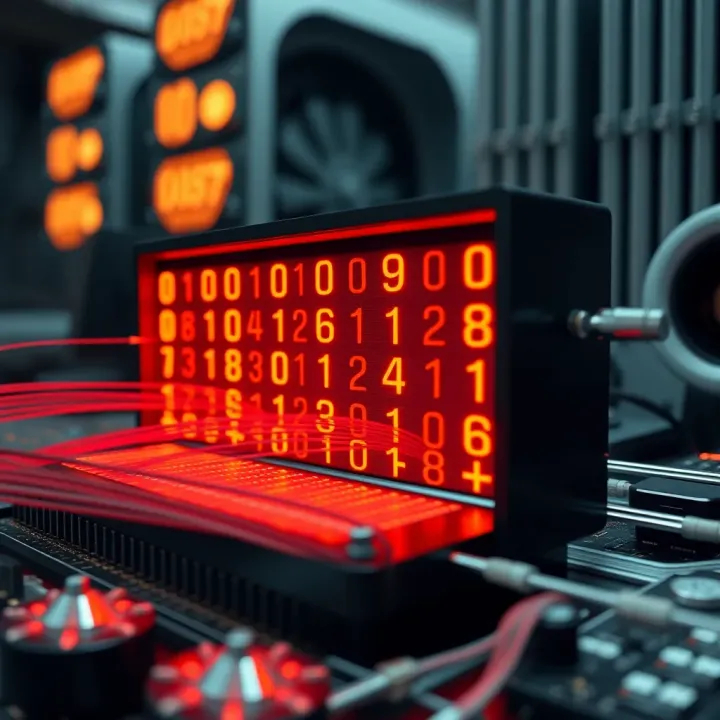
Binary counters come mainly in two types: synchronous and asynchronous. In an asynchronous counter, flip-flops are triggered one after the other, causing a slight delay—this delay becomes noticeable at higher speeds, making synchronous counters preferable for faster operations. Synchronous counters, on the other hand, trigger all flip-flops simultaneously with the same clock pulse, reducing delay and improving performance.
The reliability of a binary counter depends on clean input pulses and well-designed flip-flop arrangements, or else counting errors may occur in sensitive applications.
Commonly used flip-flops in these counters include JK and T types. A JK flip-flop toggles between states depending on its inputs, while a T flip-flop changes state on every clock pulse. Engineers often select types based on specific design needs like speed or simplicity.
In practical terms, binary counters are integral in financial trading systems where timing and sequence control matter, such as timestamping transactions or counting market data events. In education, understanding binary counters helps explain basics of digital electronics, crucial for courses that build towards programming or hardware design.
In summary, a binary counter transforms electrical pulses into a binary number sequence by toggling a chain of flip-flops, with design variations suited for different speeds and applications. This fundamental operation underpins much of the digital technology we rely on every day.
Understanding the basic concepts of a binary counter is essential before exploring its detailed operations. This foundational knowledge clarifies how input signals are translated into meaningful counting sequences in digital electronics. It also highlights components' roles and the binary system's core principles, which are key when applying or analysing binary counters in practical settings.
A binary counter is a digital device designed to count pulses and represent the count in binary form. Its primary function is to keep track of the number of events or clock cycles, making it extremely useful in timing circuits, frequency dividers, and digital clocks.
To illustrate, imagine a simple digital timer in a kitchen appliance counting seconds. The binary counter receives each clock pulse representing one second and increments its count accordingly. This count, displayed in binary, can trigger other actions like turning off the appliance after a set time.
The binary system uses only two digits: 0 and 1. Each digit, or bit, represents an increasing power of two, starting from the right (least significant bit). For example, a 4-bit binary number can represent values from 0 to 15 (2⁴ - 1).
Using binary simplifies electronic counting because digital circuits naturally operate with two states: ON (1) and OFF (0). This matches well with flip-flops switching between high and low voltage states, making binary counting efficient and reliable across electronic devices.
Flip-flops are the building blocks of binary counters. They act as memory elements that store one bit of information, flipping their state between 0 and 1 each time triggered by a clock pulse.
In practical terms, if you have a counter with four flip-flops, it can count from 0000 to 1111 in binary (0 to 15). Each flip-flop corresponds to a bit position, and its state directly contributes to the binary output.
The clock input is like the heartbeat of the counter, sending regular pulses to synchronise the flip-flops' operation. Each pulse usually causes a flip-flop to change its state, progressively advancing the count.
For instance, in a ripple counter, the clock pulse triggers the first flip-flop, and then its output pulse sequentially triggers the next. This domino effect matches counting sequences, but can introduce slight delays, which engineers must consider.
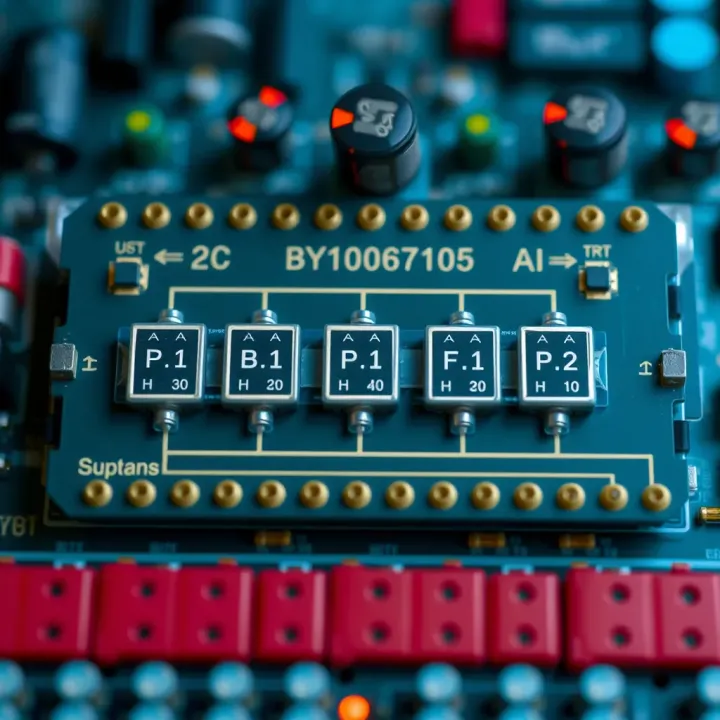
Reset and enable controls manage the counter's operation flow. The reset input clears the counter, setting all flip-flops back to zero. This is useful for starting counting afresh or synchronising multiple counters.
The enable input determines whether the counter should respond to clock pulses. When disabled, the counter holds its current state regardless of incoming pulses. This control is vital when you want to pause counting temporarily or coordinate with other devices.
Effective use of these controls ensures accuracy and synchrony in complex systems, such as digital meters or event counters, where precise timing matters.
Understanding these basic components and their roles helps demystify how binary counters translate simple clock signals into valuable digital counts. This knowledge is also fundamental when selecting or designing counters for specific applications in finance-related digital displays or automated trading systems relying on precise timing.
Understanding how a binary counter handles input signals is key to grasping its operation. Input signals drive the counter to change states, converting pulses into binary numbers that digital systems rely on. This section breaks down how these signals influence the counter, focusing on clock pulses and the resulting binary output.
The clock signal acts like the heartbeat of the binary counter. It provides the regular timing pulses that tell the counter when to advance to the next number. In practical terms, if you imagine a tick of a clock or the flash of a roadside traffic light, these pulses serve as the trigger for the counter to step through its sequence. Without this timing signal, the counter would have no reference to change its state.
Each clock pulse prompts a transition in the binary counter's internal components. This is where flip-flops come into play. Flip-flops are the tiny digital switches that remember a bit’s state as either 0 or 1. When a clock pulse arrives, it triggers these flip-flops to toggle or hold their current state depending on the design. For instance, in a ripple counter, each flip-flop toggles after the previous one changes, similar to a row of falling dominoes.
Each flip-flop in the binary counter represents a bit position, starting with the least significant bit (LSB) and moving up to the more significant bits. When the counter receives a clock pulse, the LSB changes state first, flipping from 0 to 1 or vice versa. This change may cause higher bits to toggle if the previous bit returns from 1 back to 0, similar to how a car’s odometer moves from 9 back to 0 and the next digit increments.
The output of the binary counter is a string of bits displayed as a binary number. This output is what digital circuits read to understand the current count. For example, after three clock pulses, a 4-bit counter's output moves from 0000 to 0011, representing the decimal number three. This binary count can drive numerous practical applications, such as timing circuits or frequency dividers in financial trading systems that need precise timing signals.
The way a binary counter processes its input signals directly affects its accuracy and response time, which are vital for sectors relying on digital timing and precise counting.
In summary, the clock signal synchronises state changes within the counter's flip-flops, causing the binary output to update in steps. This process forms the foundation for converting pulse inputs into meaningful binary counts used across electronic and financial devices alike.
Understanding the different types of binary counters is key to grasping how these devices function in various electronics applications. Each counter type serves specific roles, offering unique advantages depending on the operational needs. Exploring ripple, synchronous, and up/down counters reveals the trade-offs in design, speed, and complexity that engineers balance when integrating binary counters into real systems.
Design and Operation: Ripple counters, sometimes called asynchronous counters, rely on the output of one flip-flop to trigger the next. For instance, the first flip-flop toggles with every clock pulse it receives, and each subsequent flip-flop changes state based on the preceding one's output. This design is simple and cost-effective, making it suitable for basic applications where timing precision is less critical.
Propagation Delay Effects: Because each flip-flop waits for the previous one to change state before reacting, delays build up through the chain — a phenomenon known as propagation delay. This delay means the output count may briefly go through incorrect intermediate states before settling, which can be problematic in fast circuits or precise timing systems. For example, in high-speed data acquisition in Nairobi's financial trading systems, such delay might cause counting errors if not accounted for.
Simultaneous Clocking Mechanism: Unlike ripple counters, synchronous counters have all flip-flops triggered by the same clock pulse simultaneously. This synchronisation eliminates the ripple effect and keeps the outputs changing at once, improving timing accuracy. This makes synchronous counters better suited for systems like digital clocks and counters used in banking transaction processing, where timing consistency is crucial.
Advantages Over Ripple Counters: The primary benefit is speed. Since all bits change together, the count updates faster and more reliably, reducing errors from transient states. Though a bit more complex and costly to build, synchronous counters are preferred in environments requiring precise counting such as stock exchange automated systems or sensor data processing in manufacturing.
Counting Direction Control: Up/down counters can increment or decrement the count based on control inputs. This flexibility allows the same device to count forward or backward, controlled by a direction signal. For example, an up/down counter might be used in an inventory tracking system where goods are added and removed regularly.
Practical Uses: These counters find use in applications like measuring the net flow of materials, volume control in audio equipment, and position tracking in robotics and automation. In Kenya's jua kali sector, simple up/down counters help small factories keep track of assembly line counts, switching directions easily as production demands change.
Selecting the right counter depends on balancing complexity, speed, and application needs. Understanding their distinct operations aids in making informed decisions for reliable digital counting solutions.
Binary counters have a broad range of practical uses that impact daily life and industry, especially in electronics and measurement systems. Understanding where and how these counters operate sheds light on their value beyond theoretical design. They form the backbone of devices counting sequences, measuring frequencies, or tracking events precisely.
One of the most familiar applications of binary counters is in digital clocks and watches. These devices rely on counters to register each clock pulse—commonly generated by quartz crystals ticking at a stable frequency. The binary counter increments with every pulse, moving through binary numbers that software or hardware then translate into readable hours, minutes, and seconds. Without this reliable counting, digital timekeeping would falter in accuracy.
For instance, a digital wristwatch uses a binary ripple counter to divide the high-frequency quartz oscillations down to one pulse per second, simplifying how time units are tracked. This practical setup shows how the basic binary counting principles translate into everyday tools.
Binary counters play a crucial role in frequency division circuits, where the goal is to reduce a high-frequency input signal to a lower frequency output. Frequency division is widespread in radio transmitters, audio equipment, and other communication gadgets. By counting input pulses and producing output signals at set intervals, the counters ensure signals can be processed or transmitted without distortion.
Take a local radio station's transmitter, which might input a 100 MHz signal but needs to broadcast at a lower frequency. The binary counter acts as a frequency divider, cutting down the input frequency by powers of two with each counting stage. This mechanism is efficient and predictable, making it ideal for complex communication setups requiring signal regulation.
Binary counters are valuable in event counting, where exact tallies of occurrences inform decision-making or data logging. Examples include traffic flow monitoring on Kenyan roads, manufacturing assembly line counts, and sports scoring systems. Counters accumulate each event signal, turning pulses into a binary number representing total events.
A Kenyan water meter, for instance, may use a binary counter to record flow events digitally, giving a precise measure of water consumption without manual readings. Likewise, in industrial plants, counters track operations for maintenance schedules or quality control.
Binary counters provide a dependable method for turning time, frequency, and event signals into accurate digital data, making them indispensable across many sectors.
In summary, binary counters’ practical applications include efficient time measurement, stable frequency division, and exact event counting. Their simplicity and reliability make them essential building blocks in technology, both in Kenya and worldwide.
When designing or working with binary counters, certain challenges frequently arise. These affect performance, reliability, and energy consumption. Being aware of these issues helps engineers and technologists select or tailor counters that best fit their projects—from simple timers to complex digital systems.
Propagation delay refers to the time it takes for a change in the input clock signal to produce a corresponding change in the output of the flip-flops that make up the binary counter. For example, in ripple counters, this delay accumulates as each flip-flop triggers the next one in sequence, often causing a noticeable lag. This lag can lead to temporary errors if outputs are read before all flip-flops complete their state change, especially in high-speed applications.
A practical approach to reduce these issues is using synchronous counters, where all flip-flops receive the clock input simultaneously. This design cuts down on cumulative delay, improving timing accuracy. In industries like telecommunications, where signals come rapidly, reducing propagation delay ensures data integrity and prevents timing glitches.
Binary counters used in battery-powered or energy-sensitive devices, such as remote sensors or portable medical equipment, must balance counting performance with power use. Ripple counters, while simpler, sometimes consume less energy but slow down with larger bit sizes. On the other hand, synchronous counters require more complex circuitry, increasing power consumption but offering faster, more reliable counting.
Design choices like selecting low-power flip-flops and optimising clock frequencies can improve efficiency. For instance, adjusting the clock speed to the minimum necessary for the application helps save battery life without sacrificing functionality.
Selecting the right binary counter depends heavily on the particular use case. Ripple counters are often preferred for simple or cost-sensitive applications, such as basic event counting or low-speed timing, where minor delays don’t impact overall performance.
In contrast, synchronous counters suit critical operations requiring fast and accurate counts, for example in digital watches, frequency dividers, or microprocessor timers. Up/down counters provide added flexibility where both incrementing and decrementing counts matter, like in elevator floor displays or bidirectional event tracking.
Understanding these design factors and challenges ensures that the chosen binary counter matches the needs of the specific electronic system, improving reliability and lifespan.
With careful consideration of delays, power needs, and counter type, engineers can build systems that run smoothly even under demanding conditions.
🔍 Understand binary search algorithm with clear steps, implementation tips, edge cases, and how it compares with other search methods for efficient coding.

Explore how to convert binary to Gray code 🔄, understand its benefits, and learn practical methods for manual and electronic tech in Kenyan digital systems 🇰🇪.
Learn how to convert decimal numbers to binary 👉 a key skill in computing. Step-by-step guide with practical tips and helpful tools for easy understanding 💻📊

Learn how to convert binary numbers to decimal with clear steps, examples, and real-world tips. Ideal for learners & tech pros alike! 💻🔢📚
Based on 10 reviews