

Understanding Binary Trading Bots in Kenya
🤖 Learn how binary trading bots work in Kenya's markets, their pros and cons, legal tips, and ways to pick safe automated trading tools for better decisions.
Edited By
Ethan Foster
Binary bots are automated software programs designed to trade binary options without human intervention. They operate by analysing market data, spotting trends, and executing trades according to pre-set criteria. This automatic approach helps traders in Kenya and beyond react to market changes swiftly, often faster than a manual trader could.
Understanding the basics means knowing what binary options entail. These are financial contracts where you predict if an asset’s price will be above or below a certain level at a specific time. The payout is fixed, typically either a gain or loss of your stake, making it straightforward but risky.
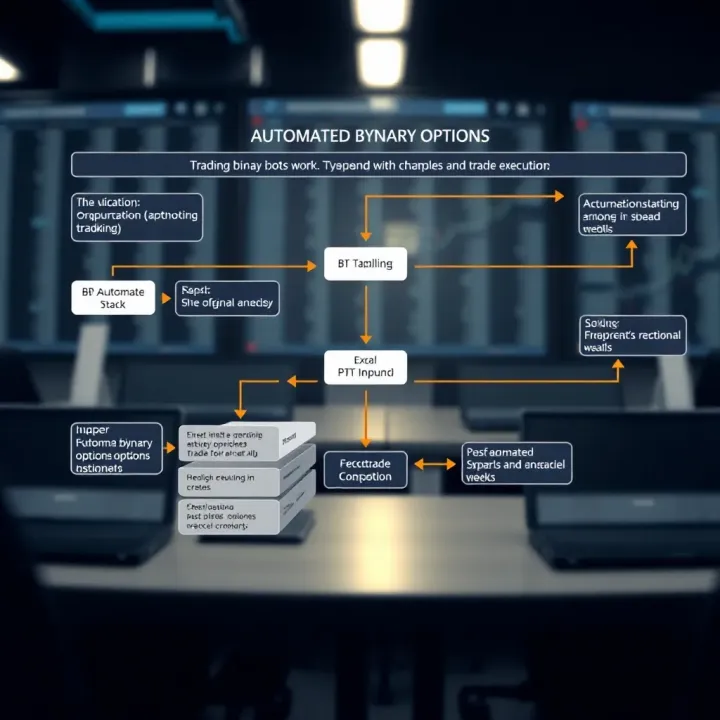
Binary bots use algorithms — sets of rules encoded in software — to decide when to enter or exit trades. These algorithms consider indicators like price movements, volume, and sometimes external news feeds. For instance, a bot might be programmed to buy a call option on the NSE stock index if the price crosses above its 10-day moving average, signalling an upward trend.
Automated trading bots remove emotion from the equation, aiming to make disciplined, consistent decisions based solely on data and predefined strategies.
Key features of binary bots include:
Speed: They can process large volumes of market data quickly and place trades in milliseconds.
Consistency: Unlike humans, bots don’t suffer from fatigue or hesitation, sticking to the strategy relentlessly.
Backtesting: Bots can be tested against historical data to check how a strategy would have performed before risking real money.
However, automated trading is not foolproof. Market conditions can change suddenly — like unexpected policy announcements from the Central Bank of Kenya or global shocks — which might throw off the bot’s strategies. Also, technical glitches and software bugs can lead to unexpected losses.
In Kenya’s growing financial markets, binary bots offer an accessible way for traders to engage with options trading. Still, understanding their mechanics and risks is crucial before relying on them for investment decisions.
Understanding binary options and their market is key for anyone keen to engage with automated trading, especially in the Kenyan financial context. Before diving into how binary bots function, it's essential to grasp what binary options represent and the environment they operate in. This foundation helps traders make informed decisions and better manage the risks attached to this form of trading.
Binary options are a simple type of financial contract where you predict whether an asset’s price will rise or fall within a specific timeframe. Instead of owning the asset, you wager on a 'yes' or 'no' outcome. For example, you might bet KSh 1,000 that the price of Safaricom shares will be above KSh 40 by the end of the day. If your prediction is right, you earn a predetermined payout. If not, you lose your stake.
This structure makes binary options accessible, especially for traders who prefer a straightforward yes/no scenario without worrying about how far a price moves. However, this simplicity comes with high risk, because the outcome hinges on precise market moves within often very short periods.
Trading binary options involves selecting an asset – like stocks, currencies, commodities, or indices – then deciding the direction you expect its price to take by the option’s expiry time. If the market moves as you predicted, you earn a fixed return, generally ranging between 60% to 90% of your initial investment. If it moves against you, the loss is your invested amount.
In practice, say you predict the Kenyan shilling will strengthen against the US dollar within an hour. You place a call option if you expect a rise or a put option if you expect a decline. When the contract expires, the trading platform calculates your win or loss automatically.
Kenya hosts numerous platforms offering binary options trading, often accessible online or via mobile apps. Popular choices include international platforms like IQ Option and Pocket Option, which provide user-friendly interfaces and local payment options such as M-Pesa.
Local traders benefit from platforms that accept Kenyan Shilling deposits and support M-Pesa payments, making funding accounts easy and quick. These platforms also provide demo accounts to practise without risking real money.
Understanding the market’s basics helps traders spot patterns and avoid the common pitfalls seen with hasty or uninformed binary options trading.
As you can see, grasping what binary options are, the mechanics of trading them, and the platforms available in Kenya sets a strong basis for appreciating how binary bots operate effectively in this environment.
Understanding binary bots is key for anyone interested in automated trading, especially in the Kenyan market. This section explains what binary bots are and why they have become popular tools for traders dealing with binary options. Knowing their purpose gives insight into how they simplify decision-making and improve trading efficiency.

A binary bot is software programmed to automatically execute trades on binary options platforms. Instead of a trader manually buying or selling options, the bot analyses market data and makes trades based on pre-set rules or algorithms. For example, a bot might monitor currency pairs like USD/KES and automatically place trades when certain price conditions are met. This hands-off approach helps traders save time and avoid emotional decisions during volatile market hours.
Unlike manual trading, where every move depends on the trader’s input, binary bots work continuously without fatigue. They take inputs such as price trends, technical indicators, and expiry times to decide when to open or close trades. This means even when you are busy or asleep, the bot can keep working for you, reacting faster than human reflexes allow.
Many traders in Kenya turn to binary bots because they offer practical advantages that improve trading consistency. For one, bots remove emotional bias. When trading manually, stress or excitement can cause impulsive trades; bots stick strictly to their programming.
Secondly, bots can handle multiple markets or assets at the same time. A trader who struggles to monitor several pairs or commodities simultaneously can benefit from bots executing trades across various assets automatically.
Thirdly, binary bots help users test different trading strategies without risking real money upfront. New traders can run simulations or demo trades to understand how certain rules perform under market conditions before committing actual capital.
While binary bots offer valuable support, they are not foolproof. Traders should combine them with their knowledge, keep monitoring performance, and understand the risks, especially given the fast-paced nature of financial markets.
In summary, binary bots serve as smart assistants for traders, allowing faster execution, discipline in trading, and the ability to test strategies—features that are particularly useful for Kenyans navigating binary options markets through platforms like IQ Option or Binomo. Understanding these tools is a step towards more informed, efficient trading decisions.
Automated trade execution is what makes binary bots valuable to traders, especially in fast-moving markets like those in Kenya. These bots remove human delays by instantly reacting to market signals, making trades within seconds. This speed can make a real difference in trading results because binary options require precise timing to capitalise on price movements within short periods.
A binary bot attaches to a trading platform using an application programming interface (API) or through web-based integration. The API acts like a bridge between the bot and the platform, allowing the bot to send commands and receive data. Popular Kenyan-friendly platforms might include those supporting M-Pesa payments for deposits and withdrawals, enhancing ease for local traders.
Setting up this connection involves inputting credentials and authorising the bot to trade on your behalf. For example, a trader using a platform like Binomo or IQ Option will obtain an API key from the platform, then configure the bot with these details. This connection must be secure to prevent unauthorised access or fund loss, so two-factor authentication (2FA) and encrypted communication are often recommended.
The trade execution starts once the bot accesses real-time market data. Here’s a simplified flow:
Market Data Analysis: The bot collects data such as asset prices, volume, and technical indicators.
Signal Generation: Based on pre-programmed rules or algorithms, the bot decides whether to buy a call or put option.
Order Placement: The bot uses the API to place the trade instantly on the platform.
Monitoring: The bot watches the trade's progress and can close the trade early if the strategy requires.
Record Keeping: Every trade action is logged for review and optimisation.
For Kenyan traders, this automation means you don’t need to watch the screen all day, which helps balance trading with other hustles. It also minimises emotional decision-making—something many new traders struggle with.
Automated trade execution not only speeds up the process but also brings consistency and discipline to trading, crucial in the volatile binary options market.
Remember, though, that the quality of trades depends on the strategy programmed into the bot, and no system guarantees profits. It’s essential to test bots on demo accounts and understand the risks before trading real KSh.
By linking your binary bot properly to trusted Kenyan trading platforms and understanding the step-by-step execution process, you get a tool that acts swiftly and reliably, giving you a better chance to succeed in the binary options market.
Algorithms are the backbone of binary bots, shaping how these tools analyse markets and decide when to trade. They follow programmed rules, allowing bots to act faster and more consistently than human traders. In Kenya’s evolving trading landscape, understanding these algorithms helps traders pick or fine-tune bots to suit their market approach and risk appetite.
Binary bots often rely on several tried-and-tested strategies. One popular method is trend-following, where the bot identifies an upward or downward market movement and makes trades that align with that direction. For example, if a bot detects a steady climb in the price of a stock like Safaricom, it might open a call option expecting the price to continue rising.
Another strategy is the mean reversion approach, based on the idea that prices will eventually return to an average level. If a market swings wildly away from its usual range, the bot might place trades betting on a return to that average. This strategy suits volatile markets, often seen during Kenyan election months when economic activities shift abruptly.
Some bots use breakout strategies, looking for moments when prices break past established support or resistance levels. When this happens, bots anticipate increased momentum and trade accordingly. This approach is useful during announcements like CBK interest rate decisions, which can cause sudden price jumps.
Technical indicators act as the sensors for binary bots, providing data signals to guide trades. Indicators like moving averages, Relative Strength Index (RSI), and Bollinger Bands help bots assess market strength or weakness. For instance, if the RSI dips below 30, a bot might interpret the asset as oversold and enter a call option.
Bots also process historical price data, volume, and sometimes news sentiment to detect patterns. This thorough data analysis enables bots to make decisions beyond just price movements — they can anticipate volatility changes or market momentum shifts. Kenyan traders can benefit by configuring bots to emphasise indicators best suited to local market behaviours rather than relying on generic global presets.
Markets are seldom static. Kenyan trading sessions are influenced by local factors like economic reports, political developments, or even weather patterns affecting agricultural output. Successful binary bots adjust their approach based on ongoing market data.
Advanced bots use machine learning algorithms to fine-tune themselves. For example, if a particular strategy underperforms during the short rains season, the bot might learn to reduce trades or switch to a more conservative approach until conditions improve.
Simpler bots may include preset risk management rules: cutting losses after a number of failed trades or adjusting trade volumes based on recent wins or losses. This adaptability improves durability in uncertain markets and helps preserve trading capital.
Understanding the algorithms and strategies behind binary bots empowers traders to use these tools wisely rather than blindly. Smarter configurations mean better chances of steady results, especially in dynamic markets like Kenya’s.
Binary bots have grown popular among Kenyan traders for automating binary options trading. While they offer a range of benefits, it's equally vital to understand the risks involved to manage them effectively. This section breaks down the advantages, potential pitfalls, and the legal landscape to help traders make informed choices.
Binary bots give Kenyan traders a chance to execute trades swiftly without needing to watch the markets all day. For example, a busy jua kali artisan in Kenya can use a bot to trade on platforms like Binomo or RaceOption while focusing on their daily work. Bots can analyse market data continuously and execute trades based on preset strategies, cutting down emotional decisions that often cause losses.
Besides speed, these bots allow 24/7 market participation, which is helpful given the global nature of binary options markets. Using automated systems also means trades happen without delay, ensuring the trader doesn’t miss out due to slow reaction times or connection issues. Kenyan traders can also backtest their strategies using historical data, refining their approach before risking real money.
Bots come with risks that traders should handle carefully. One common danger is over-reliance on automation. A bot can only follow programmed signals, so sudden market swings from political events in East Africa or global shocks may cause unexpected losses if the bot cannot adapt quickly.
Another risk involves scams—some software providers promise guaranteed profits with their bots but end up cheating users. Kenyan traders should research thoroughly, checking reviews and verifying the reputation of bot providers before subscribing.
Managing risk means using bots with clear money management rules—such as limits on trade size and daily loss caps. Regular monitoring and occasionally adjusting the bot settings also help maintain better control rather than setting it and forgetting it.
Kenya currently has no specific laws specifically regulating binary options trading or the use of trading bots. However, all trading activities fall under the Kenya Capital Markets Authority (CMA) jurisdiction. CMA advises caution since many binary trading platforms operate outside Kenyan regulatory reach.
Kenyan traders should ensure they use platforms authorised or recognised by CMA to avoid falling into unregulated territories. Additionally, when using bots, keeping track of profit or losses is important for correct declarations in income tax returns through the Kenya Revenue Authority (KRA).
While binary bots can ease trading efforts, traders in Kenya must navigate risks smartly and remain alert to ensure compliance and security in their investments.
Understanding these benefits and risks helps Kenyan investors approach binary bots with cautious optimism, balancing automation advantages with disciplined oversight.
🤖 Learn how binary trading bots work in Kenya's markets, their pros and cons, legal tips, and ways to pick safe automated trading tools for better decisions.

Discover key insights on binary bots for sale 🤖—learn how they work, benefits, risks, and tips to choose wisely in binary trading markets 📈.
🔍 Explore how binary bots work, their practical uses, and get step-by-step PDF guides on setup, strategies, and managing risks in automated trading.

Explore how binary underpins computing and digital communication 💻. Learn about data representation, binary arithmetic, coding, and everyday tech uses.
Based on 15 reviews