
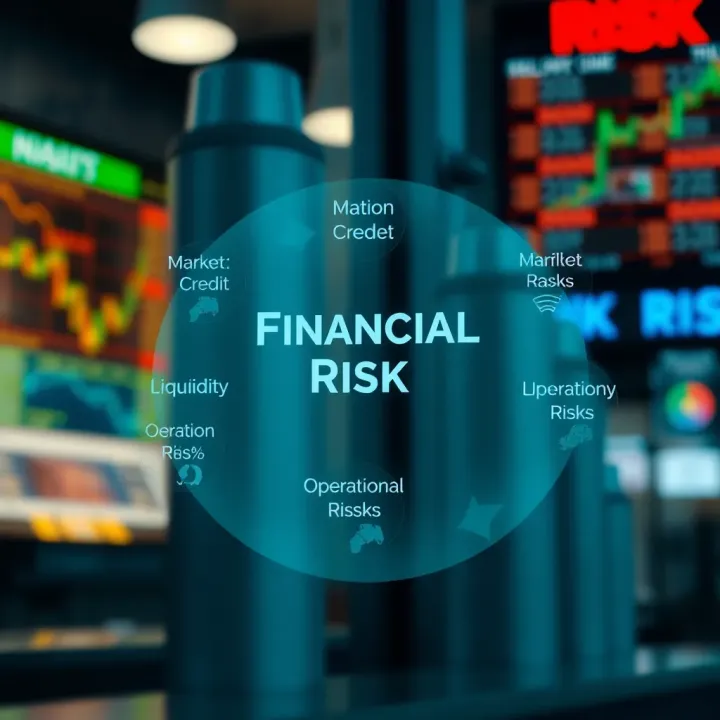
Essential Guide to Financial Risk Management
Discover how to spot, assess, and reduce financial risks in your business. Stay compliant and monitor risks continuously to protect your investments 💼📉
Edited By
Laura Spencer
Risk management is the practice of spotting, assessing, and handling potential threats before they cause serious damage. This is a must for investors, traders, and financial analysts who want to protect their portfolios and business interests. Without proper risk control, an unexpected event can wipe out profits or even lead to bankruptcy.
The first step is risk identification. This involves scanning all possible dangers, whether market volatility, credit default, operational failures, or external shocks like political unrest or natural disasters. For example, a Kenyan exporter might consider currency fluctuations between the shilling and the dollar, while a local bank looks out for loan defaulters and cyber threats.

Once risks are identified, the next is risk assessment. Analysts evaluate how likely a risk is to happen and what its impact could be. They may use techniques like scenario analysis or risk matrices to prioritise which risks need urgent attention. Consider a trader who uses historical price data to estimate the chance of a sharp market drop; this informs how much capital to set aside.
Effective risk management applies different strategies to control threats. These include:
Risk avoidance: Steering clear of activities with high risk, such as a firm avoiding investments in unstable regions.
Risk reduction: Taking steps to lessen risk, like improving IT security to curb cyber-attacks.
Risk sharing: Transferring risk to others, for example through insurance or hedging using financial instruments like futures and options.
Risk acceptance: Deciding to tolerate some risks when they’re minor or the cost to reduce them is too high.
Identifying risks early and choosing the right response can save enterprises from heavy losses and ensure steady growth.
In Kenya's fast-moving economy, practical risk management balances caution and opportunity. Applying these techniques can make the difference between sustained gains and financial setbacks.
Risk management is the foundation of making informed decisions that protect businesses, investors, and individuals from unforeseen setbacks. At its core, it means recognising potential problems before they happen and acting to reduce their impact. This approach is particularly valuable for traders and financial analysts who navigate markets sensitive to unpredictable shifts.
Risk refers to the chance of losing something valuable—whether money, time, or reputation. For example, a trader buying shares during volatile times faces the risk of price fluctuations that can lead to financial loss. Risk management, on the other hand, involves identifying these risks, evaluating their likelihood and consequence, and deciding how to handle them effectively. It’s not about avoiding risk completely but understanding which risks are worth taking and which need control.
There are several types of risks familiar to those in business and daily affairs. Market risk affects investors when prices change unexpectedly. Credit risk applies when a borrower may fail to honour obligations, affecting lenders or suppliers. Operational risks arise from internal failures like system breakdowns or human error. Outside business, daily risks include health issues, accidents, or natural disasters. For instance, a business owner relying on suppliers from different counties within Kenya must consider transport disruptions during heavy rains, which could delay stock arrival.
Acting before problems arise allows you to keep control and prevent losses. Proactive risk management saves time and resources—avoiding crises rather than fixing them later. Imagine a farmer in Rift Valley who monitors weather forecasts carefully; by preparing for droughts or floods ahead, they protect their harvest and income. Similarly, investors diversifying their portfolio don't put all eggs in one basket, reducing chances of heavy losses when one sector dips.
Taking charge of risks early helps build resilience, enabling businesses and individuals to adapt swiftly to changes without panic or heavy costs.
Understanding these basics gives you the tools to face uncertainties head-on. Whether you are analysing stocks, managing a business, or planning your family’s finances, knowing what risk means and how to handle it makes a real difference. This section lays the groundwork for more detailed techniques to identify, analyse, and manage risks strategically in the following parts of the article.
Identifying risks early helps you stay ahead of potential threats before they escalate into problems. Whether you are an investor watching market shifts or a financial analyst tracking sector changes, spotting risks early lets you prepare or adjust strategies promptly. This early action often saves significant time and money, preventing avoidable losses.

Using risk assessment tools and checklists provides a structured way to examine possible risks systematically. For example, investors might use a risk matrix to map the likelihood and impact of events like currency fluctuations or regulatory changes. Checklists tailored to particular sectors — such as banking or agriculture — ensure consistency when reviewing risks. These tools help avoid overlooking common threats; for instance, a checklist for real estate investment might remind you to assess political stability and land title clarity. Such thoroughness ensures no blind spots slow your response.
Consulting experts offers insights beyond standard data, especially in complex fields. Financial analysts often seek views from market veterans or economists to gauge unquantifiable risks like geopolitical tensions or policy shifts. In Kenya, for example, brokers might talk to fund managers experienced in NSE (Nairobi Securities Exchange) trends or commodity speculators to understand emerging risks that data alone doesn’t reveal. By combining diverse perspectives, you get a clearer picture to factor into decision-making. This collaborative approach enriches your risk profile and guides more nuanced actions.
Data and historical records form the backbone of risk identification by highlighting patterns and frequency of past events. Traders analysing fluctuations in forex markets use historical price data to spot trends that suggest possible upcoming risks. Likewise, businesses look at records from previous financial crises or political unrest to prepare for similar disruptions. In Kenyan business, reviewing NHIF or NHIF premium default rates during economic downturns can help predict client behaviour risk. By grounding your risk detection in actual facts and trends, actions become informed and less speculative.
Early risk identification is a practical necessity, enabling timely interventions that protect investments and minimise losses across sectors.
Together, these techniques build a layered approach to risk spotting, mixing data precision with human insight and systematic review to cover a wide range of potential issues. This layered method equips investors, traders, and financial analysts with robust tools to manage risks confidently in shifting environments.
Analysing and measuring risks is a vital step in risk management because it helps decision-makers understand the nature and scale of potential problems. Without this analysis, it's hard to know which risks need urgent attention or which ones can be safely ignored. For example, a financial analyst evaluating investment opportunities needs to weigh how likely a market downturn is and how badly it could affect returns. This process saves resources by focusing efforts on the most serious threats.
Qualitative analysis involves describing risks in non-numerical terms, focusing on their characteristics and possible consequences. This method is useful early on, especially when detailed data is scarce. For example, a broker might assess political unrest as a high-risk issue because it could disrupt markets, even if exact financial impacts aren’t known. On the other hand, quantitative analysis assigns numbers or values to risks, such as probability percentages and estimated financial losses. This approach is common in investment firms using historical data and models to forecast how much a currency fluctuation could cost them in KSh.
Both methods are important and often complement each other. Qualitative analysis provides context and helps identify risks, while quantitative measures put a definite scale to potential effects, making comparisons easier.
Evaluating risk probability involves estimating how likely an event will occur. Impact evaluation looks at the severity of its consequences. For instance, a trader might judge the probability of a commodity price crash as low but the impact as very high. This dual evaluation often involves creating a risk matrix where each risk is plotted according to likelihood and seriousness. This visual tool allows teams to see which risks could be minor nuisances and which might topple a portfolio or business.
Here in Kenya, analysts might use recent weather patterns to evaluate the probability of drought affecting agricultural exports. If the chances are high and impacts severe, they may advise adjusting investments accordingly.
Once risks have been analysed, prioritising them ensures resources target the most critical threats first. One effective technique is the Risk Ranking method, where risks are scored based on their probability and impact, then arranged from highest to lowest priority. Another approach is the Pareto Principle (80/20 rule), which suggests focusing on the few risks that cause most problems.
For example, a Nairobi-based investment firm might find that currency volatility and regulatory changes cause 80% of their losses. Prioritising these risks allows them to apply specific hedging strategies or seek legal advice quickly.
Effective risk prioritisation means not spreading efforts thin but tackling big threats decisively to avoid unnecessary losses.
In summary, analysing and measuring risks with clear methods like qualitative and quantitative analysis, probability-impact evaluation, and prioritisation equips financial professionals to manage uncertainty smartly. This practical approach supports making well-informed decisions in dynamic market environments.
Managing risks effectively requires practical strategies that not only spot dangers early but also deal with them in a way that balances cost and impact. This section looks at four key approaches to handling risk: avoidance, reduction, sharing, and acceptance. Each has its place, depending on the nature of the risk and the organisation's or individual's capacity to handle it.
Risk avoidance means completely steering clear of activities that could cause harm or financial loss. For example, an investor may choose not to invest in a volatile market segment perceived as too risky. In business, a firm might avoid entering contracts with suppliers who have a poor track record to prevent supply chain disruptions. Although this strategy reduces risk to zero for specific threats, it might also mean missing out on potential gains, so decision makers must weigh the trade-offs carefully.
Where avoiding risk isn’t possible or practical, reducing it becomes important. This means taking steps to lower the likelihood of a problem or its potential damage. An example is a manufacturer installing fire safety equipments and regular inspections to reduce fire risk. Traders might use stop-loss orders to limit financial losses. This approach helps protect assets and continuity without entirely shunning risk opportunities.
Sharing risk involves distributing it across multiple parties, which lowers the burden on any single individual or firm. Insurance is the classic method: businesses pay premiums to insurers who then cover specific losses. Similarly, partnerships and joint ventures spread financial exposure among participants. For traders, using derivatives like options or futures contracts can transfer market risk to other parties. Risk sharing increases resilience and frees resources but comes at the cost of sharing eventual profits.
Not all risks can be avoided or shared economically. Sometimes, accepting risk is the best option—especially if the cost of managing it exceeds the potential loss. A startup might accept the risk of market uncertainty to pursue growth. Financial analysts often accept minor fluctuations while focusing on long-term gains. This strategy requires strong monitoring because tolerance thresholds need adjustment when situations change.
Practical risk management is about choosing the right tactic for each threat, balancing protection and opportunity to keep ventures sustainable and profitable.
By applying these strategies thoughtfully, investors, traders, and financial professionals can guard against losses while staying open to new opportunities. Knowing when to avoid, reduce, share, or accept risk makes for stronger decision making and builds confidence for the future.
Monitoring and reviewing risk management processes is key to keeping risk efforts relevant and effective. No risk landscape stays the same. Markets change, regulations update, and new threats appear. Without ongoing tracking, even the best plans can become outdated fast.
Tracking risk levels over time allows you to see how threats evolve and whether your controls are working. For instance, a trader monitoring forex exposures may notice increased volatility in a currency pair. This signals the need to adjust stop-loss limits or hedge strategies. Clear records, dashboards, or software tailored for financial risks make this easier. Regularly reviewing metrics like Value at Risk (VaR), loss frequency, or exposure concentration helps spot trends early before they swell into bigger problems.
No risk management plan should be rigid. The business environment changes, and so should your responses. For example, a financial analyst might observe a sudden policy shift by the Central Bank of Kenya affecting interest rates. Immediate strategy adaptation – such as revising portfolio allocations or rebalancing risk weights – will minimise losses. Agile teams that regularly reassess assumptions can pivot quickly. This flexibility helps address unforeseen events like political unrest, technological disruptions, or economic shocks.
Risk management is not a solo task; it requires input from various players. Involving stakeholders—whether they are investors, portfolio managers, brokers, or compliance officers—ensures diverse perspectives and buy-in. For example, during quarterly reviews, inviting feedback from traders and risk officers can identify blind spots or emerging risks missed by automated tools. This collaboration builds a risk-aware culture where everyone understands their role and shares the responsibility for managing risks.
Consistent monitoring and review cement risk management as a living process, not a one-off exercise. It ensures your strategies evolve with changing conditions and remain strong against threats.
Effective monitoring combines quantitative tools with qualitative insights. It’s about spotting shifts, adjusting plans fast, and working together. This approach safeguards investments and supports sound decision-making even when markets turn unpredictable.
Discover how to spot, assess, and reduce financial risks in your business. Stay compliant and monitor risks continuously to protect your investments 💼📉

Explore how Enterprise Risk Management frameworks help Kenyan businesses spot, evaluate, and handle risks to boost decision-making and resilience. 📊🔍

Explore how Kenya manages disaster risks through assessment, preparedness, response, and recovery. Learn the roles of communities, government, and partners 🌍🔥

🔍 Explore how risk management helps identify, assess, and control threats to protect businesses and individuals in Kenya from uncertainties & losses.
Based on 13 reviews