

How to Convert Binary Numbers to Octal Easily
Learn how to convert binary to octal with simple steps and examples 🧮. Perfect for students and tech enthusiasts working in computing and electronics.
Edited By
Henry Foster
Understanding how to convert octal numbers to binary is quite practical, especially in areas like computer programming, digital electronics, and data analysis. Octal, or base-8, uses digits from 0 to 7, while binary, or base-2, uses only 0s and 1s. Since binary is the language of computers, converting numbers from octal to binary helps in debugging code, designing circuits, or analysing digital data.
Octal numbers are convenient because they group binary digits neatly in sets of three. Every octal digit corresponds to exactly three binary digits (bits), making conversion straightforward without complex calculations.
Being able to switch between octal and binary quickly reduces errors and saves time, especially when handling large numbers in computing tasks.
Here's why you might want to convert octal to binary:
Hardware design: Engineers use binary to design and test digital circuits, but often get inputs or outputs in octal.
Software development: Programmers might encounter octal values in system files or low-level code.
Educational purposes: Understanding number systems is key in computer science education.
We'll walk through simple steps and examples to make this conversion easy to grasp. You'll learn how to break an octal number digit by digit and translate it directly into binary form. This method is fast and reduces mistakes that come from converting through decimal first.
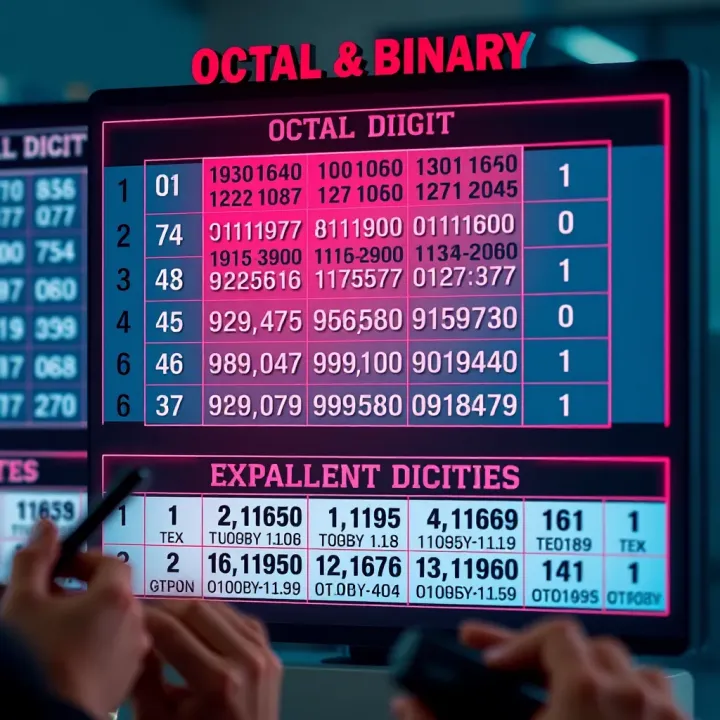
Below is a quick look at the relationship between octal digits and their binary equivalents as a reference:
| Octal | Binary | | 0 | 000 | | 1 | 001 | | 2 | 010 | | 3 | 011 | | 4 | 100 | | 5 | 101 | | 6 | 110 | | 7 | 111 |
Keep this table handy. It’s the core to transforming octal numbers into binary without confusion. The next sections will explain exactly how to put this into practice with examples and potential pitfalls to avoid.
Grasping the basics of octal and binary number systems is key when converting between these two formats. This understanding is not just academic; it affects how data is processed, represented, and interpreted in real-world computing and electronics. For instance, knowing that octal groups digits differently than binary helps prevent errors in conversion, which can save time and avoid costly mistakes, especially in fields like programming and financial analysis.
The octal number system is a base-8 numbering scheme, meaning it uses eight distinct digits — from 0 to 7. Each octal digit corresponds directly to three binary bits, making it simpler to map between octal and binary compared to decimal. For example, the octal digit 5 translates to binary as 101. This neat grouping makes octal useful when dealing with binary-coded data, reducing length without losing detail.
In Kenya, octal numbers can appear in technical settings such as embedded systems or when configuring permissions in software. In older computing systems and some programming environments, octal is still preferred for compact and clear representation, especially when working with low-level data like memory addresses.
Octal numbers are often used in electronics and computing for representing binary data in a more human-friendly way. Since each octal digit equals exactly three binary digits, it is easier to read and write long binary sequences by expressing them in octal format. For example, system programmers dealing with microcontrollers might prefer octal to avoid long strings of ones and zeros.
In some Kenyan universities and technical colleges, students learn octal systems early on as part of computer science or engineering courses. This grounding helps when they later handle digital circuits or write assembly language, where octal can simplify binary handling.
Binary is a base-2 number system that uses only two digits: 0 and 1. This simplicity aligns perfectly with how modern computers operate, using two states (on and off) to process data. Every binary digit, or bit, represents an exponential power of 2. For example, the binary number 1101 equals 13 in decimal.
Binary forms the foundation of all digital systems, from smartphones to ATMs. Unlike octal, which groups bits for convenience, binary shows the literal electrical states inside devices. Understanding binary is a must-have for anyone working closely with technology or programming.
Binary is the language that computers speak. Every instruction, image, or transaction processed by a digital device boils down to streams of ones and zeros. Its direct relation to circuitry makes binary essential, as it allows efficient and error-free data handling.
In Kenya's fast-growing ICT sector, professionals who know binary gain an edge when developing software or configuring networks. Binary knowledge supports understanding how data moves and is stored, including in crucial financial systems where accuracy is vital.
Knowing the distinctions and connections between octal and binary systems makes conversions smoother and more reliable, reducing the chance of costly errors in technology-driven fields.
Octal uses digits 0-7, each representing three binary bits.
Binary uses only digits 0 and 1, representing electric signals inside machines.
Octal simplifies binary readability; binary is the core of computer data.
Understanding these systems lays the groundwork for accurately converting octal numbers to binary, a skill valuable across computing, electronics, and data analysis.
Understanding why we convert numbers from octal to binary helps clarify its practical value in computing and programming. Often, octal numbers are a compact way to represent binary data, but digital systems themselves work natively in binary. So, having a straightforward conversion method is essential for smooth processing and system design.
Octal's base 8 structure offers a simpler way of dealing with binary sequences because each octal digit corresponds neatly to exactly three binary digits. Unlike decimal, which is base 10 and doesn't have a direct, clean link to binary, octal acts as a handy shorthand. For example, the octal digit 5 translates directly to the binary 101. This alignment reduces complexity when handling large binary numbers by breaking them into manageable chunks.
In practical terms, programmers and engineers find octal easier to work with when debugging or reading memory dumps. Instead of staring at long strings of zeros and ones, octal provides a friendlier format without losing information.
Most electronic circuits, especially digital ones like microprocessors and memory chips, operate in binary because transistors have two states: on or off. However, representing long binary sequences directly on schematics or code can be tedious and error-prone.

Using octal to represent those binary values simplifies circuit design and debugging. For instance, an engineer designing a circuit that reads inputs in groups of three bits may prefer octal notation because each input group maps perfectly to one octal digit. This way, signal states can be represented more compactly, aiding clearer documentation and reducing mistakes.
Data processing often involves converting information between formats. Using octal as a midway step in converting to binary minimises errors because each digit’s binary equivalent is predefined and fixed. This consistency makes manual conversions less prone to slip-ups.
Consider a case where a trader is analysing raw digital signals from an automated system: interpreting long binary strings can lead to overlooking a bit or two. Using octal groups helps in chunking data, making the process less error-prone and thus more reliable.
When writing or reading low-level code, especially in assembly or embedded programming, octal notation can make binary instructions easier to understand. Many programming environments support octal literals, making it easier to set flags, addresses, or instruction bits.
For example, a financial analyst using a custom algorithm in a low-level language might find octal notation more manageable when dealing with binary masks or control registers. It speeds up comprehension and reduces the cognitive load compared to interpreting raw binary or decimal numbers.
Converting octal numbers to binary not only streamlines electronic and computing tasks but also enhances accuracy and understanding in programming and data handling. This makes it a valuable skill across various tech-related fields.
In summary, converting from octal to binary bridges the gap between user-friendly notation and machine-level operation, offering tangible benefits for computing, electronics, and programming alike.
Converting octal numbers to binary might look tricky at first, but breaking the process down into clear steps makes it straightforward. This method ensures accuracy, especially useful for financial analysts and tech educators who regularly handle data transformations. Understanding each stage helps avoid errors common in raw conversions and improves confidence when dealing with diverse number systems.
Each octal digit is a number from 0 to 7, reflecting the base-8 system. Since you’re dealing with digits less than eight, it’s easier to manage than decimal or hexadecimal numbers for particular applications. For example, the octal digit ‘5’ directly represents five units in base 8, but what’s crucial is recognising its binary equivalent for computing tasks.
There is a direct and simple mapping for each octal digit to a set of three binary digits (bits). This is because 2³ equals 8, perfectly fitting the octal range of 0–7. For instance, octal '3' converts to binary '011'. This fixed-size mapping makes the conversion process more consistent and less error-prone, especially when handling long strings of numbers in digital electronics or software coding.
Start by translating each octal digit into its three-bit binary form. Treat every digit independently, so an octal number like 47 becomes ‘100’ for 4 and ‘111’ for 7 in binary. This piece-by-piece conversion keeps things tidy and helps spot mistakes early on, rather than trying to convert the entire number in one go.
Once each digit converts, join the binary groups in the same order without skipping or mixing them up. For example, octal 47 translates to binary as ‘100111’. Any jumbling can lead to wrong values, which is a common snag, especially when manually converting data for programming or hardware design.
Combining and maintaining the order of binary digit groups is essential; this preserves the number’s original value during conversion.
A frequent mistake is mixing digits beyond 7 in octal or dropping zeros in the binary groups. For instance, misreading octal '8' is invalid, as the octal system only has digits up to 7. Similarly, neglecting the leading zeros in binary like writing ‘11’ instead of ‘011’ changes the intended number’s meaning.
Kenyan analysts and educators often rely on software tools or programming scripts to double-check their conversions. Simple Python scripts or online calculators provide quick results and compare your manual conversion for accuracy. This step is crucial before using converted numbers in trading algorithms or financial models.
This stepwise approach provides clarity and precision for anyone needing reliable number system conversions, especially in fields like finance and technology in Kenya where exactitude matters.
Using examples is a solid way to grasp the practical steps when converting octal numbers to binary. Examples help clear any fog around the method, making abstract concepts concrete and easier to follow. They show how each octal digit maps directly to binary, allowing investors, traders, and professionals dealing with data to apply the conversion confidently without second-guessing.
Conversion of single-digit octal numbers is straightforward because every octal digit represents a value from 0 to 7, which fits neatly into three binary digits (bits). For instance, octal 5 translates to binary 101. This simplicity makes it easy to convert any single octal digit into binary quickly, proving useful when dealing with smaller data blocks or quick calculations in computing tasks.
Explanation of binary equivalents builds on this by demonstrating how these simple conversions form the foundation for understanding more complex numbers. For example, octal digits 0 through 7 have fixed 3-bit binary equivalents: 0 is 000, 1 is 001, and so on up to 7 which is 111. Knowing this fast lookup saves time and reduces mistakes during manual conversion or when verifying automated processes.
Stepwise conversion of multi-digit numbers takes the simple principle of converting single octal digits and applies it in sequence. Consider the octal number 237. Each digit converts individually—2 to 010, 3 to 011, and 7 to 111—and then these binary groups join to form the full binary 010011111. Breaking down a large octal number like this keeps the process clear and manageable, which matters in finance or programming where precision counts.
Validating results with examples is key to ensuring accuracy. After converting, double-check by converting the binary back to octal or using a calculator designed for these operations. For example, converting the binary number 010011111 back to octal should return 237. This cross-verification helps avoid misinterpretation in financial modelling or data analysis where a single digit's error can skew results significantly.
Practice with real examples not only builds confidence but also helps spot and correct errors early, securing the integrity of your data conversion.
By regularly applying such examples, readers can master octal to binary conversion efficiently and accurately, making their work in trading platforms, software development, or data handling much more reliable.
When converting octal numbers to binary, certain challenges can easily lead people astray if not handled carefully. Grasping these common pitfalls helps maintain accuracy, whether you’re working with data for financial models, conducting technical analysis, or teaching number systems. Understanding what to watch out for ensures smooth, error-free conversions.
Octal numbers use only the digits 0 through 7. Encountering digits like 8 or 9 in what you think is an octal number signals a mistake. For example, if you see 1759 and treat it as octal, the digit 9 makes this invalid. This matters because not spotting such errors early can throw off the entire conversion process. In Kenyan business or academic environments, input errors like these happen often, especially when manually reading or writing numbers.
Using an invalid digit leads to inaccurate binary output. Since each octal digit translates into exactly three binary digits, one wrong octal digit means the binary result will be nonsensical from that point forward. For instance, converting 1759 (with 9 invalid) to binary could result in values that don’t reflect the actual data. This can cause problems in programming, financial calculations, and electronics where precise binary representations are necessary. Detecting and correcting such errors beforehand saves time and prevents costly rework.
Each octal digit corresponds to a group of three binary digits. Mixing these groups or splitting them incorrectly leads to misinformation. Imagine combining bits like 1010011 instead of breaking them into the correct 101 001 1 – the last one is incomplete and may cause confusion or errors. For example, in computer programming or when working with digital circuits, such mistakes could cause wrong memory addresses or logic failures.
To avoid errors, always convert each octal digit to its 3-bit binary equivalent separately, then join the groups directly without adding or removing bits. For example, octal 57 converts to binary by taking 5 (which is 101) and 7 (which is 111), forming 101111. Avoiding unnecessary spaces or merging bits incorrectly preserves the number's integrity. This practice is especially useful when converting data for precise financial systems or teaching others, ensuring consistency across all stages.
Careful attention to detail guarantees that octal to binary conversion results are reliable and accurate every time, making your work trustworthy and easy to validate.
By recognising invalid digits early and handling binary digit groups correctly, you minimise miscalculations and maintain confidence in your number conversions.
In the process of converting octal numbers to binary, having the right tools and resources can save you time and reduce errors. Whether you are a financial analyst working with large data sets or an educator teaching number systems, using trusted methods and technology makes the task simpler and more reliable.
Benefits of using calculators
Online calculators designed for octal to binary conversion offer fast and accurate results. Instead of doing manual conversions, which can be tedious and prone to mistakes, these tools quickly output the correct binary equivalent once you enter the octal number. This help is important when handling many numbers or when you need to verify your manual work. For traders or investors dealing with digital data streams, such calculators ensure precision without extra stress.
Popular Kenyan and international websites
Several websites provide this service free of charge, including those tailored for Kenyan users and those with wider international use. Kenyan educational portals sometimes offer interactive tools suited for local curricula, such as CBC (Competency-Based Curriculum), making learning practical. Globally known sites like RapidTables or CalculatorSoup also host reliable converters. Their user-friendly interfaces and availability on mobile devices suit the busy schedules of professionals and students alike.
Writing simple scripts for conversion
For users comfortable with coding, writing simple scripts to convert octal to binary offers flexibility. A short program can automate repeated conversions, especially beneficial when working with large datasets common in finance or commerce. For example, a basic script using loops and conditionals can accept octal input and generate corresponding binary output efficiently, saving hours spent on manual conversion.
Using programming languages like Python
Python stands out as a popular choice due to its clear syntax and built-in functions. You can easily convert octal numbers to binary using Python’s bin() function after converting the octal input to decimal. For instance:
python
octal_num = '17'# octal input as string
decimal_num = int(octal_num, 8)# Convert to decimal
binary_num = bin(decimal_num)[2:]# Convert decimal to binary and remove '0b'
print(binary_num)# Output: 1111
This direct method simplifies conversion for financial analysts needing quick computations and developers building data processing systems, especially in Kenya’s growing tech scene.

> Using both online tools and programming approaches enhances confidence and accuracy in octal to binary conversion. Choose the method that fits your level of comfort and task complexity to optimise results.

By embracing these resources, you reduce the risk of errors while saving time. Whether it is for educational purposes, investment data analysis, or software development, these tools are practical and accessible, helping you navigate number systems effectively in your work.Learn how to convert binary to octal with simple steps and examples 🧮. Perfect for students and tech enthusiasts working in computing and electronics.
Learn how to convert binary numbers to decimal with clear steps and examples 🔢. Discover why this skill matters in computing and everyday tech use 📱💻.

Learn how to convert decimal numbers to binary easily 🧮. This guide walks you through clear steps, practical examples, and common pitfalls to avoid 🛑.

🔢 Master decimal to binary conversion with clear examples and step-by-step methods. Perfect for students and tech enthusiasts in Kenya's digital world.
Based on 13 reviews